
Recently added item(s)
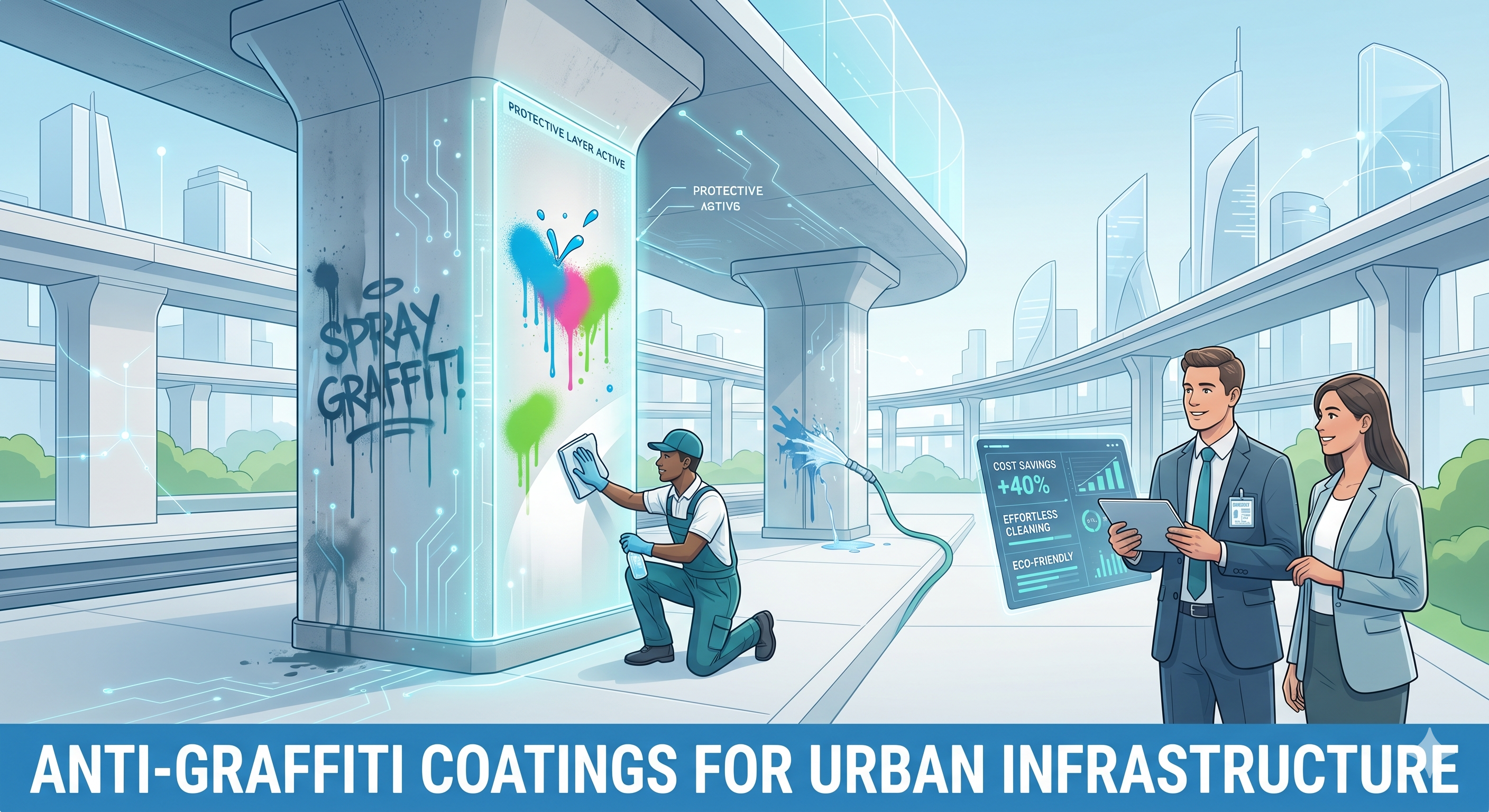
In the metropolitan landscapes of 2026, the battle for the visual soul of the city has moved beyond traditional law enforcement and into the realm of advanced material science. For decades, graffiti has been a polarizing subject—viewed by some as a vibrant form of “street art” and by others as a symptom of urban decay and a significant financial burden on taxpayers. Regardless of one’s artistic stance, the physical reality is clear: the cost of removing unwanted paint from bridges, transit systems, and historical monuments exceeds billions of dollars globally every year.
The solution is no longer found in a bucket of soapy water and a scrub brush. Instead, urban planners and civil engineers are turning to Anti-Graffiti Coatings. These are high-tech, invisible shields that use molecular engineering to ensure that spray paint, permanent markers, and stickers simply cannot bond to the surface. This article explores the chemistry of these coatings, the latest research from 2025 and 2026, and the critical balance between urban aesthetics and environmental health.
1. The Physics of “Non-Stick” Infrastructure
To understand how an anti-graffiti coating works, we have to look at Surface Free Energy. In simple terms, for spray paint to stick to a concrete wall, the molecules of the paint must be more attracted to the wall than they are to each other.
Most urban surfaces—concrete, brick, and stone—are porous and have high surface energy, meaning they “want” to bond with whatever touches them. Anti-graffiti coatings change this dynamic entirely. By applying a layer of materials like silicones or fluorinated polymers, we create a surface with ultra-low surface energy.
Think of it like a non-stick frying pan for a building. When a tagger applies spray paint to a coated surface, the paint “beads up” rather than soaking in. This makes the graffiti incredibly easy to remove, often requiring nothing more than a low-pressure power wash or a simple wipe-down with a mild cloth.
2. Categorizing the Defense: Sacrificial vs. Permanent
Not all coatings are created equal. Depending on the substrate and the budget, city planners generally choose between two primary technologies:
A. Sacrificial Coatings (The “One-and-Done”)
Sacrificial coatings are usually clear, wax-based polymers. When a coated wall is graffitied, the removal process involves using hot water to melt the wax. As the wax melts, it takes the paint with it.
-
The Downside: Once the graffiti is gone, the coating is gone too. A new layer of wax must be reapplied to protect the surface for the next time.
-
The Best Use Case: Historic stone and monuments where “breathability” is essential.
B. Permanent Coatings (The “Indestructible”)
Permanent coatings are much more robust. Often made from polyurethanes or cross-linked silicones, these films are designed to withstand hundreds of cleaning cycles. They are chemically resistant to the harsh solvents used by some removal teams and do not need to be reapplied after every incident.
-
The Downside: They can sometimes leave a “glossy” or “wet” look on the building, which may not be architecturally desirable.
3. 2026 Research Breakthroughs: Self-Healing and Bio-Based Defense
As we progress through the mid-2020s, the focus of research has shifted toward sustainability and “smart” responses.
Self-Healing Polymers
A major challenge for permanent coatings has been physical abrasion; if a coating is scratched, paint can find its way into the groove. Research published in early 2026 in Urban Materials Journal highlights a new class of polyurethane-urea coatings that contain micro-capsules of healing agents. When the surface is scratched, the capsules burst, releasing a liquid that hardens and repairs the barrier automatically.
Bio-Mimicry and the “Pitcher Plant” Effect
In 2025, a significant study conducted at the Global Institute for Material Science introduced “Slippery Liquid-Infused Porous Surfaces” (SLIPS). Inspired by the carnivorous pitcher plant, these coatings maintain a microscopic layer of lubricating fluid on the surface. Because the surface is technically a liquid film, even the strongest industrial adhesives and spray paints have zero “grip.”
Photo-Catalytic Synergy
In a crossover with “Self-Cleaning Glass” technology, researchers are now adding Nano-Titanium Dioxide (TiO2) to anti-graffiti formulas. Under UV light, the TiO2 produces radicals that break down the organic binders in spray paint, causing the graffiti to “chalk” and peel off naturally over time without human intervention.
4. The “Historic Stone” Dilemma: Breathability and Clinical Testing
One of the most sensitive areas of urban infrastructure management is the protection of heritage sites. Unlike modern concrete, old limestone or sandstone must “breathe.” If a coating is too tight, it traps moisture inside the stone. In cold climates, this moisture freezes and expands, causing the historic stone to crack or “spall.”
Technical Performance Metrics (2025 Study): A clinical-style study on the Moisture Vapor Transmission Rate (MVTR) of new-age silane-based coatings found that modern “breathable” anti-graffiti layers now allow for 85% of standard vapor transmission. This means we can now protect 150-year-old cathedrals without the risk of long-term structural rot—a massive leap forward for architectural preservation.
5. Advantage–Risk Assessment: A Balanced Evaluation
The Advantages
-
Massive Cost Savings: While the initial application is expensive, the “life-cycle cost” of a coated bridge is roughly 60% lower than the cost of repeated sandblasting and repainting.
-
Deterrence (The Broken Windows Theory): Criminological studies suggest that if graffiti is removed within 24–48 hours, taggers are less likely to return. Anti-graffiti coatings allow for this rapid response.
-
Infrastructure Longevity: Graffiti removal via sandblasting or harsh chemicals eventually wears down the surface of concrete and stone. Protective coatings eliminate this mechanical wear.
The Risks and Challenges
-
Visual Alteration: Even “matte” coatings can slightly change the color or texture of a building. In 2026, finding a truly “invisible” coating for all substrates remains a minor challenge.
-
Environmental Runoff: Legacy cleaners often contained high levels of VOCs (Volatile Organic Compounds). While the coatings themselves are becoming “greener,” the process of washing off the paint can still wash chemicals into the city’s storm drains.
-
Application Complexity: Permanent coatings require precise temperature and humidity conditions to cure correctly. A poorly applied coating can peel or turn yellow within two years.
6. Case Study: The 2026 Transit Revolution
In a recent project in London, the transit authority coated its entire new fleet of trains with a Nano-Graphene Anti-Sticker coating. Graphene, being incredibly strong and slippery, not only prevented spray paint from sticking but also solved a secondary urban nuisance: “sticker bombing.” Adhesive stickers, which usually require scraping, simply fell off the trains as they moved through the air, drastically reducing cleaning time in the depots.
7. The Ethical and Aesthetic Counter-Argument
As an AI, it is important to acknowledge the social nuance. Some urban critics argue that the “sanitization” of the city through anti-graffiti coatings removes a layer of cultural expression. However, the engineering consensus is that for functional infrastructure (bridges, signage, safety barriers) and heritage sites, the protection of the structural integrity and legibility of the surface is the absolute priority.
8. Conclusion: Toward a Low-Maintenance Future
The global supply chain of anti-graffiti technology is rapidly evolving toward “Passive Urban Defense.” By the end of 2026, we expect to see these coatings integrated directly into the manufacturing process of pre-cast concrete and architectural glass.
The city of the future is not one that is constantly being scrubbed; it is one that is designed to be resilient. Through the use of SLIPS technology, graphene-infused layers, and breathable silanes, we are creating urban environments that remain clean, safe, and visually appealing with a fraction of the environmental and financial cost. The science of “non-stick” is no longer just for our kitchens—it is the foundation of our modern cities.