How Nano Alumina (Al2O3) Improves Thermal Conductivity in Polymers

Have you ever noticed how hot your smartphone gets when you are playing a graphic-intensive game or watching a high-definition video while charging? Or perhaps you have read about the challenges of keeping electric vehicle (EV) batteries cool to prevent them from catching fire. As technology advances, our devices are becoming smaller, faster, and more powerful. However, this massive leap in performance comes with a universal, unavoidable byproduct: heat.

Read more 

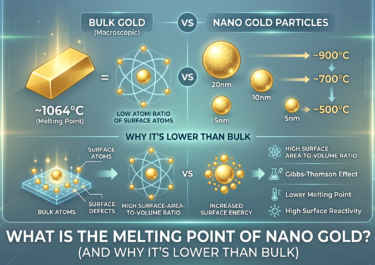
What is the Melting Point of Nano Gold? (And Why It’s Lower Than Bulk)

For thousands of years, humanity has revered gold for its unyielding permanence. It does not rust, it does not tarnish, and it requires intense, blazing heat to melt. If you wear a gold ring or own a piece of gold jewelry, you are wearing a metal that obeys a strict set of classical physics rules. However, when you shrink that exact same element down to the nanoscale—a realm where particles are measured in billionths of a meter—those classical rules completely fall apart.

Read more 

The Role of Magnetic Nanoparticles in Targeted Drug Delivery

For decades, modern medicine has relied on a fundamentally flawed premise when it comes to treating localized diseases: to cure a problem in one specific part of the body, we often flood the entire system with powerful drugs. The most glaring example of this is traditional chemotherapy. To destroy a tumor in the liver or breast, highly toxic drugs are injected into the bloodstream, circulating indiscriminately and attacking healthy cells alongside cancerous ones. This systemic approach is the root cause of the severe side effects—nausea, hair loss, and compromised immune systems—that patients endure.

Read more 

How Nano Zinc Oxide Acts as an Antimicrobial Agent

In an era where modern medicine faces one of its greatest challenges—the rapid rise of antibiotic-resistant “superbugs”—scientists are looking beyond traditional pharmaceuticals to find solutions. We are currently witnessing a microscopic arms race. Bacteria and fungi are constantly evolving to evade the drugs we have relied on for nearly a century. To win this war, researchers are turning to a field that operates on the scale of atoms and molecules: nanotechnology. Among the most promising soldiers in this new microscopic army is Nano Zinc Oxide (ZnO).

Read more 

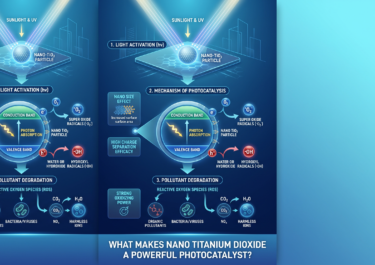
What Makes Nano Titanium Dioxide a Powerful Photocatalyst?

Imagine a world where building windows clean themselves, urban smog is neutralized by the very sidewalks we walk on, and hospital surfaces actively destroy dangerous superbugs using nothing but room lighting. This might sound like science fiction, but it is rapidly becoming our reality. The driving force behind this technological leap? A microscopic marvel known as Nano Titanium Dioxide (TiO2).

Read more 

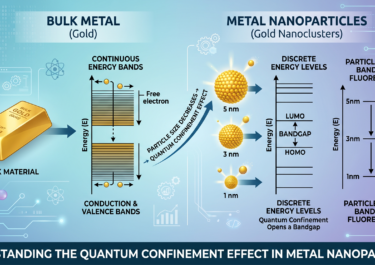
Understanding the Quantum Confinement Effect in Metal Nanoparticles

When we look at the physical world around us, we expect matter to behave in predictable ways. A block of iron is hard, conductive, and magnetic; a piece of gold is shiny, inert, and yellowish. For centuries, our understanding of materials science was rooted in these bulk properties. However, as modern technology has allowed us to slice matter into infinitesimally small pieces, we have discovered a realm where the classical laws of physics begin to break down, giving way to the strange and fascinating rules of quantum mechanics.

Read more 

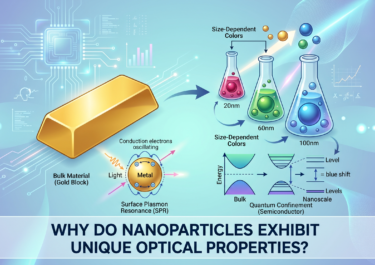
Why Do Nanoparticles Exhibit Unique Optical Properties?

If you were to take a solid bar of pure gold and break it down into smaller and smaller pieces, you would expect the tiny fragments to still look like gold. A microscopic speck of gold should, intuitively, still possess that familiar shiny, yellowish hue. However, the universe plays a fascinating trick on us when we enter the realm of the extremely small. If you shrink that gold down to the nanoscale—to particles just a few billionths of a meter across—it suddenly stops being yellow. Instead, a solution of gold nanoparticles might appear vibrant ruby red, deep purple, or even blue.

Read more 

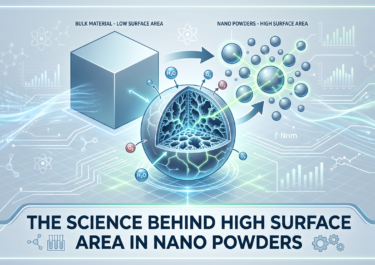
The Science Behind High Surface Area in Nano Powders

The world of materials science is currently undergoing a profound revolution, and paradoxically, the driving force behind this massive shift is incredibly small. Nanotechnology—the manipulation of matter on an atomic and molecular scale—has transitioned from a theoretical concept into a cornerstone of modern manufacturing, medicine, and energy storage. At the very heart of this technological leap are nano powders. Ranging typically from 1 to 100 nanometers in size, these ultra-fine particles are redefining what is physically and chemically possible.

Read more 

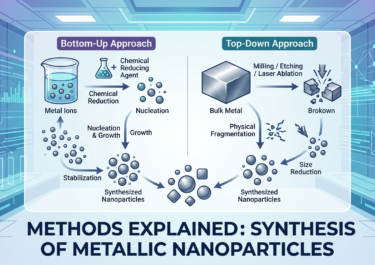
How Are Metallic Nanoparticles Synthesized? Methods Explained

The world of materials science is undergoing a quiet but profound revolution. For centuries, humanity has utilized metals in their bulk forms to build bridges, forge tools, and wire cities. However, in recent decades, scientists have discovered that when you take a seemingly ordinary metal and shrink it down to an almost incomprehensibly small size, the fundamental rules of physics and chemistry change. At the nanoscale, gold can become a deep red or purple liquid, silver becomes a potent weapon against bacteria, and iron can be manipulated to hunt down cancer cells.

Read more 

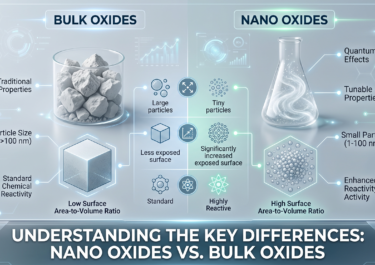
Nano Oxides vs. Bulk Oxides: Understanding the Key Differences

Metal oxides are the unsung heroes of both the natural world and industrial manufacturing. From the rust forming on a piece of exposed iron to the advanced ceramics shielding spacecraft from the intense heat of atmospheric reentry, oxides are everywhere. Traditionally, industries have relied on these materials in their “bulk” form—macroscopic powders, solid blocks, and thick coatings. However, modern materials science has unlocked a new frontier by taking these exact same chemical compounds and shrinking them down to the nanoscale.

Read more 

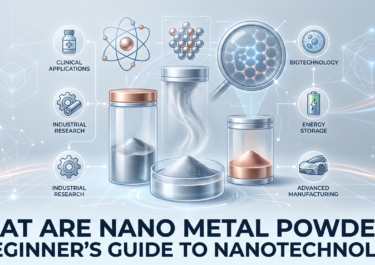
What Are Nano Metal Powders? A Beginner’s Guide to Nanotechnology

Welcome to the invisible revolution. When we think of metals, we typically picture solid, heavy, and immutable objects—steel girders holding up skyscrapers, copper wires routing electricity, or aluminum panels on automobiles. However, when you take these exact same metals and shrink them down to the nanoscale, the traditional rules of physics and chemistry begin to blur. At this microscopic level, metals cease to be just structural materials and transform into highly reactive, deeply versatile, and incredibly powerful tools.

Read more 

How to Source Certified Nano Metal Powders Globally

Nanotechnology is no longer a concept confined to the pages of sci-fi novels or elite university laboratories. Today, it drives a multi-billion-dollar global manufacturing supply chain. At the heart of this revolution are nano metal powders—engineered metallic particles measuring between 1 and 100 nanometers. From aerospace components and next-generation electronics to advanced biomedical implants and highly efficient chemical catalysts, these ultra-fine materials are rewriting the rules of industrial performance.

Read more 

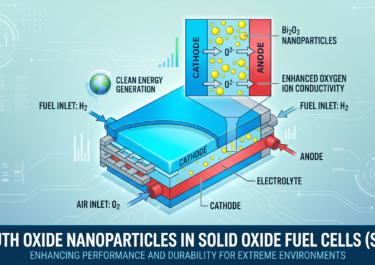
Bismuth Oxide Nanoparticles in Solid Oxide Fuel Cells (SOFCs)

The global transition toward clean, sustainable energy is the defining technological challenge of our era. While solar panels and wind turbines are highly visible champions of this green revolution, they share a common flaw: intermittency. The wind doesn’t always blow, and the sun doesn’t always shine. To build a truly resilient power grid, we need technology that generates clean, continuous electricity on demand.

Read more 

Molybdenum Nanoparticles: Lubricants and Coatings for Extreme Environments

In the realm of advanced engineering, friction is the ultimate enemy. It is the invisible force that drains energy, generates catastrophic heat, and ultimately destroys the moving parts of our most vital machines. For everyday applications, conventional liquid oils and greases do a magnificent job of keeping this enemy at bay. However, as human ambition pushes technology into more extreme environments—from the icy vacuum of deep space to the blistering heat of industrial turbines—traditional liquid lubricants spectacularly fail. They boil off, freeze solid, or simply get crushed under immense pressure.

Read more 

Cerium Oxide (CeO2) in Automotive Catalyst Converters

Every time you turn the key in your car’s ignition, a miniature symphony of controlled explosions begins under the hood. While these explosions give us the power to traverse continents, they also produce a toxic cocktail of gases: carbon monoxide, nitrogen oxides, and unburned hydrocarbons. Fortunately, before these harmful pollutants can escape the tailpipe and choke our atmosphere, they are forced through a metallic honeycomb hidden beneath the car—the catalytic converter.

Read more 

Tungsten Carbide Nanoparticles for High-Wear Industrial Tools

In the relentless world of heavy industry, the battle against friction, heat, and time is never-ending. Whether it is deep-earth mining, aerospace engineering, or precision automotive machining, the tools used to shape, cut, and drill our modern world take an unimaginable beating. For decades, the undisputed champion of these extreme environments has been tungsten carbide. Known for its incredible hardness and durability, it has been the backbone of high-wear industrial tools. However, as our engineering ambitions have grown, so too have the demands we place on our materials. Enter the microscopic revolution: Tungsten Carbide (WC) nanoparticles.

Read more 

Tin Oxide (SnO2) Nanoparticles in Gas Sensor Manufacturing

We live in a world surrounded by an invisible ocean of gases. While oxygen and nitrogen sustain life, our modern industrial society also produces a complex mixture of volatile organic compounds (VOCs), toxic emissions, and combustible gases. Our human noses, though biologically remarkable, are entirely blind to many of these invisible threats, such as carbon monoxide or dangerous methane leaks. To survive and thrive, we have had to invent “electronic noses.”

Read more 

Why Biomedical Labs Prefer Spherical Gold Nanoparticles

Humanity’s fascination with gold has spanned millennia. From ancient Egyptian pharaohs to modern-day economies, this precious metal has always been a symbol of wealth, beauty, and endurance. However, in the 21st century, the true value of gold is not found in bank vaults or jewelry stores. Instead, it is found inside cutting-edge biomedical laboratories, operating at a scale thousands of times smaller than the width of a single human hair.

Read more 

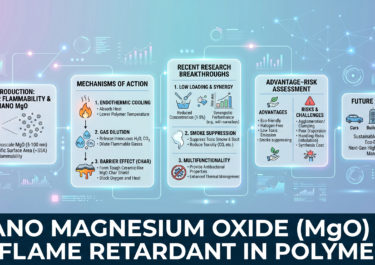
Nano Magnesium Oxide (MgO) as a Flame Retardant in Polymers

Plastics, or polymers, have revolutionized modern life. They are in our cars, our electronics, our homes, and even our clothes. However, this ubiquity comes with a hidden danger: most synthetic polymers are highly flammable. When they ignite, they burn rapidly, release immense heat, and produce thick, toxic smoke, which is often the primary cause of casualties in fires.

Read more 

How Cobalt Nanoparticles Are Upgrading Magnetic Storage Devices

The post would start by tracing the history of data storage from early, room-sized hard drives to modern, pocket-sized devices. It would explain the current bottleneck: hard drive manufacturers are hitting the physical limits of how small magnetic bits can be made using traditional materials without data flipping randomly (the “superparamagnetic limit”). Nanotechnology, specifically the use of engineered cobalt nanoparticles, is introduced as the solution to pack more data than ever before into smaller spaces.

Read more