
Recently added item(s)
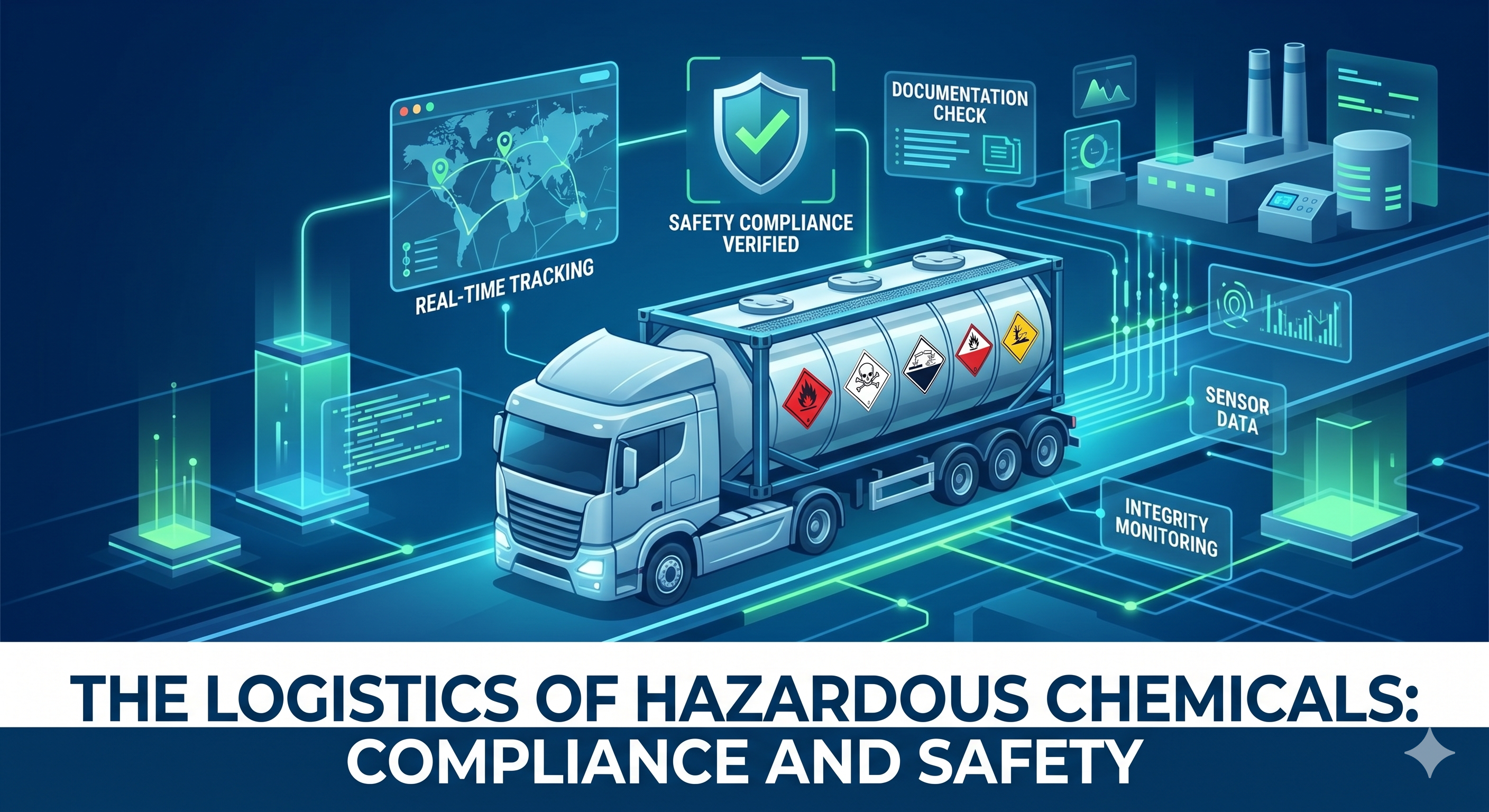
The global economy is built on a foundation of chemicals. From the lithium-ion batteries in our smartphones to the advanced polymers in medical devices and the specialized metal powders used in aerospace, hazardous materials (hazmat) are the silent engine of modern life. However, moving these substances from a synthesis lab to an industrial plant is a high-stakes operation. The logistics of hazardous chemicals is not merely a matter of transportation; it is a complex intersection of chemistry, international law, engineering, and digital risk management.
As supply chains become more globalized and the demand for highly reactive or specialized materials—such as micronized metal powders and carbon nanotubes—increases, the margin for error shrinks to zero. A single failure in compliance or safety protocols can lead to catastrophic environmental damage, loss of life, and irreversible brand damage. This article explores the intricate world of hazardous chemical logistics, the regulations that govern it, and the cutting-edge technologies ensuring its safety.
1. The Global Regulatory Framework: The “Alphabet Soup” of Compliance
Navigating the logistics of hazardous materials requires an understanding of a multi-layered regulatory landscape. These laws are designed to ensure that every person handling a chemical, from the warehouse worker to the sea captain, knows exactly what is inside the container and how to react in an emergency.
The UN “Orange Book” and GHS
The foundation of all chemical logistics is the UN Recommendations on the Transport of Dangerous Goods, often called the “Orange Book.” This framework provides the basis for the Globally Harmonized System of Classification and Labelling of Chemicals (GHS). GHS standardizes how chemicals are classified (e.g., flammable, toxic, corrosive) and how that information is communicated via Safety Data Sheets (SDS) and standardized pictograms.
Modal Regulations
Depending on the method of transport, different international treaties apply:
-
ADR (Road): The European Agreement concerning the International Carriage of Dangerous Goods by Road. It dictates everything from vehicle construction to driver training.
-
IMDG Code (Sea): The International Maritime Dangerous Goods Code, which governs how chemicals are stowed on massive container ships to prevent reactive substances from being placed near each other.
-
IATA DGR (Air): The International Air Transport Association Dangerous Goods Regulations, the strictest of all, as an incident at 30,000 feet is significantly harder to manage.
For an entrepreneur or logistics manager, compliance means ensuring that every shipment has the correct UN Number, proper packaging groups (I, II, or III), and a compliant SDS available in the local language of every country the shipment passes through.
2. The Science of Containment: Packaging and Storage Engineering
In chemical logistics, the “package” is the first and most critical line of defense. Standard cardboard boxes are replaced by UN-certified drums, Intermediate Bulk Containers (IBCs), and specialized ISO tanks.
Specialized Handling for Advanced Materials
The logistics requirements become even more stringent when dealing with advanced materials like metal powders (e.g., Nickel, Tungsten, or Aluminum) and carbon nanotubes. Some metal powders are pyrophoric, meaning they can ignite spontaneously when exposed to air, while others are “water-reactive,” producing flammable gases upon contact with moisture.
For these materials, logistics involves:
-
Inerting: Filling the headspace of containers with Argon or Nitrogen to displace oxygen.
-
Double-Wall Containment: Using reinforced vessels to prevent punctures.
-
Climate Control: Maintaining specific temperature and humidity levels to prevent chemical degradation or unintended reactions.
Recent research in material science has led to the development of “smart packaging” that uses nano-coatings to detect leaks. These coatings can change color or send an electronic signal if they detect a specific chemical vapor, allowing for intervention long before a spill becomes a disaster.
3. The Human Factor: Training and Emergency Response
Even with the best packaging, the human element remains a significant variable. Logistics safety is heavily dependent on the Dangerous Goods Safety Advisor (DGSA). This role is a legal requirement for many companies involved in hazmat transport.
Training Protocols
Drivers and warehouse staff must undergo specialized training that covers:
-
Segregation Rules: Knowing that you cannot store Class 8 (Corrosives) next to Class 4.3 (Dangerous when wet).
-
Spill Containment: The immediate use of “universal binders” and neutralizers.
-
PPE (Personal Protective Equipment): Proper selection of respirators, chemical-resistant suits, and gloves based on the SDS.
A critical study in the Journal of Loss Prevention in the Process Industries highlighted that over 60% of transport incidents are caused by “procedural non-compliance,” often due to a lack of understanding of the specific risks associated with newer, complex materials. Continuous education is the only antidote to this risk.
4. Technological Innovations: IoT, AI, and Real-Time Tracking
The future of hazardous logistics is digital. The “Internet of Things” (IoT) has transformed the way we monitor chemicals in transit.
Real-Time Sensor Fusion
Modern chemical shipments are often equipped with sensors that track:
-
Temperature and Pressure: Crucial for volatile organic compounds or pressurized gases.
-
Shock and Vibration: Essential for sensitive chemical catalysts or glass-bottled reagents.
-
GPS and Geofencing: Ensuring that a truck carrying hazardous materials does not enter a protected water-source area or a high-density city center unless permitted.
AI and Predictive Safety
Artificial Intelligence is now being used to model “what-if” scenarios. In the event of a vehicle accident, AI-driven software can instantly calculate the “plume model” (the spread of chemical gas) based on current wind speed, humidity, and the volume of the spill. This allows emergency services to evacuate the correct areas with surgical precision.
5. Advantage-Risk Assessment: The Strategic Balance
Managing hazardous logistics is a high-cost, high-responsibility endeavor. Organizations must constantly weigh the economic advantages against the inherent risks.
| Feature | Advantage of Professional Compliance | Risk of Non-Compliance / Poor Logistics |
| Market Access | Ability to ship high-value specialized chemicals globally. | Immediate “Stop-Work” orders and seizure of goods. |
| Operational Continuity | Predictable supply chains with minimal insurance claims. | Massive financial losses from cleanup and litigation. |
| Brand Reputation | Recognized as a reliable partner in advanced manufacturing. | Public relations disasters (e.g., chemical spills in waterways). |
| Safety | Protection of employees, the public, and the environment. | Irreversible environmental damage and potential loss of life. |
| Costs | Higher upfront costs for certified packaging and training. | Unlimited liability and “blacklisting” from major carriers. |
6. Clinical Perspectives: The Health Impact of Logistics Failures
From a “clinical” or public health perspective, the failure of chemical logistics can have long-lasting effects. Recent longitudinal studies on populations exposed to chemical spills (such as the East Palestine train derailment) have shown that the “toxicological footprint” extends far beyond the initial cleanup.
Inhalation of micronized powders or exposure to volatile organic compounds (VOCs) can lead to acute respiratory distress syndrome (ARDS) or chronic pulmonary conditions. This is why Safety Data Sheets (SDS) now include more detailed toxicological data and “Exposure Limits” (DNEL/PNEC) that logistics providers must respect. Ensuring that transport routes avoid sensitive ecological zones and densely populated areas is not just a legal requirement; it is a public health necessity.
7. The Future of Sustainable Chemical Logistics
As the world moves toward “Green Chemistry,” the logistics sector is also evolving. There is a growing movement to reduce the carbon footprint of the transport itself. This includes:
-
Sustainable Packaging: Moving away from single-use plastics to recyclable, high-durability composites.
-
Optimized Routing: Using AI to find the shortest, safest paths, reducing fuel consumption and exposure time.
-
Electric/Hydrogen Hazmat Vehicles: Transitioning the fleet to zero-emission vehicles, though this presents its own challenges in terms of battery safety in the presence of reactive chemicals.
Conclusion
The logistics of hazardous chemicals is a silent but vital discipline that bridges the gap between scientific innovation and industrial application. For founders and engineers working with advanced materials—be it graphene, carbon nanotubes, or micronized metal powders—logistics is as much a part of the “product” as the chemical itself.
Ensuring quality and purity starts in the lab, but it is maintained through a rigorous, compliant, and technologically advanced supply chain. By embracing global standards, investing in the latest sensor technologies, and prioritizing human training, the industry can ensure that the chemicals powering our future arrive safely, today.