
Recently added item(s)
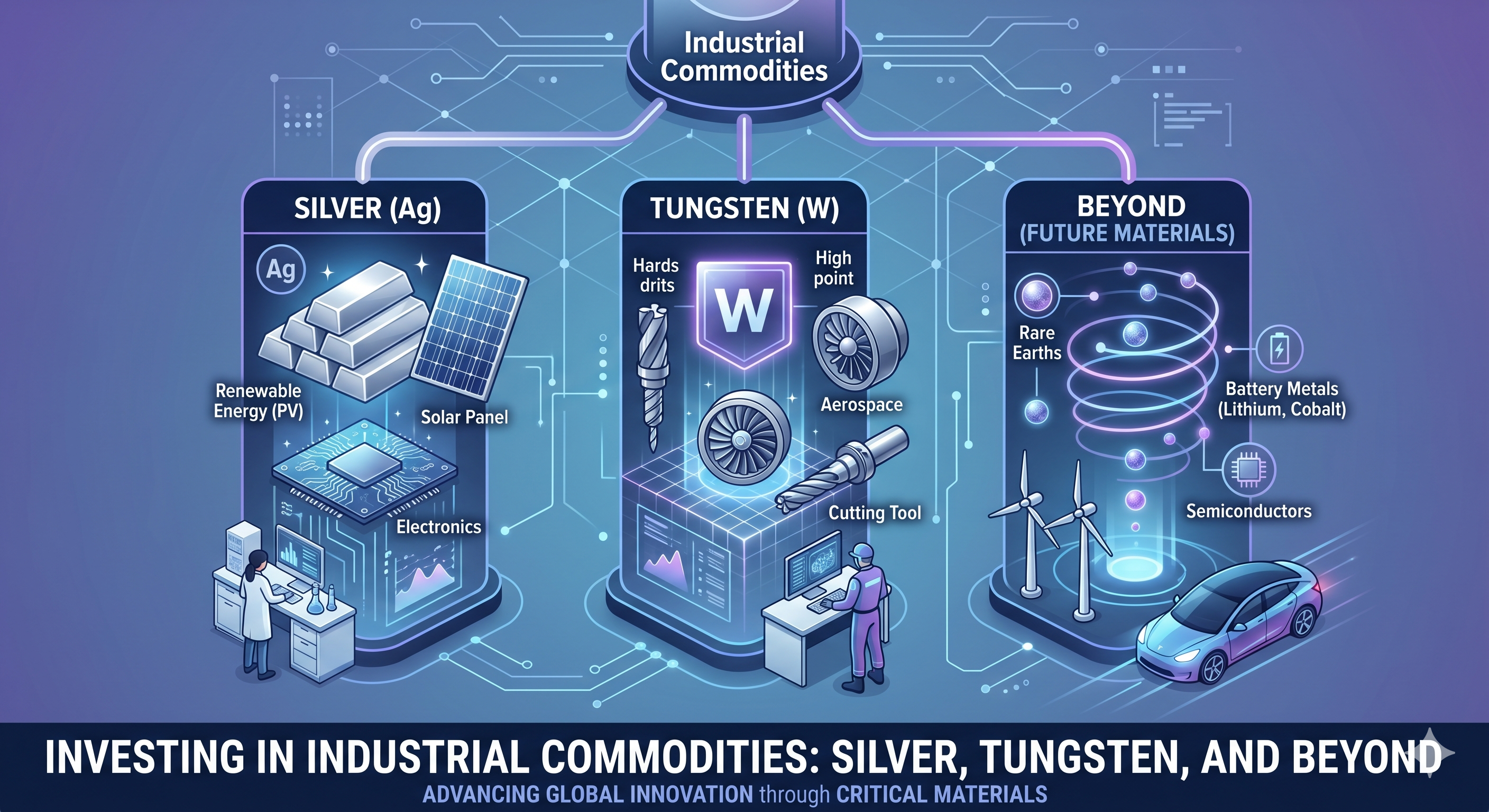
Industrial commodities are essential materials that form the basis of a functioning global economy. These tangible assets, often mined or extracted, are critical across a vast array of sectors, from infrastructure development to high-tech manufacturing and clean energy. While the term “commodities” can include energy, metals, and agricultural products, this article will focus on the investing landscape of non-ferrous metals and rare earths, with a particular emphasis on two highly versatile and increasingly critical elements: silver and tungsten. We’ll also peek into the fascinating and crucial world of “beyond,” looking at the factors that will shape the future of industrial commodity investment.
A Scientific, Yet Strategic Perspective: Why Commodity Data Matters
Commodity markets are inherently driven by fundamental scientific and geological principles. The price of any commodity, at its core, is a reflection of its scarcity (geological availability), the cost of extraction (engineering and technology), and its unique physical and chemical properties (which determine its specific industrial applications). Understanding the science behind these materials is not just for academics; it’s a prerequisite for any serious investor looking to make informed, data-driven decisions. For example, knowing that silver is the best known electrical and thermal conductor among all metals is key to forecasting its long-term demand in a world transitioning to renewable energy. Similarly, understanding tungsten’s exceptional hardness and melting point is essential to realizing its indispensability in cutting-edge aerospace and defense manufacturing. Science, in this context, becomes a framework for predicting supply and demand imbalances, which are the fundamental drivers of commodity price movements.
The Power of Precious and Practical: Silver (Ag)
Silver is a metal of dual nature. It holds historical prestige as a monetary asset and a store of value, often moving in tandem with gold during times of economic uncertainty. However, in the modern era, its industrial utility has far surpassed its traditional role. Silver possesses a unique combination of properties: it is the most electrically and thermally conductive, the most reflective, and has significant anti-microbial qualities.
Modern Science and Clinical Applications
-
Medical and Antimicrobial Properties: Beyond its traditional use in wound dressings, recent clinical studies are exploring silver-based compounds as potent antimicrobial agents in medical implants and devices to combat antibiotic-resistant bacteria. A 2023 study published in Advanced Healthcare Materials demonstrated the effectiveness of silver-nanoparticle-coated implants in reducing postoperative infections. The data showed a significantly lower rate of bacterial colonization compared to non-coated controls, suggesting a substantial future application.
-
Nanotechnology and Advanced Electronics: Silver’s conductivity makes it irreplaceable in high-end electronics. The trend towards miniaturization is pushing demand for silver ink in printed electronics and conductive adhesives. Research is ongoing to develop new silver-based nanocomposites with enhanced durability and transparency, a key research area for flexible displays and next-generation touchscreens.
-
A “Green” Giga-Trend: The most significant driver of industrial silver demand is the green energy transition. Silver is a critical component in photovoltaic (PV) cells, which convert sunlight into electricity. As the world accelerates solar capacity installations, the demand for silver is projected to grow substantially. Recent data from the Silver Institute indicates that the photovoltaic sector now accounts for over 10% of total global silver fabrication, a percentage that is set to rise. For every gigawatt of new solar capacity installed, tons of silver are required.
The Metal of Extreme Strength: Tungsten (W)
Tungsten, with the chemical symbol W (from its Latin name wolframium), is a metal defined by extremes. It has the highest melting point of all metals (3422°C or 6192°F) and the second-highest of all elements. It is also exceptionally dense and boasts remarkable hardness, particularly when formed into tungsten carbide.
Critical Industrial Applications and Strategic Importance
-
Hard Metals and Machining: Over 60% of global tungsten consumption is in the form of tungsten carbide, used for cutting tools, drill bits, and wear-resistant parts in the mining, construction, and oil and gas industries. Its hardness is rivaled only by diamond, making it essential for shaping and machining other tough materials.
-
High-Temperature Alloys: The unparalleled melting point of tungsten makes it an indispensable component in superalloys for aerospace (e.g., turbine blades), defense (e.g., kinetic energy penetrators), and nuclear power. As nations invest heavily in defense and energy independence, demand for these specialized alloys is rising.
-
The Electronic Frontier: Tungsten is increasingly used in the semiconductor industry. Its ability to withstand high temperatures and prevent metal diffusion is critical for the “metallization” phase of microchip production, particularly in advanced 3D NAND and logic chips. Research by organizations like the International Tungsten Industry Association highlights the metal’s growing role in a range of microelectronic and optoelectronic applications.
Going “Beyond”: Identifying the Future of Critical Materials
While silver and tungsten are critical components, the commodity market is constantly evolving. Savvy investors look beyond the obvious. Here are key areas of current research that highlight future-critical materials:
-
Rare Earth Elements (REEs): Elements like Neodymium and Praseodymium are crucial for creating high-strength permanent magnets used in electric vehicles (EVs) and wind turbines. Dysprosium and Terbium, also REEs, are added to these magnets to allow them to operate efficiently at high temperatures.
-
Battery Metals: The EV revolution is a powerful driver for Lithium, Cobalt, Nickel, and Graphite. These elements are the building blocks of modern lithium-ion batteries. Supply chains for these materials are often constrained and geometrically concentrated, presenting both risks and high-growth potential.
-
Minor Metals and High-Tech Applications: Indium is essential for transparent conductive coatings in flat-panel displays. Gallium is critical for compound semiconductors used in 5G infrastructure and LEDs. Tellurium is a key component in a specific type of thin-film solar panel (Cadmium Telluride).
Advantages and Risks of Investing in Industrial Commodities
Investing in industrial commodities offers unique opportunities but also comes with distinct risks. A balanced perspective is crucial.
Advantages:
-
Fundamental Demand: These are non-discretionary assets. A bridge cannot be built without steel and tungsten, and a solar panel cannot be made without silver.
-
Inflation Hedge: Hard assets often perform well during periods of high inflation as their intrinsic value tends to rise with price levels.
-
Exposure to Giga-Trends: Investments can be positioned to benefit from multi-decade shifts like the green energy transition, global urbanization, and advanced manufacturing.
-
Portfolio Diversification: Commodities often have a low correlation with traditional asset classes like stocks and bonds, potentially reducing overall portfolio risk.
Risks:
-
Macroeconomic Sensitivity: Commodity prices are highly correlated with the health of the global economy. A recession can sharply reduce industrial demand and lead to a painful price correction.
-
Supply Dynamics: New mines coming online or technological breakthroughs that reduce the need for a specific metal can significantly impact supply.
-
Geopolitical and Political Risk: The production of many critical metals is concentrated in a few countries. Policy shifts, resource nationalism, trade wars, or civil unrest can disrupt supply chains.
-
Currency Fluctuations: Most industrial commodities are priced in U.S. dollars. A strengthening dollar can make these metals more expensive for foreign buyers, dampening demand.
-
Technological Substitution: Advancements can lead to the development of alternative materials that are cheaper or perform better. For example, research into finding a replacement for cobalt in batteries is an ongoing effort.
Conclusion: A Strategic and Informed Outlook
Investing in industrial commodities like silver, tungsten, and the critical metals that will define the future requires a long-term, strategic perspective informed by both market dynamics and technological progress. By understanding the fundamental supply and demand drivers, the impact of emerging giga-trends, and the unique properties of these materials, investors can better navigate the opportunities and challenges of this dynamic and essential market. The key is thorough research, constant monitoring of global economic health, and a healthy appreciation for the risks involved. While the path may be volatile, the long-term fundamentals suggest that the materials that build our world will continue to be a vital part of well-diversified investment portfolios.