
Recently added item(s)
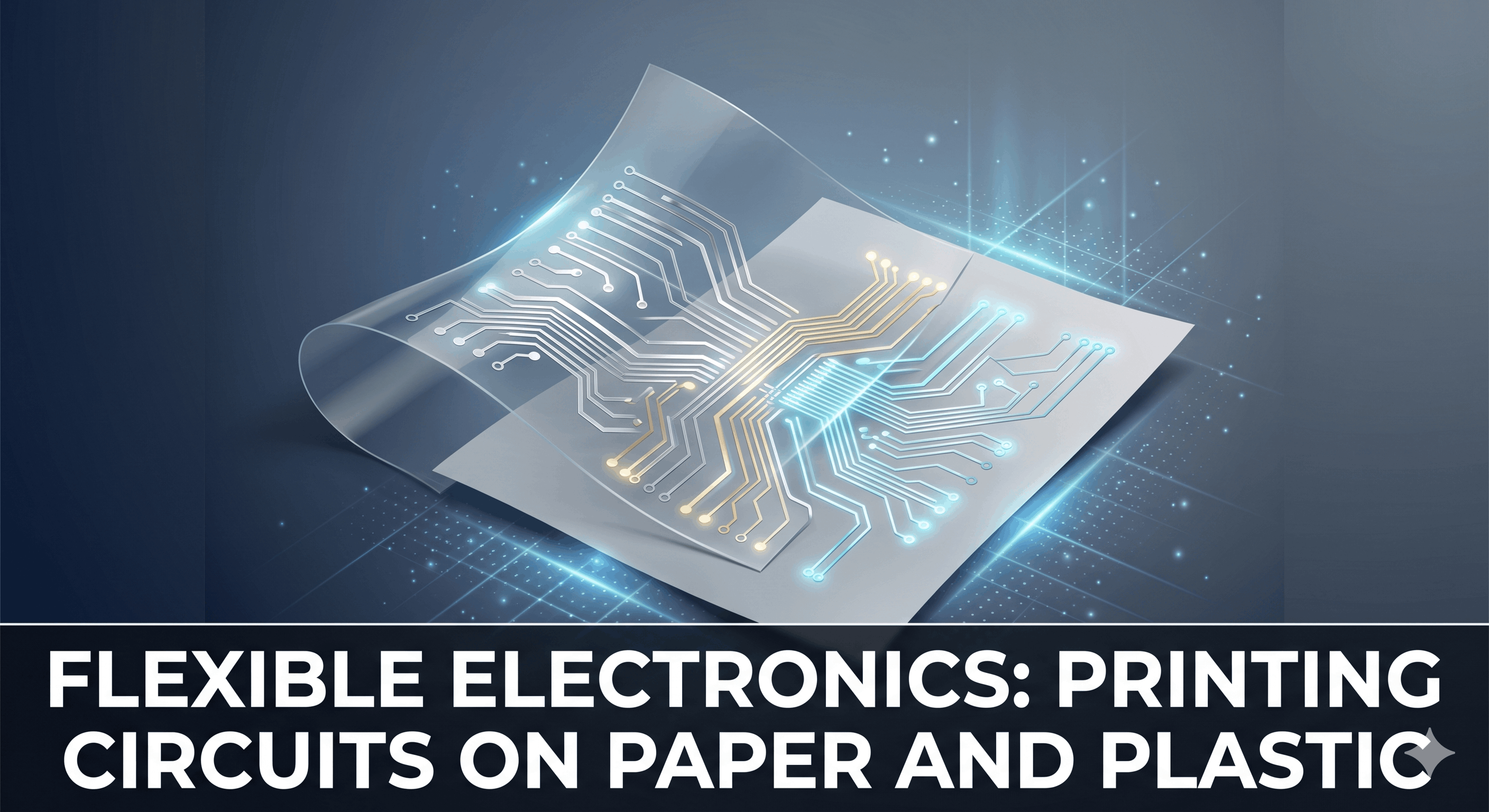
For over half a century, the word “electronics” has been synonymous with rigid, green fiberglass boards, stiff silicon chips, and bulky enclosures. We have lived in a world of hard angles and fragile components. However, a quiet revolution is currently unfolding in laboratories and high-tech manufacturing facilities. The future of technology is no longer rigid—it is bendable, foldable, and even wearable.
Flexible electronics, often referred to as “flex circuits” or “printed electronics,” represent a paradigm shift where electronic devices are built on non-rigid substrates like plastic films or even standard cellulose paper. This technology is not just about making devices that don’t break when you drop them; it’s about integrating intelligence into the very fabric of our daily lives—from smart bandages that monitor wound healing to food packaging that tells you if the milk has spoiled.
The Foundation: Why Paper and Plastic?
The core of flexible electronics lies in the substrate—the base material upon which the circuit is built. While traditional electronics use FR4 (flame-retardant fiberglass), flexible systems utilize materials that can endure repeated mechanical stress.
1. Plastic Substrates (PET, PEN, and PI)
Polymers like Polyethylene Terephthalate (PET) and Polyimide (PI) are the workhorses of the industry.
-
PET is the same material used in soda bottles; it is cheap, transparent, and possesses excellent moisture resistance.
-
PI (Polyimide) is used for high-performance applications because it can withstand the high temperatures required for some industrial soldering processes. These plastics allow for “Roll-to-Roll” (R2R) manufacturing, a process similar to how newspapers are printed, enabling the production of kilometers of circuitry in a single continuous run.
2. The Rise of Paper Electronics
Paper is perhaps the most exciting substrate for the 2026 economy. It is biodegradable, extremely low-cost, and ubiquitous. By using specialized coatings to manage its porosity, researchers are now printing fully functional sensors and batteries directly onto cellulose. This opens the door to “disposable electronics”—devices intended for a single use that can be recycled or composted along with their packaging.
The Magic in the Ink: Conductive Materials
To print a circuit, you need “ink” that can conduct electricity. This is where nanotechnology and material science take center stage. We are moving away from traditional wire bonding toward liquid-phase electronics.
-
Silver Nanoparticle Inks: These are currently the industry standard. They offer high conductivity and can be “sintered” (fused) at relatively low temperatures, making them compatible with plastic substrates that would melt under traditional heat.
-
Carbon Nanotubes and Graphene: As we enter 2026, carbon-based inks are seeing massive adoption. Graphene, in particular, is prized for its incredible mechanical strength and electrical mobility. Unlike silver, carbon doesn’t oxidize, making these circuits more durable for long-term use in harsh environments.
-
Liquid Metals: Gallium-based alloys that remain liquid at room temperature are being used for “stretchable” electronics. These circuits can be pulled like a rubber band and still maintain a perfect electrical connection.
Printing Techniques: From Inkjet to Screen Printing
The ability to “print” a circuit is what makes this technology so scalable. Instead of the complex, multi-step lithography used for silicon chips, flexible electronics utilize several streamlined methods:
-
Inkjet Printing: Much like a home office printer, an inkjet head deposits tiny droplets of conductive ink exactly where they are needed. This is ideal for rapid prototyping and customized “on-demand” electronics.
-
Screen Printing: This is the most mature technique, used for high-volume production of sensors and membrane switches. It is fast and can handle thicker, more viscous inks.
-
Gravure and Flexography: These are high-speed industrial processes used for large-scale production of RFID tags and smart packaging.
Clinical Insights and Medical Applications
The most profound impact of flexible electronics is being felt in the healthcare sector. Because these circuits can conform to the human body, they allow for continuous, non-invasive monitoring.
Clinical Study Focus: Epidermal Electronics (E-Skin)
Recent clinical trials in 2025 and early 2026 have focused on “Electronic Skin”—ultrathin, flexible patches that adhere to the skin like a temporary tattoo.
-
Continuous Glucose Monitoring: Clinical studies have demonstrated that printed electrochemical sensors on flexible substrates can monitor glucose levels through interstitial fluid (the fluid between cells), eliminating the need for daily finger-pricks.
-
Cardiac Monitoring: Flexible ECG patches are now being used in post-surgery recovery. Unlike traditional bulky monitors, these flexible patches allow patients to move freely while providing hospital-grade data to doctors via wireless links.
-
Wound Care: Smart bandages equipped with moisture and pH sensors are being tested in clinical settings to detect the earliest signs of infection in chronic wounds, such as diabetic ulcers, before any visible symptoms appear.
Current Research Frontiers (2025–2026)
Research is currently pushing the boundaries of what these materials can do, focusing on “closing the loop” between hardware and biological systems.
-
Biodegradable Circuits: Researchers are developing “transient electronics” made of silk proteins and magnesium circuits that completely dissolve in the body or the environment after a set period. This solves the burgeoning problem of e-waste.
-
Self-Healing Electronics: New polymers are being integrated into flexible circuits that can “heal” themselves. If a printed trace on a plastic substrate is cracked or cut, the material automatically reforms its chemical bonds, restoring electrical conductivity within seconds without human intervention.
-
Neuromorphic Printed Logic: Scientists are beginning to print transistors that mimic the way human neurons work. These “brain-like” circuits can process information locally on a flexible patch, reducing the need to send large amounts of data to the cloud, which saves battery life and increases privacy.
Advantage vs. Risk: A Detailed Evaluation
As we transition toward a more flexible world, it is vital to weigh the benefits against the potential drawbacks.
The Advantages
-
Cost: Printing electronics is significantly cheaper than traditional semiconductor manufacturing. It requires less energy, fewer hazardous chemicals, and allows for massive scale.
-
Form Factor: The ability to bend, roll, or stretch electronics allows them to be integrated into clothing, aerospace components, and curved architectural surfaces.
-
Weight: Flexible electronics are incredibly light, which is a critical advantage for the aerospace and electric vehicle (EV) industries, where every gram saved translates to better range and efficiency.
The Risks and Challenges
-
Durability and Lifecycle: While flexible, these materials can eventually fail due to “mechanical fatigue” after thousands of bends. Ensuring that a foldable phone screen or a wearable sensor lasts for years is an ongoing engineering challenge.
-
Performance Gap: Silicon is still king when it comes to raw processing power. Printed transistors are much slower than their rigid counterparts, meaning flexible electronics are currently better suited for sensing and simple logic rather than high-end computing.
-
Sustainability of Inks: While paper is biodegradable, the silver or copper nanoparticles used in the ink often are not. Developing truly “green” conductive inks that are both high-performing and environmentally benign is a primary focus for 2026 research.
The Road Ahead: A Seamless Future
The goal of flexible electronics is to make technology “invisible.” We are moving away from devices that we carry and toward systems that are integrated. Imagine a world where your wallpaper monitors the air quality, your jacket charges your phone using printed solar cells, and your skin provides a real-time dashboard of your internal health.
By moving circuits from the rigid cage of the circuit board onto the versatile surfaces of paper and plastic, we are not just changing how electronics are made—we are changing our relationship with technology itself. It is no longer a tool we hold; it is a layer of intelligence that wraps around our world.