
Recently added item(s)
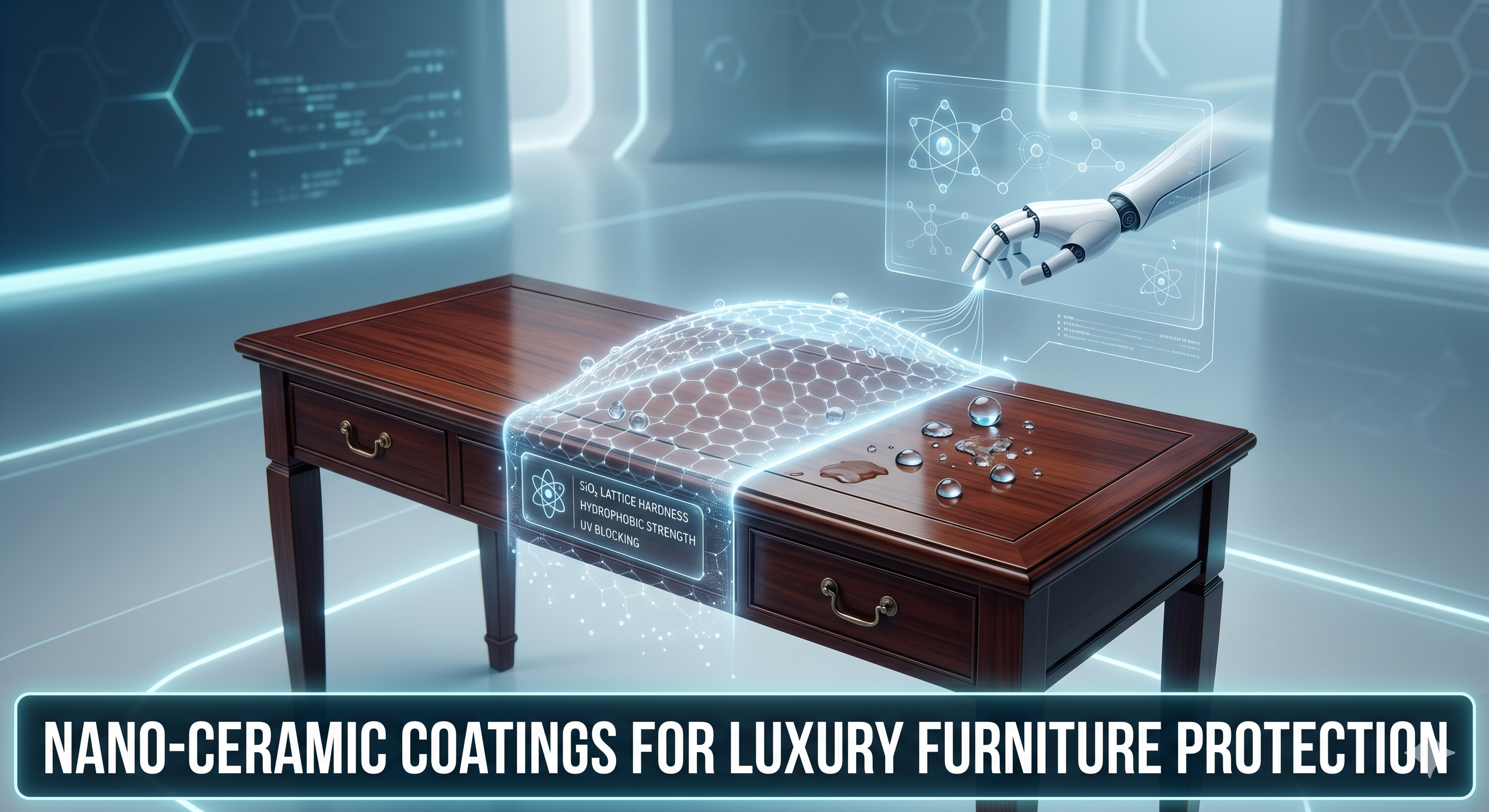
Luxury furniture is more than just functional décor; it is an investment in artistry, craftsmanship, and ambiance. Whether it is an antique mahogany dining table, a supple Italian leather sofa, or a contemporary piece featuring polished marble and exotic veneers, these items often represent significant financial and emotional value. However, the very materials that define their luxury—delicate wood grains, porous stones, and high-quality textiles—are the ones most vulnerable to the hazards of daily life: spills, scratches, sunlight, and humidity.
Traditional protection methods, such as waxes, polishes, and lacquers, often suffer from a critical flaw: they sit primarily on top of the surface. Waxes melt away, lacquers are brittle and susceptible to cracking, and many finishes require regular reapplication to remain effective. In recent years, the material science industry has witnessed a paradigm shift toward a much more sophisticated solution: Nano-Ceramic Coatings.
By harnessing the principles of nanotechnology, these advanced coatings offer an entirely new approach to preservation—creating an “invisible armor” that bonds with materials at a molecular level, offering durability that traditional methods simply cannot match.
What Exactly is a Nano-Ceramic Coating?
To understand how these coatings work, we must first look at the science of “nano.” A nanometer is one-billionth of a meter. For context, a sheet of paper is about 100,000 nanometers thick. Nanotechnology involves manipulating matter at this microscopic atomic and molecular level.
Nano-ceramic coatings are essentially liquid formulations that utilize nanoparticles—most commonly Silicon Dioxide (SiO₂) or, less frequently, Titanium Dioxide (TiO₂). SiO₂, in particular, is the core component of quartz and glass. When applied to a surface, these nanoparticles are so incredibly small that they can penetrate and fill the microscopic pores of virtually any substrate, whether it is wood, leather, metal, or stone.
The Mechanism of Molecular Bonding
Unlike traditional finishes that rely on mechanical adhesion (clinging to surface imperfections), nano-ceramic coatings create a chemical covalent bond with the substrate. As the carrier liquid in the formulation evaporates, the ceramic nanoparticles undergo a process of polymerization, effectively turning from a liquid into a flexible, glass-like layer that becomes an inseparable extension of the furniture itself.
This resulting layer is incredibly dense and smooth. Because it is so smooth, it drastically lowers the “surface energy” of the furniture. When a material has low surface energy, it relentlessly repels other substances. This is the science behind the “lotus effect”—the high hydrophobicity that causes water to bead up and roll off rather than penetrate.
The Specialized Application of Nano-Ceramic on Luxury Materials
Luxury furniture utilizes a wide spectrum of materials, and one of the most remarkable features of advanced nano-ceramic engineering is its versatility.
Wood (Antique, Veneered, and Lacquered)
Wood is the quintessential luxury material, but it is also a sponge for humidity and an easy target for scratches.
-
Pore Filling: High-end finishes like French polish or nitrocellulose lacquer are beautifully clear but incredibly brittle and easily marked by water rings or minor abrasions. A specialized ceramic coating for wood fills the microscopic grain without blocking the natural beauty, adding flexibility and toughness to the existing finish.
-
The Humidity Battle: One of the main reasons antique or exotic wood furniture cracks or warps is the cycle of absorption and desorption of atmospheric humidity. Nano-ceramic coatings significantly slow the speed at which moisture vapor enters or leaves the wood, creating dimensional stability.
Luxury Leather
Protecting high-quality leather (like aniline or semi-aniline) while maintaining its natural “hand” (feel and texture) has long been a challenge. Traditional products are often heavy creams or conditioners that clog pores.
-
Maintained Breathability: Specialized nano-leather coatings are engineered to have high flexibility and permeability at the nano-level. They allow the leather to breathe while still providing a robust barrier against oil and water stains. They also contain critical UV inhibitors to prevent the drying, cracking, and fading that destroy expensive leather over time.
Marble, Travertine, and Exotic Metals
Marble and travertine are surprisingly porous and instantly vulnerable to acid etching from coffee, wine, or citrus. Metals like brass or copper tarnish when exposed to oxygen.
-
An Impermeable Barrier: A nano-ceramic layer on stone or metal is virtually non-porous. It creates an invisible shield that prevents liquids from ever touching the substrate. This not only stops etching and staining but also prevents metal corrosion and oxidation, keeping polished surfaces bright for years.
Current Material Testing and Scientific Validation (“Clinical Trials” for Surfaces)
While we do not subject furniture to “clinical trials” in the human sense, the material science industry relies on standardized, rigorous laboratory testing (such as ASTM or ISO standards) to validate performance claims. Independent research on the compounds used in these coatings (SiO₂ and TiO₂) confirms their unique protective properties.
Hardness Testing (Mohs and Pencil Hardness)
A key claim of ceramic coatings is their increase in scratch resistance. Many coatings market themselves with a “9H” rating. It is crucial to understand that this is Pencil Hardness, not Mohs mineral hardness (where a diamond is 10). A 9H pencil hardness means the coating can resist scratches from the hardest pencil grade available, signifying a very robust surface relative to standard wood lacquers, which often hover around 2H or 3H. Studies in coatings technology confirm that SiO₂ nanoparticles, when properly cured, create a lattice structure that significantly enhances surface hardness without sacrificing optical clarity.
Accelerated Weathering and UV Resistance
To test a coating’s ability to prevent fading on expensive upholstery or wood veneers, materials are subjected to “accelerated weathering” tests. Samples are placed in QUV chambers where they are bombarded with intense UV radiation, high temperatures, and moisture condensation. A study published in the Journal of Coatings Technology and Research investigated the effectiveness of adding TiO₂ and UV absorbers to clear wood coatings. The research demonstrated that these nano-additives significantly reduced photodegradation of the wood structure beneath, stabilizing the color of the veneer compared to untreated samples.
Hydrophobicity and Contact Angle Studies
The key metric for spill protection is the “contact angle” of a water droplet on the surface. A high contact angle (>100 degrees) means the water beads up. Research on polymer nanocomposites consistently shows that the introduction of organized SiO₂ nanoparticle arrays increases the water contact angle significantly, confirming the “easy-to-clean” and stain-resistant claims of ceramic coatings.
A Comprehensive Risk vs. Advantage Analysis
Like any sophisticated technology, nano-ceramic coatings for furniture must be evaluated for their trade-offs.
The Advantages
-
Unrivaled Durability: A cured ceramic coating is significantly harder and more resilient than waxes or traditional furniture polishes. It offers years of protection rather than months.
-
Ease of Maintenance: Statistically, nano-coated surfaces attract less dust and static. Cleaning usually requires only a damp microfiber cloth, eliminating the need for aggressive, potentially damaging cleaning chemicals.
-
Spill Protection (High Hydrophobicity): Spills sit on top of the coated surface, giving owners precious minutes to wipe them away before any absorption can occur.
-
UV Preservation: UV inhibitors built into the coating act as “sunscreen” for expensive veneers, leather, and fabrics, drastically slowing the rate of fading and discoloration.
-
Aesthetic Preservation: A high-quality coating is optically clear. It doesn’t look like a plastic bag is over the furniture; instead, it often increases the depth and clarity of the wood grain or the richness of the leather.
The Risks and Drawbacks
-
Initial Cost: Professional application of luxury-grade nano-ceramic coatings is expensive, both in terms of the product and the skilled labor required.
-
Irreversibility (The Removal Problem): This is a critical factor, particularly for antique furniture. Once a professional ceramic coating cures, you cannot simply wipe it off with a solvent. Removal often requires aggressive mechanical polishing or abrasive sanding. If applied over an antique original finish (like shellac), removal would almost certainly destroy that original finish. This makes application on priceless, museum-quality antiques highly controversial in conservation circles.
-
Application Complexity: This is not a “spray and walk away” DIY project. Proper application requires a “paint correction” mindset: the surface must be perfectly cleaned, polished, and decontaminated beforehand. Any scratch, dust speck, or fingerprint sealed under the coating is sealed permanently until the coating is mechanically removed.
-
Health and Environmental Concerns during Application: While the cured coating is inert and safe, the solvents used to keep the nanoparticles in their liquid carrier phase are often volatile organic compounds (VOCs). These require high-quality personal protective equipment (respirators) and excellent ventilation during the application phase.
The Professional Application Process: The Importance of Preparation
Understanding the process highlights why professional application is typically required for luxury furniture.
-
Decontamination: The first step is removing all existing waxes, silicones, oils, or polish residue. Even invisible oils from hands can prevent the proper chemical bonding of the coating.
-
Surface Correction: For lacquered or high-gloss items (modern dining tables or marble), the surface must be polished to a mirror finish. The ceramic coating will amplify any micro-scratches or swirl marks.
-
Application and Flashing: The liquid coating is applied using a special applicator pad in small, controlled sections. The installer must monitor the product as the carrier solvents “flash” (evaporate). When it reaches the correct point (the “rainbow effect”), the excess must be immediately buffed off. Waiting too long leads to “high spots” (streaks of cured glass) that must be sanded down.
-
Curing: The furniture must cure in a dust-free environment, usually for 24 hours for initial cure and up to a week for full hardness. It cannot be used or exposed to moisture during this time.
Conclusion: An Investment in the Investment
Nano-ceramic coatings are transforming the world of luxury asset preservation. They represent the frontier of material science, transitioning the industry from superficial top-coats to chemically bonded molecular armor.
While they introduce complex considerations regarding cost, proper application, and potential irreversibility (making them controversial for some museum-grade antiques), the value proposition for the vast majority of luxury furniture in active homes is undeniable. By significantly increasing hardness, stability, spill resistance, and UV protection, nano-ceramic coatings ensure that these pieces of art can be enjoyed daily, maintaining their exquisite beauty and structural integrity not just for this generation, but for generations to come.