Recently added item(s)
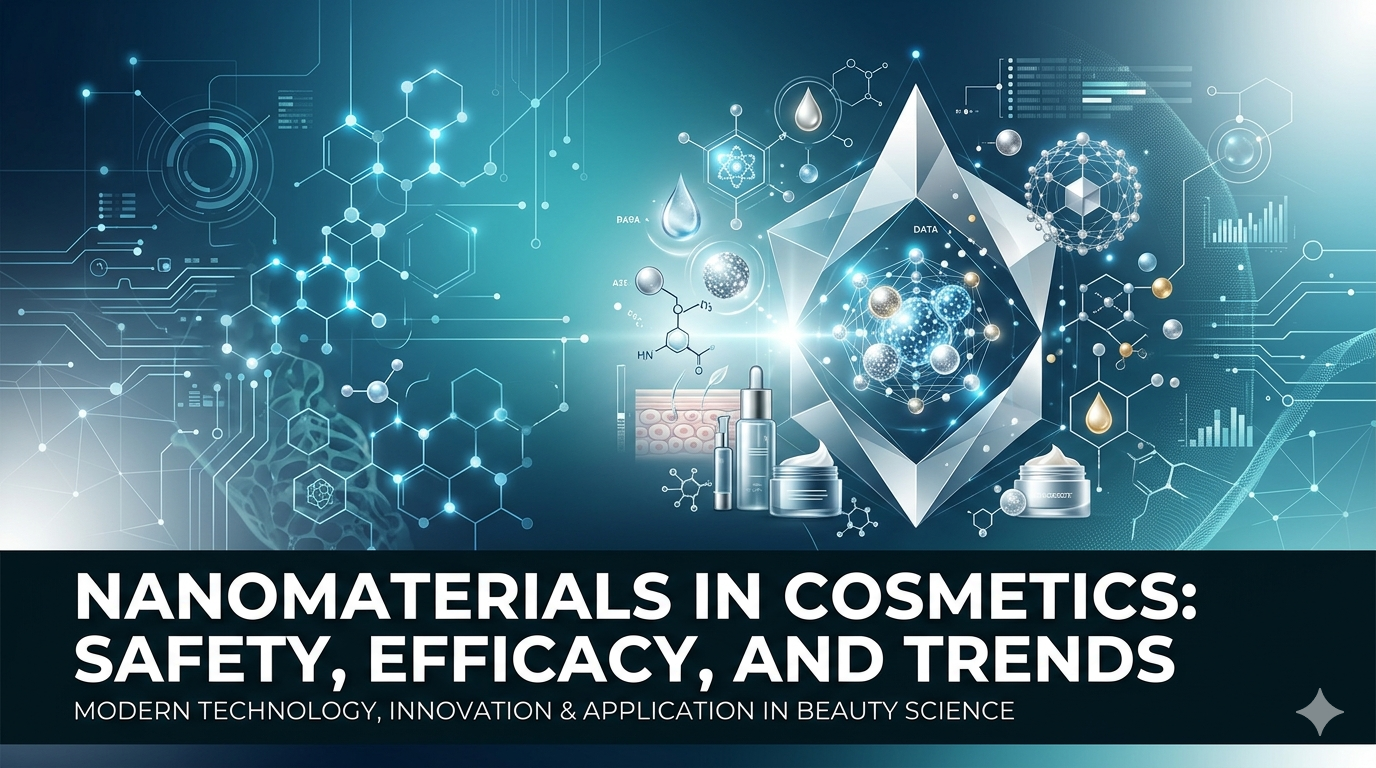
The beauty industry is currently undergoing a silent, microscopic revolution. If you look at the back of a high-end sunscreen or an anti-aging serum, you are no longer just looking at a mixture of oils and water. You are looking at a sophisticated feat of molecular engineering. Nanotechnology—the science of manipulating matter at the scale of 1 to 100 nanometers—has moved from the research lab to the vanity mirror.
In this deep dive, we explore how nanomaterials are redefining the efficacy of skincare, the scientific truth behind their safety, and the emerging trends that are shaping the global cosmetic market in 2026.
The Power of the “Nano” Scale
To understand why nanomaterials are so effective, we must look at the physics of the small. A nanometer is one-billionth of a meter. At this scale, the physical and chemical properties of materials change. The primary advantage of nanomaterials is their massive surface-area-to-volume ratio. This allows for higher reactivity, better stability of active ingredients, and, most importantly, enhanced penetration into the skin’s layers.
In traditional cosmetics, many active ingredients like Vitamin C or Retinol are notoriously unstable; they break down when exposed to light or air. Nanocarriers act as “molecular vaults,” protecting these fragile molecules until they reach their target destination within the skin.
Key Nanomaterials in Modern Formulations
1. Mineral UV Filters: Nano-TiO2 and ZnO
This is perhaps the most common application of nanotechnology. Traditional zinc oxide sunscreens were thick, white, and pasty. By shrinking these minerals to the nanoscale, manufacturers created sunscreens that are completely transparent on the skin while providing superior broad-spectrum UV protection. These particles sit on the surface and reflect light like microscopic mirrors.
2. Lipid-Based Nanocarriers: Liposomes and Niosomes
Liposomes are tiny bubbles made of the same material as cell membranes. They are the “delivery trucks” of the cosmetic world. By encapsulating active ingredients inside these vesicles, brands can ensure that moisture-boosting or anti-wrinkle agents bypass the tough outer layer of the skin (the stratum corneum) more effectively than traditional creams.
3. Noble Metal Nanoparticles: Gold and Silver
Nano-gold is increasingly used in “luxury” skincare for its purported anti-inflammatory and antioxidant properties. Nano-silver, on the other hand, is prized for its potent antimicrobial effects, making it a popular choice for acne-prone skin treatments and as a high-tech preservative to replace traditional parabens.
4. Carbon-Based Nanomaterials: Fullerenes
Fullerenes, often referred to as “carbon sponges,” are incredibly efficient at mopping up free radicals. Recent research suggests they are significantly more powerful than Vitamin C in protecting the skin from environmental stressors and pollution-induced aging.
Efficacy and Performance: The Scientific Advantage
The primary metric for a successful cosmetic product is its “bioavailability”—how much of the active ingredient actually works on the skin cells.
Clinical studies conducted between 2024 and 2026 have shown that nano-emulsions (mixtures of oil and water where the droplets are in the nanometer range) provide a much more uniform film on the skin. This leads to:
-
Controlled Release: Instead of a “spike” of an ingredient that might irritate the skin, nanocarriers can release the active slowly over 12 to 24 hours.
-
Enhanced Hydration: Nano-sized lipids can integrate into the skin’s natural barrier, reducing “transepidermal water loss” more effectively than larger paraffin-based molecules.
Safety and Clinical Perspectives: The Dermal Barrier Debate
The most frequent question regarding nanomaterials is: Do they enter the bloodstream?
Dermal Penetration
A wide body of clinical research, including studies reviewed by the Scientific Committee on Consumer Safety (SCCS), suggests that for healthy, intact skin, most nanoparticles (especially mineral ones like TiO2) do not penetrate beyond the outer layers of the epidermis. The skin is an incredibly effective barrier.
Inhalation and Ingestion Risks
The primary safety concern isn’t actually the skin; it’s the lungs. Clinical data indicates that nanomaterials in spray or powder form (like loose face powders or aerosol sunscreens) pose an inhalation risk. Once in the lungs, these tiny particles can cross into the bloodstream. This has led to strict regulations regarding “non-respirable” nano-forms in cosmetic manufacturing.
Advantage vs. Risk Assessment
Evaluating nanotechnology requires a balanced look at its industrial benefits and potential biological impacts.
| Feature | Advantage | Potential Risk |
| UV Protection | Transparent, high-performance sunscreens that encourage daily use. | Possible photocatalytic activity if particles are not properly coated. |
| Delivery Systems | Deep penetration and protection of unstable vitamins (C, A, E). | “Over-penetration” of ingredients that were meant to stay on the surface. |
| Preservation | Reduced need for harsh synthetic preservatives like formaldehyde-releasers. | Long-term environmental impact (bioaccumulation in water systems). |
| Product Texture | Silky, non-greasy formulations with high consumer appeal. | Cost of manufacturing and specialized stability testing required. |
Trends to Watch: The Future of “Nano-Beauty”
1. “Green” Nano-Synthesis
In 2026, the trend is shifting toward “Green Nanotechnology.” This involves using plant extracts (like green tea or grape seed) to act as reducing agents in the creation of nanoparticles. This reduces the chemical footprint of the production process and creates “bio-conjugated” particles that are even more skin-friendly.
2. Smart Release Systems
We are seeing the emergence of pH-responsive nanocarriers. These “smart” particles only open and release their contents when they sense a specific skin condition—such as a shift in pH that indicates inflammation or dehydration.
3. DNA-Repair Nanotechnology
The frontier of anti-aging is moving toward “genocosmetics.” Specialized enzymes encapsulated in nanosomes are being designed to support the skin’s natural DNA repair mechanisms after UV damage, effectively working as a biological “undo” button for sun exposure.
Regulatory Landscape: Transparency and Labeling
As an entrepreneur or consumer, it is vital to know that the regulatory environment is catching up. In the European Union and Turkey, any ingredient in its “nano” form must be explicitly labeled with the word [nano] in the ingredients list. This transparency allows consumers to make informed choices while ensuring that manufacturers adhere to the highest safety standards for particle size and coating.
Conclusion: Small Particles, Big Impact
Nanomaterials are not a passing fad; they are the logical progression of material science applied to human health and aesthetics. By allowing for more precise delivery, better protection against the sun, and more stable formulations, nanotechnology is helping create products that finally live up to their “miracle” claims.
However, the “invisible shield” of nanotechnology comes with a responsibility for rigorous testing and environmental awareness. As we continue to refine these materials—from 5-micron powders to complex lipid vesicles—the focus must remain on the synergy between high-tech performance and long-term biological safety. The future of beauty is small, but its impact on our confidence and health is immense.