
Recently added item(s)
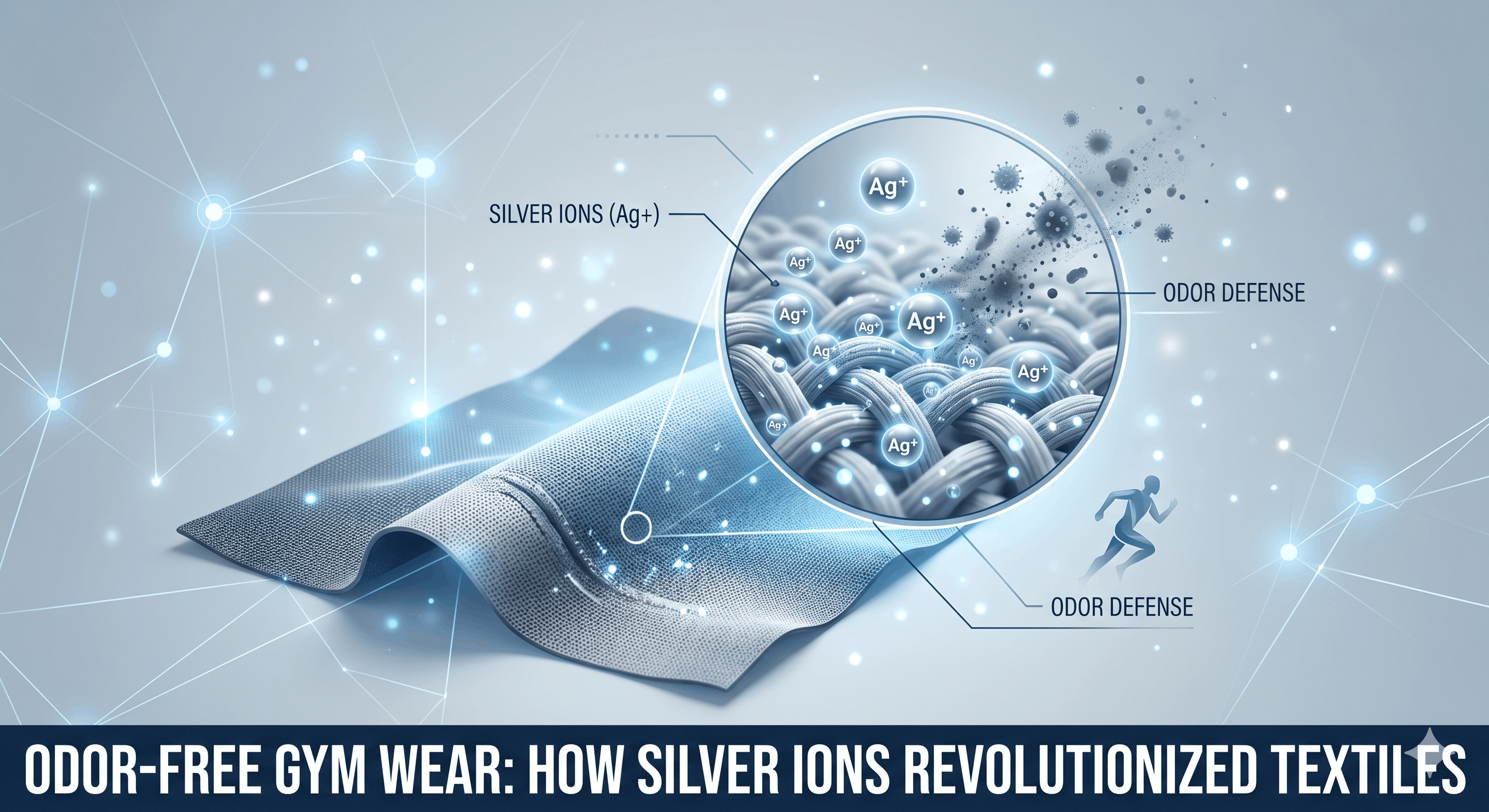
There is a universal truth among fitness enthusiasts: the most grueling workouts are often followed by the most stubborn smells. For decades, gym-goers accepted the “stink” as a badge of honor, a testament to their dedication. Traditional fabrics, especially the synthetic fibers praised for their moisture-wicking properties, seemed to harbor odors even after multiple wash cycles.
This changed with the arrival of a seemingly magical solution borrowed from ancient history and perfected by modern nanotechnology: Silver Ion Technology.
The integration of silver into textiles didn’t just provide a superficial odor blocker; it revolutionized the way activewear is made, offering a proactive, microscopic solution to a macroscopic problem. Today, silver-ion-treated fabrics are a staple in high-performance apparel, from elite athlete gear to everyday gym wear. This article dives deep into the scientific mechanism behind this technology, its application, its verified effectiveness through current research, and a critical look at the balance between its advantages and potential risks.
The Malodorous Villain: Why Gym Wear Smells
To understand how silver ions revolutionized textiles, we must first understand the enemy they are fighting. Contrary to popular belief, sweat itself is almost entirely odorless. It is a mixture of water, salts, proteins, and lipids secreted by eccrine and apocrine glands.
The smell—colloquially known as “gym stink”—is the byproduct of microbial digestion. Our skin is home to a complex ecosystem called the skin microbiome, predominantly composed of bacteria like Staphylococcus epidermidis and various Corynebacterium species.
When we exercise, the moisture (sweat) and heat provide an ideal breeding ground for these microbes. They feast on the organic compounds found in sweat, breaking them down into volatile organic compounds (VOCs). It is these VOCs, such as isovaleric acid (which smells like cheesy feet) and sulfury compounds, that create the pungent odors associated with post-workout apparel.
Traditional synthetic fabrics, such as polyester and nylon, aggravate this issue. While excellent at wicking moisture away from the skin, their smooth surfaces and hydrophobic nature create a stable microenvironment where bacteria can easily adhere, colonize, and proliferate within the fabric weave itself. This leads to a phenomenon known as “permastink”—odors that remain trapped in the fibers even after washing.
The Silver Bullet: The Science of Silver Ions (Ag+)
Silver has been recognized for its antimicrobial properties for thousands of years. Ancient civilizations used silver vessels to keep water and wine fresh. In the pre-antibiotic era, silver compounds were used to treat infections and wounds.
The revolution in modern textiles lies in our ability to harness the active component responsible for this effect: the positively charged silver ion (Ag+).
It is crucial to distinguish between generic “silver” and silver ions. Metallic silver (Ag0), such as in jewelry, is relatively inert. However, when metallic silver is exposed to moisture—such as sweat—it undergoes a slow oxidation process, releasing Ag+ ions onto the surface.
Silver ions operate via a multi-pronged, sophisticated attack on microbial life. Unlike antibiotics, which usually target a specific pathway, silver ions are broad-spectrum and non-selective killers, making it exceptionally difficult for bacteria to develop resistance. Their primary mechanisms of action include:
1. Disrupting Cell Membrane Integrity
Silver ions have a high affinity for sulfur-containing proteins (thiols) found in the cell walls and membranes of bacteria. When Ag+ binds to these proteins, it disrupts the membrane’s structure, causing physical leakage of vital cellular contents and effectively “popping” the bacterial cell.
2. Interfering with Bacterial Metabolism (Cellular Respiration)
Once inside the cell, silver ions bind to key respiratory enzymes, particularly those involved in the electron transport chain (such as NADH dehydrogenase). By inhibiting these enzymes, silver starves the bacteria of energy (ATP production), leading to a cessation of growth and eventual death.
3. Binding to DNA and Inhibiting Replication
Silver ions can bind directly to bacterial DNA and RNA. By cross-linking with the nucleobases, Ag+ prevents the DNA from unwinding, a critical step for replication and transcription. Even if the bacterium survives the initial membrane damage and metabolic shutdown, it cannot reproduce, preventing the formation of odorless colonies.
Revolutionizing the Thread: Application Methods in Textiles
The challenge for textile engineers was not discovering that silver works, but figuring out how to integrate it permanently, safely, and economically into fabrics. Several methods have emerged, ranging from simple surface treatments to sophisticated embedding.
-
Topical Coatings/Finishes: The simplest method involves padding the fabric in a solution containing silver salts or silver nanoparticles. This applies a coating to the outside of the fibers. While effective initially, these treatments are susceptible to leaching and are often depleted after 20–30 wash cycles.
-
Nano-Silver Coating: Utilizing nanotechnology, smaller silver particles (nanoparticles) are coated onto the surface. Their smaller size increases the surface area-to-volume ratio, allowing for a more rapid and potent release of silver ions. However, this method faces significant durability and environmental concerns.
-
Polymer Masterbatch Integration (Embedding): This is the true textile revolution. Silver compounds or nanoparticles are mixed directly into the molten polymer (e.g., polyester) before it is extruded into fibers. The silver is trapped within the matrix of the thread itself. As the surface silver releases ions and is worn away, new silver within the fiber becomes exposed to moisture, ensuring a consistent and virtually permanent supply of antimicrobial Ag+ ions for the life of the garment. This method dramatically improves durability and reduces environmental leaching during washing.
Advantages of Silver-Ion-Treated Gym Wear
The primary, intended advantage of silver-ion textiles is superior odor control, but the benefits extend beyond mere freshness.
-
Permanent Fresher Smell: By killing 99.9% of odor-causing bacteria on contact, silver-infused activewear ensures you smell fresher during your workout and eliminates the development of “permastink” in the fabric weave.
-
Increased Garment Lifespan: Bacteria do more than cause smell; some species can degrade synthetic fibers over time, weakening the fabric and causing it to lose elasticity. By eliminating microbial colonization, silver protects the integrity of the material, making your expensive activewear last longer.
-
Reduced Environmental Impact (Fewer Washes): Because silver-infused apparel resists odors, it does not need to be washed after every single use. Reduced washing frequency conserves significant amounts of water and energy and reduces the release of microfibers and detergents into the ecosystem.
-
Hygienic Confidence: Knowing that your gear is actively fighting bacteria provides psychological confidence and peace of mind during intense social fitness activities.
-
Potentially Reduced Skin Irritation: While not its primary purpose, suppressing the bacterial population on the fabric between the skin and the garment may reduce the risk of certain bacterial-related skin conditions, such as folliculitis (inflammation of hair follicles) sometimes exacerbated by friction and sweat in athletic populations.
Critical Analysis: Risks, Regulatory Landscape, and Environmental Impact
Despite its transformative benefits, the widespread use of silver—particularly in its nano-formulation—has raised scientific, ethical, and regulatory questions. An honest assessment must balance the advantages against potential risks.
1. Human Health Concerns: Skin Absorption and the Microbiome
The primary health question concerns whether silver ions or nanoparticles can be absorbed through the skin, especially during high-heat, high-friction exercise when pores are open.
-
Systemic Toxicity: Metallic silver has very low toxicity. While extreme, prolonged exposure to high silver concentrations can cause argyria (a benign blue-gray discoloration of the skin), the levels used in textiles are far too low to cause systemic harm.
-
Skin Microbiome: The broad-spectrum nature of silver means it does not discriminate. It can kill the beneficial bacteria on our skin that maintain the skin barrier and protect against pathogens. Concerns exist that long-term use of antimicrobial clothing could disrupt this delicate ecosystem, potentially leading to increased skin sensitivity or imbalances.
2. Regulatory Landscape: Biocides or Treated Articles?
The regulatory classification of silver-treated textiles is complex and differs by region.
-
USA: The Environmental Protection Agency (EPA) regulates antimicrobials as biocides. If a manufacturer claims a garment is antimicrobial, the substance must be registered. If the claim is that the garment is protected from degradation by the substance, it may fall under the “treated article” exemption.
-
EU: The Biocidal Products Regulation (BPR) classifies silver as an active substance. Articles treated with silver must carry clear labels specifying the biocide used and any precautionary measures. This ensures greater transparency for consumers regarding nanoparticles.
3. Environmental Impact: Leaching into Wastewater
This is the most significant current risk. When silver-treated fabrics are washed, they can leach metallic silver, silver ions, or nanoparticles into the wastewater system.
-
Toxicity to Aquatic Ecosystems: Silver ions are highly toxic to aquatic life, particularly microorganisms, fish, and algae. If leaching is high, it can disrupt the microbial processes used in wastewater treatment plants and accumulate in aquatic organisms. Current research indicates that embedded methods (polymer integration) show significantly lower leaching rates than topical coatings.
4. Development of Bacterial Resistance?
There is scientific debate about whether the widespread use of low-dose silver could eventually create silver-resistant “superbugs.” While difficult due to silver’s multi-pronged attack, resistance mechanisms (such as Ag+ efflux pumps) have been observed in some bacterial species. Continued vigilance is necessary to ensure silver remains a viable antimicrobial tool.
Current Research and Clinical Studies
The efficacy of silver-ion technology is well-documented, but current research is focusing heavily on refining safety and environmental protocols.
-
Verified Efficacy: Numerous in vitro studies confirm that silver-treated fabrics achieve a >99.9% reduction in common odor-causing and pathogenic bacteria, including Staphylococcus aureus (the bacterium often associated with skin infections) and Staphylococcus epidermidis (a key odor producer).
-
Clinical Data: In clinical contexts, silver-infused wound dressings are a benchmark treatment for reducing bacterial load and promoting healing in burn victims and chronic ulcers, showcasing its potent biocide ability in human applications. However, long-term clinical trials specifically assessing the effects of wearing silver-treated activewear on the skin microbiome of healthy individuals are currently scarce but represent a critical avenue for future research.
-
Leaching Studies: A seminal 2011 study published in Environmental Science & Technology compared leaching rates of different silver treatments. It found that nano-silver topically applied to fabrics leached significantly more total silver than methods where silver was embedded in the fiber, highlighting the importance of manufacturing quality. More recent studies focus on the speciation of leached silver, finding that much of the silver is converted into less-toxic silver sulfide (Ag2S) during the wastewater treatment process, somewhat mitigating the ecological risk.
Conclusion: Weighing the Freshness
Silver ion technology has undeniably revolutionized the textile industry, particularly in the realm of high-performance gym wear. It offered a definitive scientific solution to the enduring problem of bacterial odor, allowing athletes to train harder and feel fresher, while also protecting the longevity of expensive apparel.
The textile revolution is moving toward more durable, permanently embedded silver solutions, which maximize the advantages of odor control while significantly reducing the primary risk of environmental leaching.
For the conscious consumer, silver-ion gear represents a balance. It offers superior performance and convenience, allowing for fewer washes and reduced water/energy consumption. However, this must be balanced against the complex ecological profile of nanosilver. By choosing high-quality garments that utilize permanent embedding technologies and minimizing unnecessary washing, gym-goers can harness the odor-killing power of the ancient world, refined by modern science, to transform their fitness experience from stinky to scent-sational.