
Recently added item(s)
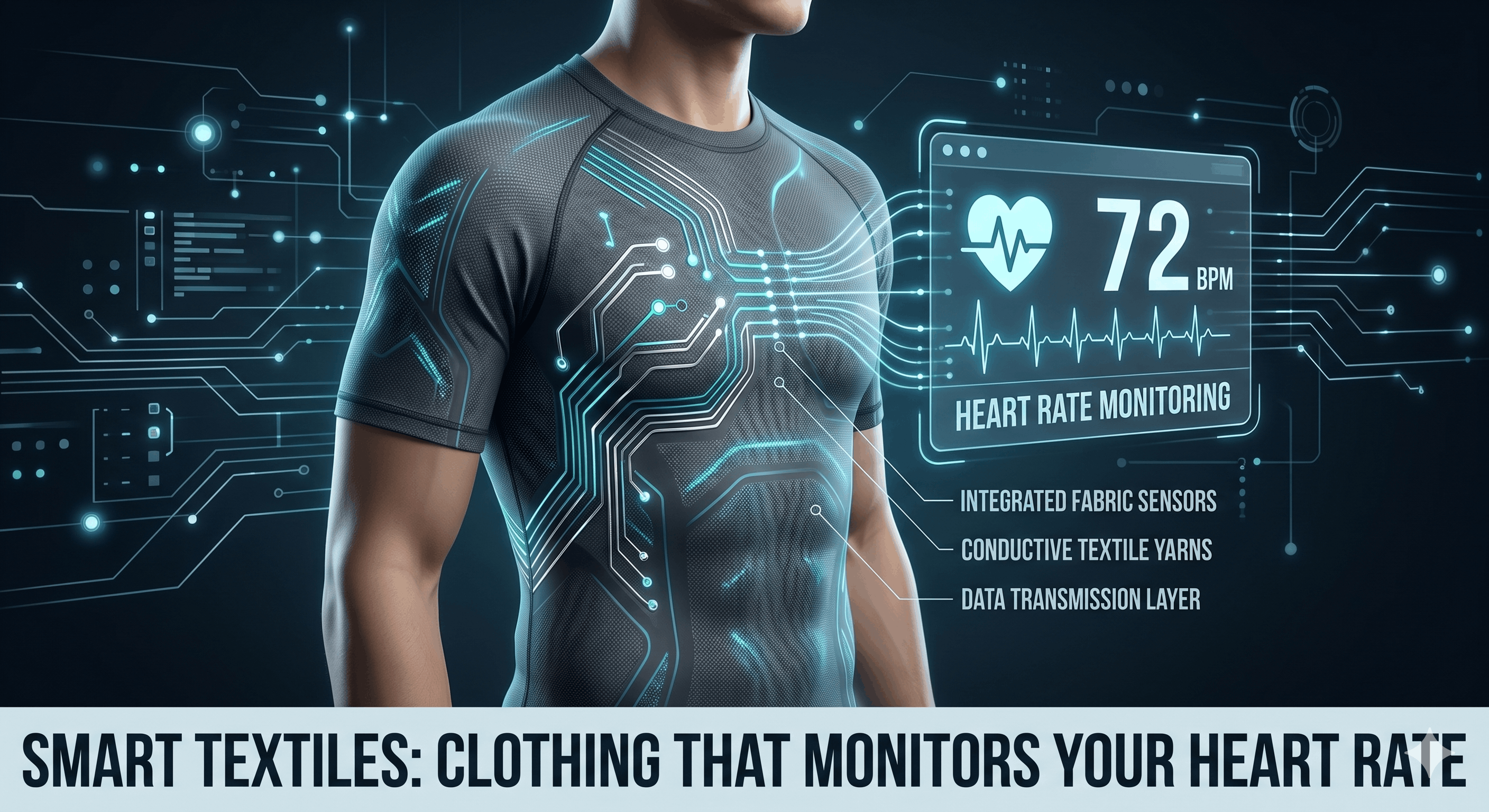
Imagine a world where your daily health check isn’t a chore you actively perform, but a seamless result of merely getting dressed. This futuristic vision is becoming a reality through the convergence of material science, textile engineering, and biomedical tech: Smart Textiles (E-Textiles). In the context of cardiovascular health, these are garments explicitly designed to monitor your heart rate continuously, comfortably, and non-invasively, transforming everyday clothing into sophisticated diagnostic tools.
While wearable devices like wristwatches and chest straps have paved the way, smart textiles offer the next logical step: invisibility. This article explores the scientific principles, the latest research, and the clinical potential of clothing that listens to the beat of your heart.
1. The Core Science: Beyond the Wristband
Wrist-based heart rate monitors, while convenient, primarily use photoplethysmography (PPG). This technology uses light (usually green LEDs) to measure volumetric changes in the blood vessels near the skin. While effective at rest, PPG is famously susceptible to motion artifacts—interference caused when you move your arm, altering the light’s path.
Smart heart-monitoring clothing typically utilizes Electrocardiography (ECG), the same fundamental technique used in hospital machines. An ECG measures the actual electrical activity generated by the heart muscle as it contracts and relaxes.
The Problem with Electrodes
A standard medical ECG requires ten electrodes attached to the body using sticky, conductive gels. These ensure a low-impedance connection necessary to capture very faint electrical signals. While accurate, this setup is incompatible with daily life. It causes skin irritation over time, limits mobility, and requires active patient cooperation.
The Smart Textile Solution
Smart textiles replace these bulky, sticky electrodes with conductive yarns and textile sensors integrated directly into the fabric of a shirt, bra, or vest.
The sensors are typically made from polymers (like polypyrrole or polyaniline) coated onto standard fibers, or fibers spun with metals like silver, carbon, or stainless steel. When the garment is worn snugly, these textile electrodes make contact with the skin, capturing the faint voltage differences (in millivolts) generated across the chest by the heart’s electrical cycle.
These electrical signals must then travel through conductive thread “wires” to a tiny microprocessing hub (often removable for washing) clipped somewhere inconspicuous on the garment. This hub amplifies the signal, filters out noise, and transmits the heart rate data via Bluetooth to a smartphone app.
2. Weaving Conductors: Current Research Frontiers
The primary scientific challenge for smart textiles is maintaining a reliable signal during movement while ensuring the garment remains textile-like (soft, breathable, and washable). Current research is focusing on three critical areas:
A. Advances in Material Conductivity and Flexibility
Historically, conductive textiles have used metal coatings (like silver plating). While highly conductive, metal coatings are brittle, expensive, and can cause allergic reactions. Research is shifting toward:
-
Conductive Polymers: Materials that behave like plastics but conduct electricity. They are lighter, cheaper, and chemically inert, reducing the risk of skin irritation.
-
Carbon Materials (Graphene and Nanotubes): These “wonder materials” offer incredible strength, flexibility, and exceptional conductivity. Research is perfecting techniques to apply carbon-based conductive inks onto traditional textiles.
-
Yarn-Level Integration: Instead of coating a finished fabric, researchers are developing individual yarns spun with conductive cores. A 2024 study published in Advanced Functional Materials demonstrated a technique for spinning conductive polyaniline-coated nylon yarns directly into cotton fibers, ensuring conductivity even after extreme stretching.
B. Overcoming Motion Artifacts and Intermittent Contact
ECG signals captured by dry textile electrodes are weaker and messier than medical gel electrodes. Movement creates friction between the skin and the textile sensor, causing huge noise spikes that can completely bury the heart’s signal. Furthermore, during strenuous exercise or simple shifts in posture, the sensor might lose skin contact momentarily.
Current research tackles this using advanced signal processing and structural design:
-
Algorithm Solutions: Modern smart garment hubs employ complex mathematical filtering, including Kalman filtering and adaptive algorithms (such as those using Machine Learning), specifically trained to identify and subtract noise typical of textile friction and muscle movement.
-
Structural Solutions: Researchers are designing garments with localized compression zones, ensuring the sensors are pressed firmly against the chest only where necessary, maintaining comfort elsewhere.
C. The Washability Challenge (Encapsulation and Durability)
For smart textiles to succeed commercially, they must survive being thrown into a washing machine. Conductive materials, particularly silver coatings, often degrade quickly after multiple wash cycles.
Current research focuses on encapsulation (coating conductive threads in waterproof, elastic polymers) and developing novel yarn architectures that protect the conductive core while allowing necessary skin contact. Studies are now achieving 50+ medical-grade wash cycles while maintaining sufficient conductivity.
3. The Clinic Wears Denim: Clinical Applications and Studies
Smart textile monitoring isn’t just for athletes optimizing performance; it has serious medical potential, particularly for chronic condition management and preventative care.
Case Study: Arrhythmia Detection and Monitoring
The most powerful use case is detecting intermittent arrhythmias, such as Atrial Fibrillation (AFib). AFib is a leading cause of stroke, yet it often occurs unpredictably and without symptoms (silent AFib). Continuous, comfortable monitoring can capture these rare events that a standard 10-minute ECG or a 24-hour Holter monitor might miss.
Several recent clinical trials have validated this potential:
-
The TEXTILE Trial: A 2023 study published in the Journal of Electrocardiology compared a commercially available smart ECG vest with a standard clinical Holter monitor in a group of 50 cardiac patients. The smart vest successfully identified every episode of significant AFib detected by the Holter monitor, demonstrating that textile electrodes can achieve high diagnostic sensitivity if signal processing algorithms are sufficient.
-
Elderly Monitoring: Studies are exploring the use of smart undershirts for continuous monitoring of elderly patients with pre-existing heart conditions. The goal is early detection of heart rate trends that might suggest a worsening condition, allowing for proactive medical intervention before a crisis (like a heart attack or stroke) occurs.
Optimization and Rehabilitation
Smart textiles are also being integrated into cardiac rehabilitation programs. By continuously monitoring heart rate and rhythm during home-based exercise, clinicians can personalize the intensity of the rehab, improving outcomes and patient compliance.
4. Balanced Assessment: Advantages and Risks
The trajectory of smart textiles is promising, but like any emergent technology, it requires a careful cost-benefit analysis.
Advantages
-
Invisible Comfort: Smart textiles eliminate the “medicalization” feel of Holter monitors or bulky chest straps. Continuous, comfortable monitoring dramatically increases patient compliance (they actually wear it).
-
Contextual Data: Because the sensors are part of standard clothing, data can be captured in real-world contexts, including sleep, normal activity, and stress, rather than just at rest in a clinic.
-
Early, Proactive Detection: Continuous (24/7) monitoring is exponentially more likely to detect silent or intermittent cardiac events (like silent ischemia or paroxysmal arrhythmias), offering a massive advantage in preventative cardiology.
-
Reduced Clinical Load: Seamless data capture allows clinicians to review data remotely, reducing the need for in-person appointments for stable, chronically monitored patients.
Risks and Challenges
-
Data Privacy and Security: The biggest non-technical risk. Continuous streaming of medical-grade physiological data from standard clothing creates a high-stakes target for hacking and data breaches. Robust encryption (from garment to app to cloud) is non-negotiable.
-
Data Overload and Interpretation: Continuously generating ECG data for billions of people creates massive data pools. Without powerful, validated AI systems to analyze this data and flag only clinically significant events, healthcare systems could be overwhelmed by “noise” and false positives, potentially increasing physician fatigue and unnecessary anxiety in healthy individuals.
-
Regulatory Complexity: Most smart clothing currently marketed is classed as “consumer wellness” gear, which has lower regulatory hurdles (in the US, regulated by the FDA). However, if a garment makes diagnostic claims (e.g., “detects heart attacks”), it must pass rigorous, expensive clinical validation equivalent to any other medical device.
-
Accuracy during Extreme Motion: While algorithms are improving, textile ECG accuracy during high-impact, chaotic activities (like sprinting or contact sports) still cannot match chest straps (which have mechanical consistency) or, certainly, medical ECGs.
-
Dependency and Anxiety: Continuous access to real-time heart data can cause medical anxiety (cyberchondria) in some individuals, leading to obsessive checking and unnecessary medical visits for normal physiological variations.
5. Conclusion and Future Outlook
Smart textiles represent the ultimate integration of biomedical diagnostics into the fabric of our lives. By making heart rate monitoring invisible, comfortable, and continuous, we unlock the potential for truly proactive, preventative cardiovascular care. The transition from bulky medical gadgets to standard clothing is happening.
While challenges remain—specifically signal accuracy during high-impact movement and robust data security—the material science and signal processing algorithms are advancing rapidly. In the next five years, it will likely become routine for undershirts and sports apparel, moving from a niche wellness item to a validated healthcare tool, perhaps ultimately proving that health monitoring shouldn’t just look like fashion; it should be fashion.