
Recently added item(s)
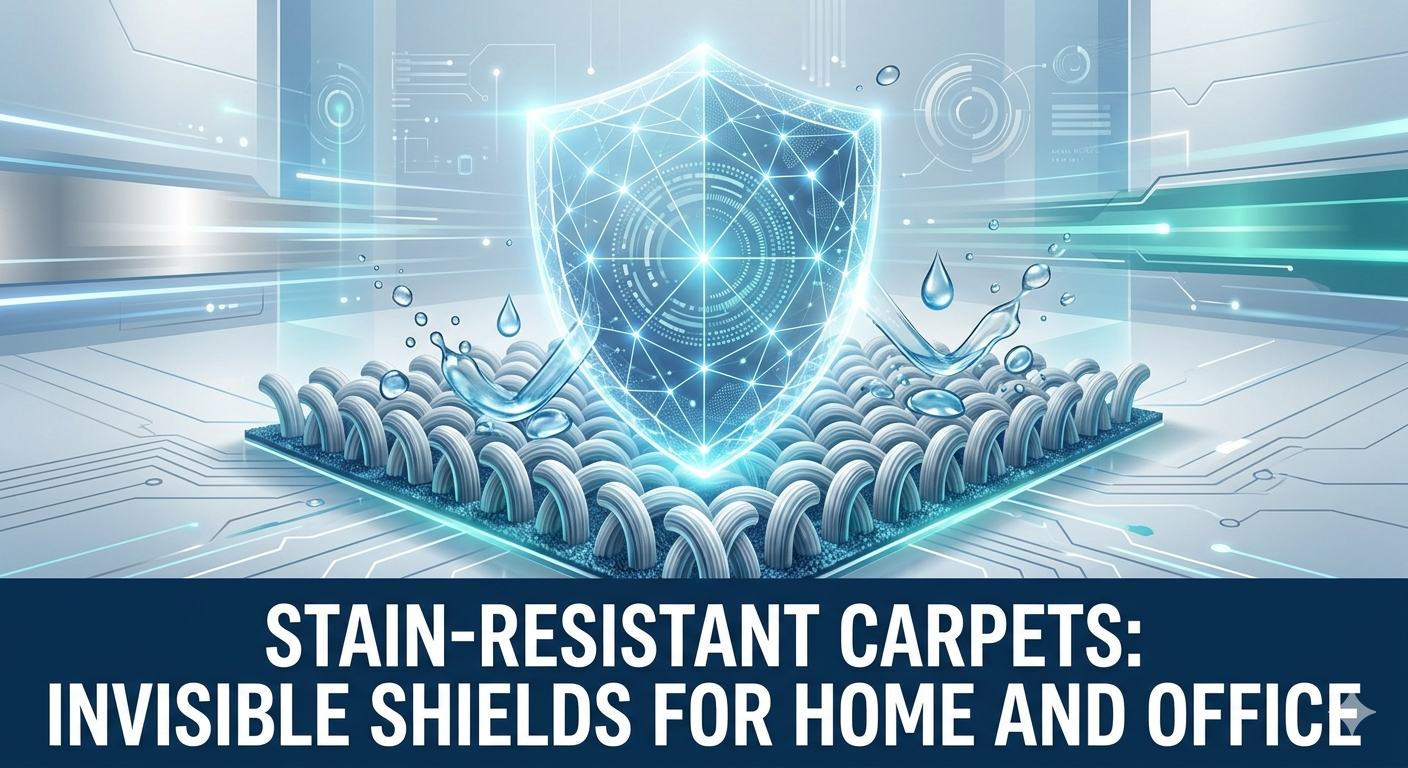
For decades, the carpet was seen as a humble, static piece of furniture—a soft surface to walk on, a way to dampen sound, and a decorative touch to tie a room together. However, under the lens of modern material science, the contemporary carpet has transformed into a high-tech filter and a sophisticated chemical shield. The term “stain-resistant” is no longer just a marketing buzzword; it represents a complex intersection of polymer chemistry, nanotechnology, and environmental health.
In this deep dive, we will explore the invisible shields that protect our floors, the scientific mechanisms that make them work, and the evolving research regarding their impact on our health and the world around us.
The Molecular Architecture of a Clean Floor
To understand stain resistance, we first have to understand why things get dirty. Most carpet fibers, such as nylon, wool, or polyester, are naturally porous or have “dye sites” on a molecular level. When you spill coffee or red wine, the pigment molecules in the liquid find these open sites and form a permanent chemical bond. Once that bond is made, the stain isn’t just on the carpet; it is part of the carpet.
Stain-resistant technology works through two primary mechanisms: Repellency and Resistance.
-
Repellency (The Physical Barrier): This involves coating the fibers with a low-surface-energy chemical. When a liquid hits these treated fibers, it cannot “wet” the surface. Instead of soaking in, the liquid beads up into droplets, much like water on a freshly waxed car. This is often achieved through fluorochemicals or silicon-based treatments.
-
Resistance (The Chemical Guard): This is a “space-filler” strategy. Manufacturers apply a colorless acid-dye blocker to the fiber. These blockers occupy the dye sites during the manufacturing process, leaving no room for the molecules of a spilled drink to latch on.
The Nanotechnology Revolution: From PFAS to Biomimicry
For years, the “gold standard” for stain resistance was a class of chemicals known as PFAS (per- and polyfluoroalkyl substances). These molecules are incredibly effective because they contain a carbon-fluorine bond—one of the strongest bonds in organic chemistry. This bond creates a shield that is both hydrophobic (water-repelling) and oleophobic (oil-repelling).
However, as we move into 2026, the industry is undergoing a massive shift. PFAS have earned the nickname “forever chemicals” because they do not break down in the environment and can accumulate in the human body. This has led to a surge in nanotechnology-based alternatives and biomimicry.
The Lotus Effect
Current research is heavily focused on the “Lotus Effect.” In nature, the lotus leaf remains clean because its surface is covered in microscopic wax pillars. These pillars create a “super-hydrophobic” surface where water droplets pick up dirt particles as they roll off. Scientists are now replicating this at the nanoscale on carpet fibers. By creating a textured surface at the molecular level, they can achieve high levels of stain resistance without using the heavy fluorinated chemicals of the past.
Clinical Perspectives: Allergens and Indoor Air Quality
One of the most persistent myths in home design is that carpets are inherently bad for people with allergies. Recent clinical studies have begun to challenge this notion, suggesting that the “shielding” properties of modern carpets might actually benefit indoor air quality when managed correctly.
The “Sinking” Effect
A 2024 study focused on indoor particulate matter (PM2.5) found that stain-resistant carpets act as a “sink.” Unlike hard floors, where dust, pet dander, and pollen are easily kicked back into the breathing zone by footsteps or drafts, carpet fibers trap these particles. The stain-resistant coating prevents the particles from sticking too tightly to the fiber, making them significantly easier to remove during a standard vacuuming cycle.
Dermatological and Respiratory Considerations
Clinical research into Volatile Organic Compounds (VOCs) has also seen progress. While older stain treatments were notorious for “off-gassing” (that “new carpet” smell that can cause headaches or respiratory irritation), modern “Green Label Plus” certifications ensure that treatments meet rigorous standards for low chemical emissions. For families with infants who spend a significant amount of time crawling, these low-VOC, stain-resistant shields provide a safer interface between the child and the floor.
Industrial vs. Residential: The Demand for Durability
The “invisible shield” required for a high-traffic office is vastly different from what is needed in a living room.
-
Office Environments: In commercial settings, the primary enemy is “wicking” and “soiling.” Wicking occurs when a spill soaks deep into the backing and then travels back up to the surface after cleaning. Commercial-grade stain shields often include “moisture barriers” built into the carpet backing to prevent liquid from ever reaching the subfloor.
-
Residential Environments: Here, the focus is on “spot resistance”—the ability to handle high-pigment spills like juice, wine, or pet accidents. Residential treatments are often softer to the touch, prioritizing “hand-feel” alongside chemical protection.
Risk-Benefit Analysis: The Trade-off of Convenience
While the advantages of stain-resistant carpets are clear—longer product lifespan, easier maintenance, and better aesthetics—it is essential to evaluate the potential risks with a critical eye.
The Advantages
-
Longevity: A carpet that doesn’t stain is a carpet that doesn’t need to be replaced every five years. This reduces the landfill burden, making it a more sustainable choice in the long run.
-
Economic Efficiency: Reduced need for professional deep-cleaning chemicals saves money and reduces the chemical footprint of a household.
-
Health: By trapping allergens and allowing for easier removal, stain-resistant carpets can improve the living conditions for asthma sufferers.
The Risks
-
Chemical Exposure: Even with the move away from PFAS, any chemical treatment carries a risk of skin sensitivity for highly reactive individuals.
-
False Sense of Security: Stain resistance is not “stain-proofing.” If a spill is left long enough, the heat and pressure can eventually force the liquid through the shield.
-
Environmental Impact of Manufacturing: The production of synthetic fibers and their chemical coatings is still an energy-intensive process.
Maintenance: Protecting the Shield
An invisible shield is only effective if it remains intact. One of the most common mistakes owners make is using harsh, high-pH cleaning agents on stain-resistant carpets.
Scientific analysis of fiber degradation shows that overly acidic or alkaline cleaners can actually “strip” the stain-resistant coating off the fiber. Once this shield is gone, the carpet becomes more vulnerable than if it had never been treated at all, as the stripped fibers are often left “open” and more porous than untreated ones. To maintain the shield, it is recommended to use “CRI-approved” (Carpet and Rug Institute) cleaning solutions that are pH-neutral.
The Future: Self-Healing and Bio-Based Shields
Looking toward the next decade, the research is moving into Self-Healing Polymers. Imagine a carpet fiber that, if scratched or abraded by heavy furniture, can “re-flow” its protective coating when exposed to steam or heat. This would effectively “reset” the invisible shield, extending the carpet’s life indefinitely.
Additionally, we are seeing a move toward bio-based repellents derived from corn and soy proteins. These offer a “circular” solution—protection that is grown in a field rather than synthesized in a lab, ensuring that when the carpet’s life finally ends, the shield it carries is as biodegradable as the earth it returns to.
Conclusion: A Balanced Approach to Modern Flooring
Stain-resistant carpets are a marvel of modern engineering. They represent our ability to manipulate materials at a molecular level to make our lives easier and our environments more beautiful. By understanding the science behind these invisible shields—and the responsibility that comes with using them—homeowners and office managers can make informed decisions that balance the convenience of a clean floor with the health of the planet.
The invisible shield is no longer a luxury; it is a testament to how far we have come in turning our living spaces into intelligent, resilient ecosystems.