
Recently added item(s)
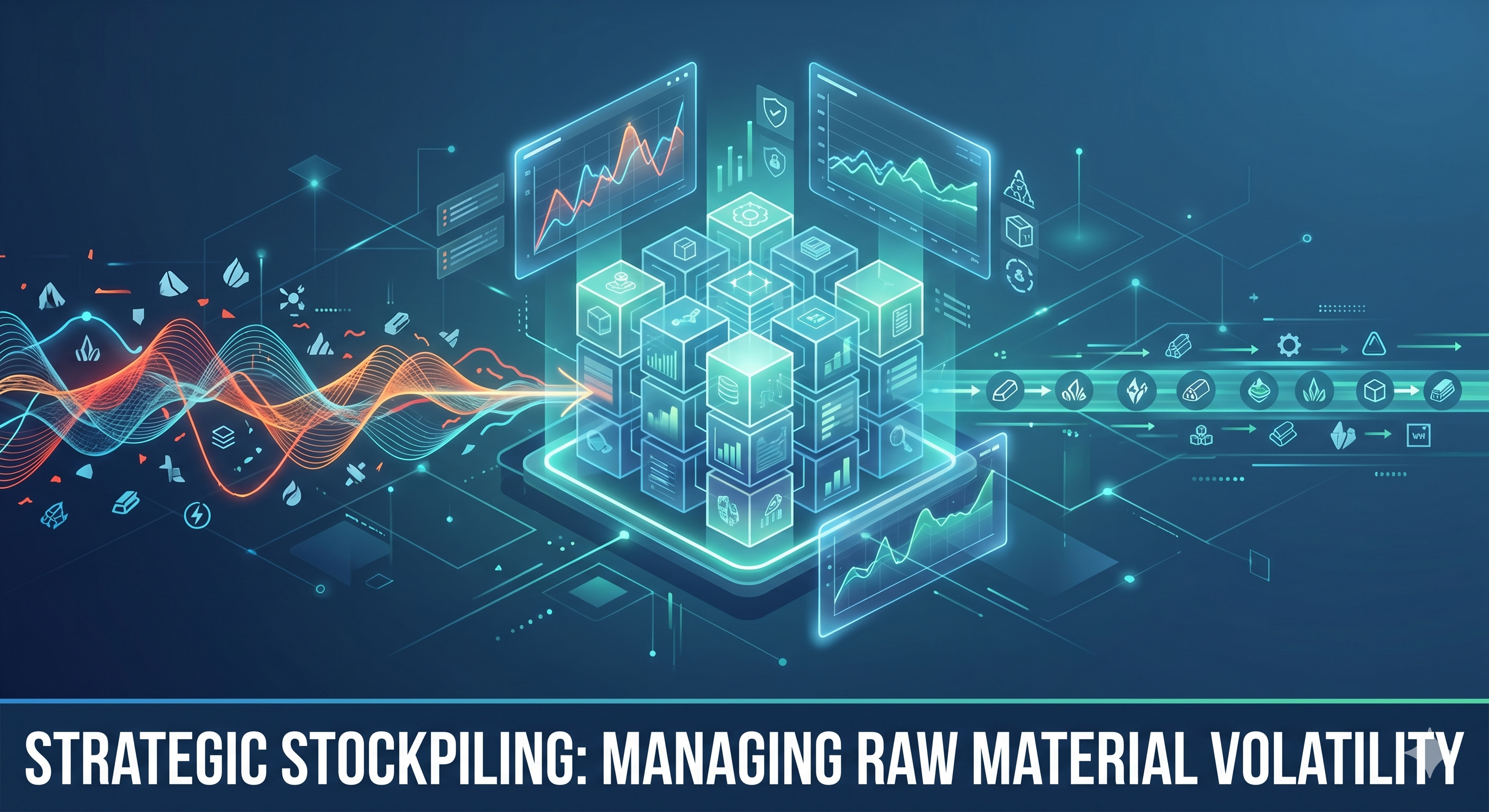
In the current global economic landscape, the “Just-in-Time” (JIT) manufacturing model, which dominated the late 20th century, is being systematically dismantled. In its place, a more robust, albeit complex, philosophy has emerged: Strategic Stockpiling. This transition is not merely a response to temporary supply chain hiccups; it is a fundamental shift in how industries—ranging from nanotechnology and advanced metallurgy to renewable energy—insulate themselves against a world defined by volatility.
Managing raw material volatility is no longer just a task for the procurement department. It has become a core pillar of corporate strategy and national security. Whether dealing with the rare earth minerals required for semiconductors or the high-purity metal powders essential for advanced manufacturing, the ability to maintain a “buffer” can be the difference between market leadership and industrial paralysis.
1. The Anatomy of Volatility: Why Prices Swing
To manage volatility, one must first understand its sources. In the 2020s, the “triple threat” of geopolitics, environmental shifts, and speculative economics has made raw material prices more unpredictable than at any point in modern history.
Geopolitical Fragility
Many of the world’s most critical raw materials—such as cobalt, tungsten, and specific grades of graphite—are concentrated in geographically or politically sensitive regions. Trade barriers, sanctions, and shifting alliances can overnight turn a reliable flow of materials into a trickle.
The “Green” Demand Spike
The global transition toward decarbonization has created a “green premium.” Materials like silver, copper, and lithium are seeing demand curves that outpace mining capacity. This creates “structural volatility,” where the price isn’t just swinging; it is trending upward with high-frequency fluctuations.
Logistics and the “Bullwhip Effect”
In supply chain science, the Bullwhip Effect describes how small fluctuations in demand at the retail level can cause massive swings in wholesale and raw material orders. When a manufacturer perceives a slight shortage, they over-order; this ripples up the chain, leading to artificial scarcity and price spikes.
2. From JIT to JIC: The Strategic Shift
The 2020 pandemic and subsequent logistical crises served as a “clinical trial” for global supply chains. The results were clear: Lean manufacturing (Just-in-Time) is highly efficient in stable environments but dangerously fragile in volatile ones.
Just-in-Case (JIC) Manufacturing
Strategic stockpiling is the cornerstone of the Just-in-Case model. By maintaining a physical inventory of critical precursors—such as micronized metal powders or chemical stabilizers—companies can decouple their production schedules from the chaos of the spot market.
Stochastic Demand and Buffer Management
Modern research into inventory theory uses stochastic modeling to determine the “Optimal Stockpile Level.” This isn’t about hoarding every material; it’s about identifying which “bottleneck materials” have the highest risk of disruption and the lowest ease of substitution.
3. Case Studies: Strategic Materials in the 21st Century
Scientific and industrial case studies highlight how stockpiling operates differently across various sectors.
The Nanotechnology Frontier
In the world of advanced materials, such as graphene and carbon nanotubes, the challenge isn’t just the quantity but the consistency of the supply. Research shows that even slight variations in the purity of carbon precursors can ruin an entire production run of functionalized materials. Strategic stockpiling of high-grade precursors allows labs and manufacturers to maintain consistent quality even when their primary suppliers face technical or logistical downtime.
The Precious Metals Hedge
Industries that rely on silver, gold, or platinum-group metals often treat stockpiling as a dual-purpose strategy: supply security and a financial hedge. Recent economic analyses suggest that companies holding physical assets in precious metals have significantly better balance sheet resilience during inflationary periods than those relying solely on digital futures contracts.
4. The Science of Storage: Risks of the Stockpile
Stockpiling is not a “set it and forget it” solution. It carries significant technical and financial risks that must be managed through scientific oversight.
Physical Degradation and Oxidation
Materials don’t stay “new” forever. For instance, micronized metal powders (like nickel or tungsten) have a high surface-area-to-volume ratio, making them extremely susceptible to oxidation if stored incorrectly. Strategic stockpiling requires advanced climate-controlled environments and vacuum-sealed packaging systems to prevent the material from becoming chemically inert or hazardous.
The Risk of Obsolescence
In high-tech sectors, the “next big thing” can make a stockpile worthless. If a company stockpiles a specific chemical catalyst for a five-year window, but a new research paper proves that a cheaper, more efficient catalyst exists, that physical inventory becomes a “stranded asset.”
Capital Tie-up and Opportunity Cost
Every dollar spent on a stockpile is a dollar not spent on R&D or marketing. Scientific inventory management uses the Economic Order Quantity (EOQ) formula, modified for volatility, to find the “sweet spot” where the cost of holding inventory is balanced against the cost of a potential stock-out.
5. Advantage–Risk Evaluation
When deciding whether to implement a strategic stockpiling program, a rigorous evaluation is required.
Key Advantages
-
Price Certainty: Locking in costs at today’s prices protects margins against future spikes.
-
Uninterrupted Production: Ensures that “the machines never stop,” maintaining customer trust and market share.
-
Bargaining Power: Having a stockpile allows a company to walk away from predatory pricing during a crisis.
-
Quality Control: Buying in large, single-batch quantities ensures material homogeneity over long production cycles.
Critical Risks
-
Storage Costs: Warehousing, insurance, and security can erode the financial benefits of the hedge.
-
Market Reversal: If prices drop significantly after a stockpile is built, the company is left with high-priced inventory while competitors buy cheap.
-
Inventory Shrinkage: Loss through damage, theft, or chemical expiration.
6. Predictive Analytics: The Future of the Stockpile
The next evolution of stockpiling lies in Artificial Intelligence and Predictive Analytics. By 2026, the most successful industrial firms will not just be “storing” materials; they will be using AI agents to monitor global shipping lanes, satellite imagery of mines, and geopolitical sentiment to adjust their stockpile levels in real-time.
These systems allow for “Dynamic Stockpiling,” where the buffer grows or shrinks based on a real-time risk coefficient. This minimizes the “Capital Tie-up” risk while maximizing the “Resilience” advantage.
7. Conclusion: The Warehouse as a Strategic Asset
Strategic stockpiling has moved from being a sign of “inefficiency” to being a hallmark of “intelligence.” In an era of nanotechnology, global energy transitions, and unpredictable geopolitics, the physical warehouse is no longer just a room full of boxes; it is a time machine that preserves the prices and stability of the past for the challenges of the future.
For companies dealing with advanced materials—whether they be metal powders, graphene, or chemical precursors—the message is clear: The most expensive material is the one you don’t have when you need it. By balancing the scientific rigors of material stability with the economic logic of price hedging, businesses can turn volatility from a threat into a competitive advantage.