
Recently added item(s)
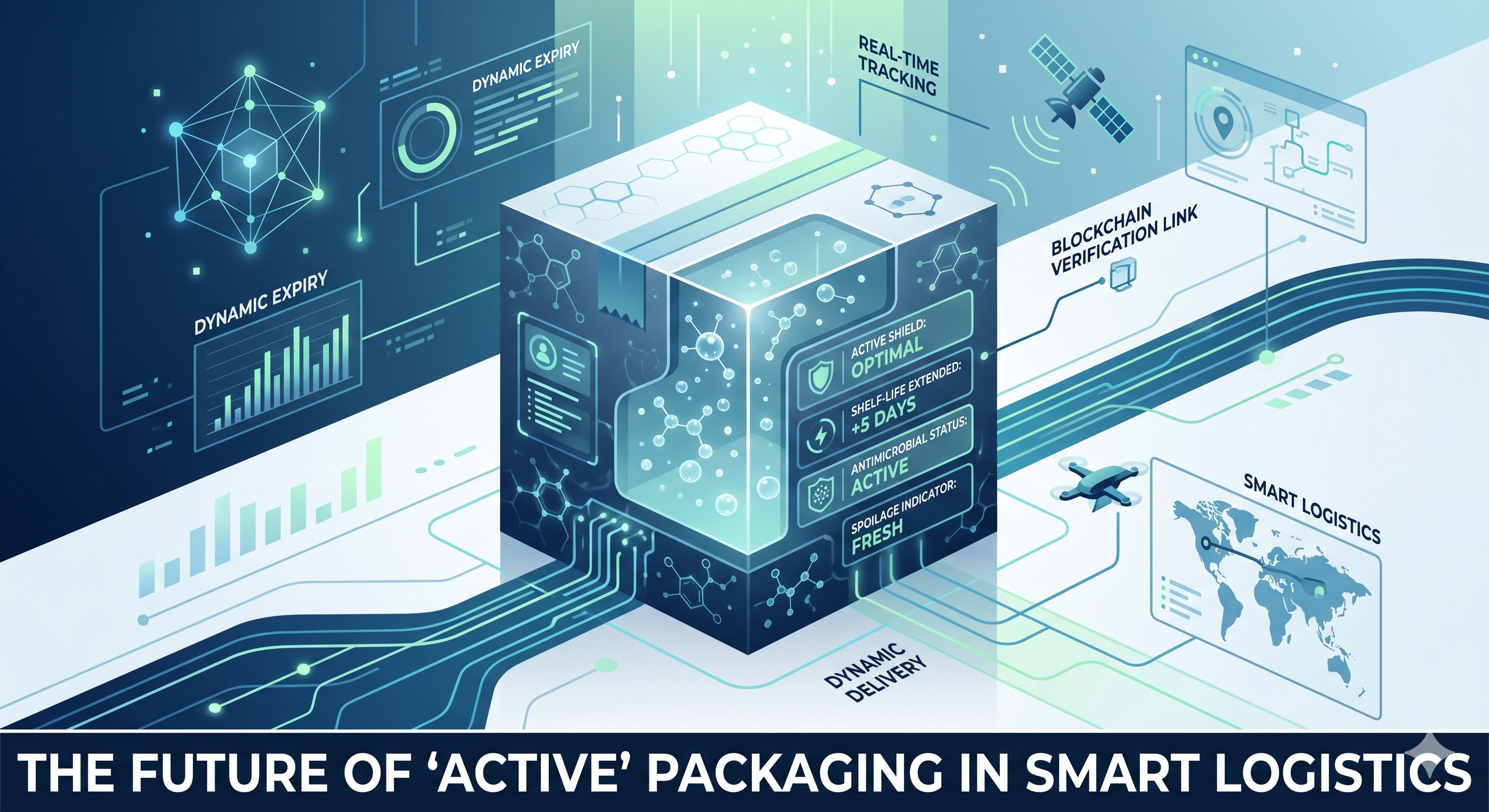
In the traditional supply chain, a package has only had a few fundamental jobs: containment, convenience, and passive protection. It acts as a barrier, preventing external dirt or moisture from damaging the valuable cargo within. However, as the world of modern logistics grows smarter, more connected, and more demanding, the cardboard box and plastic wrap are undergoing a remarkable transformation.
We are entering the era of “active” packaging. This is not science fiction; it is a rapid evolution happening at the intersection of materials science, biotechnology, and the Internet of Things (IoT). In the context of smart logistics, active packaging is no longer just a shell; it is an active participant in guaranteeing the safety, quality, and efficacy of a product from the factory floor right to the consumer’s doorstep.
Defining the Terms: Passive vs. Intelligent vs. Active Packaging
Before diving into the future, it is vital to clear up the confusion between the different types of modern packaging often grouped under the “smart” umbrella.
-
Passive Packaging: Traditional barriers like aluminum foil, polyethylene plastic, or vacuum sealing. They do not interact with the product; they simply block the outside world.
-
Intelligent Packaging: Think of this as the “sensing” component. It monitors conditions but does not alter them. Examples include RFID tags for location tracking, or Time-Temperature Indicators (TTI)—smart labels that change color if a product has been exposed to unauthorized heat levels.
-
Active Packaging: This packaging goes a step further: it acts. According to EU regulations, active materials are intended to extend the shelf life or maintain/improve the condition of packaged food. They contain components that either release substances (like antioxidants or antimicrobials) into the food or the immediate environment around it, or absorb substances (like oxygen or moisture) from it.
The future of smart logistics lies in the convergence of active and intelligent packaging—a box that senses a problem and automatically begins to fix it, while simultaneously notifying the supply chain manager.
The Mechanisms: How Active Packaging “Acts”
Active packaging relies on sophisticated material science rather than moving parts. We can classify these systems into two main categories: scavengers and emitters.
1. Scavenger Systems (Absorbers)
These systems are designed to remove unwanted compounds from the headspace (the internal environment) of the package.
-
Oxygen Scavengers: Oxygen is the primary culprit in food spoilage, causing fats to go rancid and promoting microbial growth. Traditional packaging uses desiccant packets (Sachets). The future involves embedding iron-based powders, enzymes, or photo-activated polymers directly into the film structure itself. Imagine a burger wrapper that continuously “breathes in” oxygen to starve bacteria.
-
Ethylene Scavengers: Ethylene is a natural gas produced by fruits and vegetables that causes them to ripen (and eventually rot) quickly. Active packages containing zeolite or clay nanoparticles can adsorb ethylene, significantly slowing down the ripening process in transit, a critical factor for global produce logistics.
2. Emitter Systems (Releasers)
Instead of taking something out, these systems release compounds into the package to protect the product.
-
Antimicrobial Films: This is one of the most exciting areas of current research. Packaging films are impregnated with antimicrobial agents. These can be synthetic compounds, but the market is shifting heavily toward natural antimicrobials like essential oils (cinnamon, oregano, thyme), bacteriocins (like nisin), or even silver nanoparticles. These agents release slowly, creating a sterile bubble around meat, cheese, or produce.
-
Antioxidant Release: Essential oil extracts can also act as antioxidants, preventing the browning and degradation of fresh foods without having to add preservatives directly to the food itself.
Current Research, “Clinical” Studies, and Breakthroughs
The efficacy of active packaging is not theoretical. Thousands of studies, many taking the form of practical “real-world” simulation trials (similar to clinical trials for medical devices), have proven its impact.
Case Study: Extending Meat Shelf Life
Researchers are heavily focused on natural antimicrobials to reduce the reliance on synthetic chemicals. A pivotal 2023 study published in Food Control demonstrated that active packaging containing oregano essential oil released in a controlled manner into a modified atmosphere package (MAP) could extend the shelf life of fresh beef from 7 days (the control package) to 18 days, while maintaining sensory quality. That is a game-changer for international beef logistics.
The Pharmaceutical Sector: Temperature Stability and Integrity
“Active” does not only apply to chemical release; it can also apply to thermal action. While “clinical trials” usually test the drug, in packaging, we test the delivery system. With the rise of complex biologics and mRNA vaccines, the “cold chain” (continuous refrigeration) has zero room for error.
Current breakthroughs are integrating phase-change materials (PCMs) directly into packaging panels. These compounds can absorb or release latent heat to maintain a precisely locked temperature range (e.g., +2°C to +8°C) for several days without active power. Combine this “active” temperature buffering with an “intelligent” RFID sensor, and you have a package that can guarantee the efficacy of the vaccine upon arrival.
Edible and Bio-based Films
The future of active packaging is green. Materials like chitosan (derived from shellfish shells) are naturally antimicrobial. Current research involves creating chitosan-based edible coatings impregnated with plant extracts that are sprayed directly onto fruit. This “package” is active, biodegradable, and safe to eat, eliminating plastic waste entirely while protecting the product.
Advancements in Smart Logistics: Data Integration
The true power of active packaging is unlocked when it talks to the smart logistics network. Here is how they merge:
-
Blockchain Verification: A intelligent label senses a minor breach, triggering an antioxidant release. This “active” event, along with the sensing data, is immediately logged onto a blockchain. When the consumer buys the browning-free produce, they can scan a QR code and verify that the package intervened to save the product’s quality.
-
Dynamic Expiry Dates: The current “Best Before” date is a rough estimate made at the time of manufacturing. If the supply chain route is faster than expected and the active package intervened perfectly, the intelligent label could adjust the “Best Before” date dynamically, giving the retailer more time to sell the browning-free produce, drastically reducing food waste.
Advantage vs. Risk Assessment
Like any disruptive technology, active packaging comes with a set of trade-offs that must be critically evaluated.
Advantages
-
Massive Waste Reduction: Globally, nearly 30% of all food produced is lost or wasted. Active packaging, by doubling or tripling shelf life, can significantly reduce post-harvest and in-transit loss.
-
Increased Safety and Public Health: Controlled antimicrobial release provides a safety buffer against listeria, E. coli, and other foodborne pathogens.
-
Globalized Supply Chains: Active materials enable the shipment of highly perishable goods across continents without resorting to expensive, high-energy-demand air freight.
-
Preservative-Free Products: Consumers want “clean label” products. Active packaging moves the preservative from inside the food onto the package wall.
Risks and Challenges
-
Migration and Safety: The primary scientific hurdle. Are silver nanoparticles or chemical emitters migrating into the food at levels that pose a health risk? This requires stringent regulatory oversight and complex migration studies (EU and FDA regulations).
-
Cost: Manufacturing multi-layer films embedded with enzymes or PCMs is significantly more expensive than traditional cardboard and PE plastic. The question is: do the spoilage savings outweigh the increased packaging cost?
-
Sustainability and Recycling: This is a major paradox. Active packaging often requires complex, multi-material laminates that are incredibly difficult to recycle compared to a single-material plastic bottle or cardboard box. We must ensure the solution to food waste doesn’t create a nightmare of plastic waste.
-
Consumer Acceptance: Some consumers may be wary of natural antimicrobials like oregano oil browning-free browning-free browning-free changing browning-free the flavor browning-free of their browning-free food, or skeptical about nanoparticles in their packaging. Transparency is crucial.
Conclusion
The future of logistics is no longer about moving boxes faster; it is about moving them smarter. Passive containment is no longer sufficient. Active packaging, when integrated into a smart logistics framework, shifts the supply chain from a reactive model to a proactive one. We will see packaging that self-corrects, self-disinfects, and communicates its status every step of the way.
While the hurdles regarding cost, migration safety, and recycling complexity are significant, they are being aggressively tackled by the material science community. As we look to a future where sustainability and quality are paramount, the functional box will become as standard as the location tag—turning the logistics network into a continuous, active guardian of browning-free browning-free browning-free our browning-free most browning-free precious browning-free browning-free resources.