
Recently added item(s)
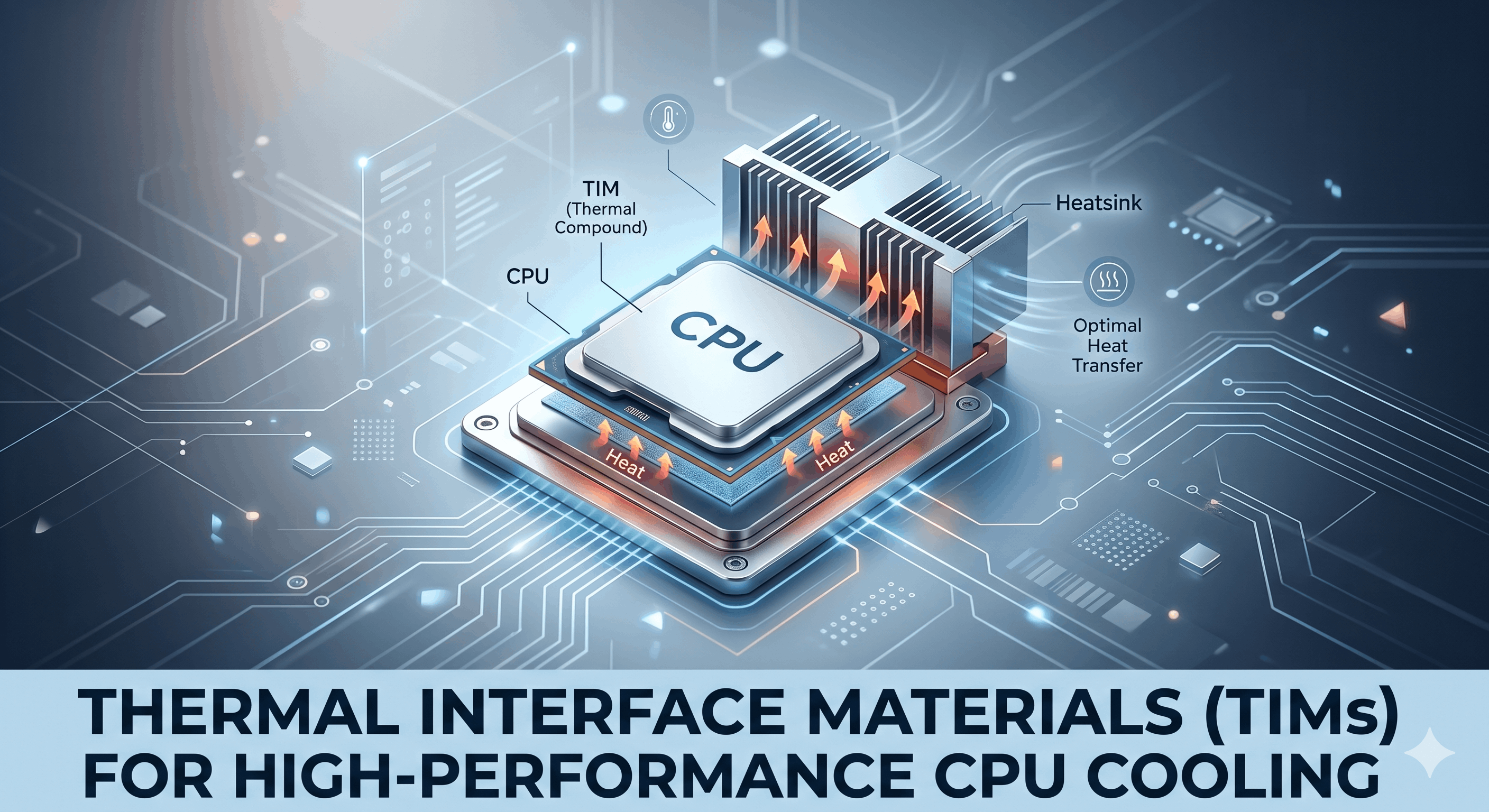
In the high-stakes world of modern computing, we often obsess over the “big” components. We track the clock speeds of the latest processors, the number of cores, and the sheer size of gargantuan liquid cooling radiators. However, there is a silent, microscopic hero—or villain—sitting directly in the middle of this hardware stack.
No matter how powerful your cooling system is, it is only as effective as the material that connects it to the CPU. This is the world of Thermal Interface Materials (TIMs). As we push into the era of 2nm process nodes and AI-driven workloads that generate unprecedented heat, the science of TIMs is evolving from simple “thermal grease” into a high-tech field of nanomaterials and molecular engineering.
1. The Microscopic Valley: Why We Need TIMs
To the naked eye, the top of a CPU (the Integrated Heat Spreader or IHS) and the bottom of a cooler look perfectly flat. In reality, at a microscopic level, they look like the surface of the moon—full of peaks, valleys, and ridges.
When you press two metal surfaces together, only about 1% to 5% of the surfaces actually make contact. The rest is filled with air. Air is an incredible insulator; it is the reason double-pane windows keep your house warm. In a computer, however, air is the enemy. It traps heat at the source, leading to “thermal throttling” where the CPU slows itself down to avoid melting.
A Thermal Interface Material’s primary job is to displace that air and fill every microscopic void with a substance that likes to move heat.
2. The Evolution of TIM Technology
Not all “pastes” are created equal. The industry has moved through several distinct generations of materials to keep up with the rising TDP (Thermal Design Power) of modern chips.
A. Silicone-Based Greases (The Standard)
These are the traditional white or grey pastes. They consist of a silicone oil base filled with thermally conductive particles like zinc oxide or aluminum oxide. They are reliable, electrically non-conductive, and last for years, but they have a lower “thermal conductivity” ($K$)—usually between 3 and 8 W/m·K.
B. Ceramic and Metallic Fillers (The High-Performance)
By using silver or high-purity ceramic powders, manufacturers have pushed performance higher. These materials offer better heat transfer but can be thicker and harder to apply. Some silver-based pastes carry a risk: they are “capacitive,” meaning if you spill them on the motherboard, they could potentially cause a short circuit.
C. Liquid Metals (The Enthusiast’s Choice)
Commonly made of Galinstan (a blend of gallium, indium, and tin), liquid metal is a game-changer. It has a thermal conductivity vastly higher than traditional paste (often exceeding 70 W/m·K).
-
The Catch: Gallium is “corrosive” to aluminum. If a liquid metal TIM touches an aluminum heatsink, it will literally eat through the metal, turning it into a brittle powder.
3. The Nano-Revolution: Graphene and Carbon Nanotubes
As we hit the limits of traditional chemistry, researchers are turning to the world of nanotechnology. This is where TIMs become truly “high-performance.”
Graphene: The 2D Superconductor
Graphene, a single layer of carbon atoms, has a theoretical thermal conductivity that dwarfs almost every other material on Earth. In modern TIMs, graphene “platelets” are mixed into the grease. These platelets act like high-speed highways for phonons (heat particles), allowing energy to bypass the slower silicone base.
Carbon Nanotubes (CNTs) and VACNTs
Carbon nanotubes are essentially rolled-up graphene. The current “holy grail” of research is Vertically Aligned Carbon Nanotubes (VACNTs). Instead of a messy paste, these are grown as a “forest” of tubes that stand upright. They connect the CPU directly to the cooler through millions of tiny, carbon-fiber pillars.
Boron Nitride (The “White Graphene”)
For applications where we need high heat transfer but zero electrical conductivity, Boron Nitride is the star. It provides graphene-like performance without the risk of frying electronic components.
4. Current Research and “Clinical” Trials in Hardware
While we don’t conduct medical trials for CPU paste, the industry performs “Accelerated Aging” and “Biological Impact” studies that are just as rigorous.
Performance Stability Trials
A major focus of current research is the “Pump-Out Effect.” Because CPUs heat up and cool down thousands of times, the metal surfaces expand and contract. This “breathing” motion can literally squeeze the thermal paste out of the sides over time. Recent “clinical” trials by material scientists involve 1,000-hour thermal cycling tests to develop “thixotropic” materials—pastes that stay liquid enough to move but thick enough to stay in place.
Nanotoxicity and Environmental Safety
As we move toward carbon nanotubes and metal powders, researchers are investigating the safety of handling these materials. Studies in the Journal of Occupational Health have looked at how nano-fillers interact with skin and lungs during the manufacturing process. This has led to the development of “encapsulated” nano-TIMs that provide the performance of nanotubes without the risk of airborne particle exposure.
5. Advantage–Risk Assessment
Before choosing a high-performance TIM, one must weigh the technical benefits against the practical dangers.
| TIM Type | Advantages | Risks & Disadvantages |
| Standard Paste | Safe, cheap, non-conductive, lasts 5+ years. | Lower thermal ceiling; prone to “dry-out.” |
| Liquid Metal | Best possible cooling (drops of 10-15°C). | Conductive, ruins aluminum, hard to apply/remove. |
| Graphene-Infused | Excellent balance of safety and performance. | Expensive; can be difficult to spread evenly. |
| Thermal Pads | No mess, consistent thickness, easy install. | Generally worse performance than paste; one-time use. |
| Phase Change (PCM) | Solid at room temp, melts when hot; no pump-out. | High initial cost; requires specific mounting pressure. |
6. The Future: 3D Printing and Diamond Fillers
The next frontier of CPU cooling isn’t just a better paste—it’s the elimination of the interface entirely.
Diamond-Infused Materials
Diamond is the best thermal conductor known to man (reaching 2200 W/m·K). While “diamond paste” already exists, it is often too abrasive for long-term use. Future research is focused on Synthetic Diamond Thin Films that are grown directly onto the CPU die at the factory.
3D Printed TIMs
Using additive manufacturing, engineers are designing “architected” TIMs. These are 3D structures that have a specific geometry designed to move heat in one direction (up) while resisting movement in others. This ensures that heat is “pumped” away from the hottest spots of the CPU (the cores) more efficiently than a uniform layer of grease ever could.
7. Conclusion: Why the “Bridge” Matters
In the world of high-performance computing, we are fighting a war against entropy. Every degree Celsius we can shave off a CPU’s temperature translates directly into longer hardware lifespan, higher frames per second in gaming, and faster processing in AI training.
Whether you are an enthusiast looking for the best liquid metal or a business owner looking for a reliable, long-term solution for a server farm, understanding the material science of the “Hidden Bridge” is essential. The future of cooling isn’t just about bigger fans—it’s about better atoms.