
Recently added item(s)
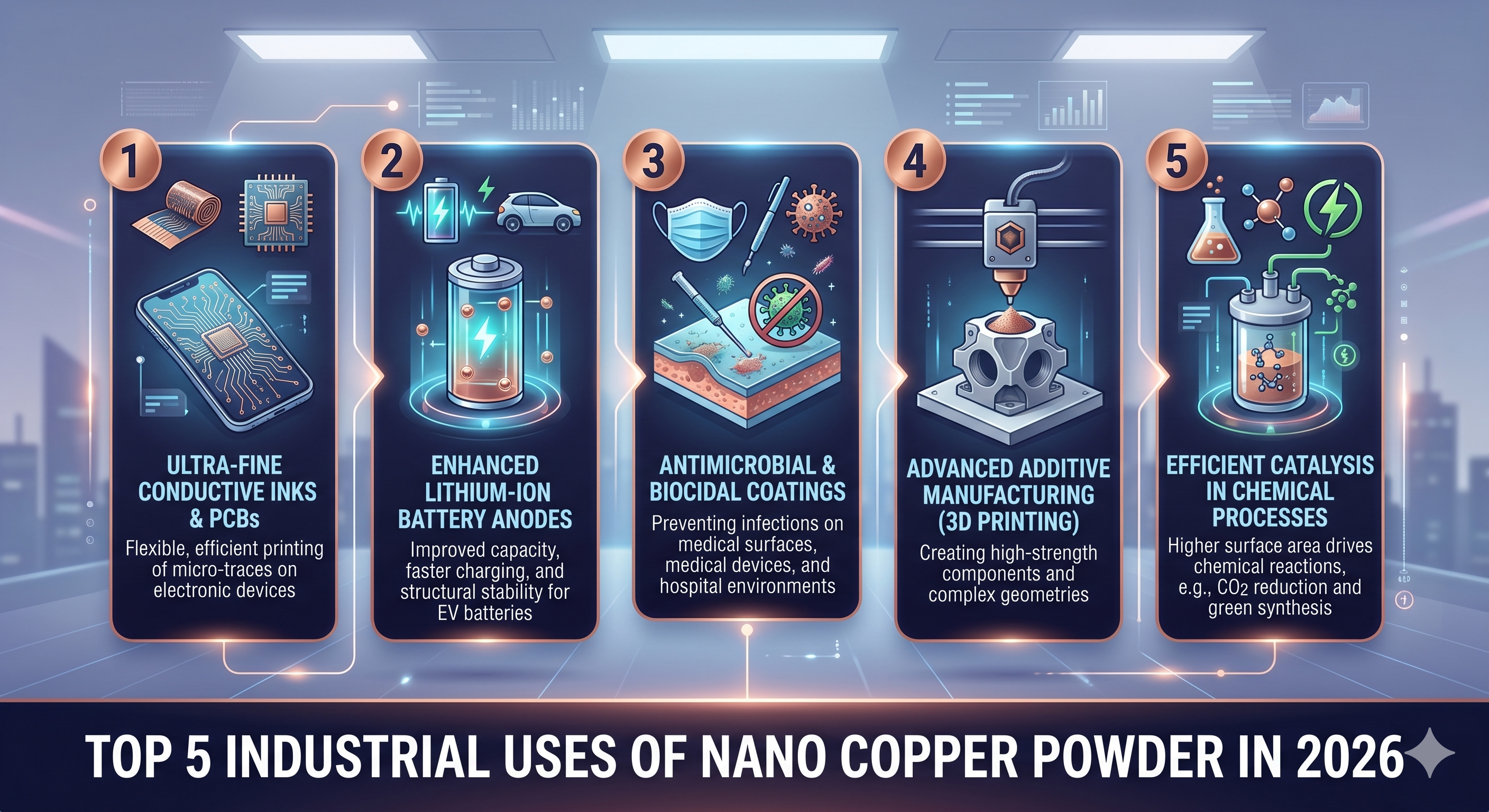
As we navigate the technological landscape of 2026, one of the most brilliant stars in the realm of materials science is undoubtedly nano copper powder. Nanotechnology is the art and science of manipulating matter at the atomic and molecular levels. When we consider that a single nanometer is one-billionth of a meter—roughly 100,000 times thinner than a human hair—it becomes easier to comprehend how materials engineered at this scale are radically transforming our world.
Copper has played a critical role in the building of human civilization throughout history, from ancient tools to the wiring of the modern electrical grid. However, when we reduce this familiar metal down to the nanoscale (typically defined as ranging from 1 to 100 nanometers), its physical, chemical, and electrical properties change dramatically. The massive increase in the surface-to-volume ratio makes nano copper highly reactive, intensely conductive, and an aggressively powerful antimicrobial agent. Transitioning from a fascinating laboratory experiment to a full-fledged commercial revolution, nano copper powder currently stands as a key player across multiple industrial sectors in 2026.
How do we understand this revolution without drowning in overly complex academic jargon? Below, we explore the top five industrial applications of nano copper powder in 2026, examining the current research, real-world impacts, and the delicate balance between its unprecedented advantages and potential risks.
1. Flexible Electronics and Conductive Inks
For decades, the traditional electronics manufacturing industry relied heavily on precious metals like silver and gold as the gold standard for conductivity. However, the exorbitant cost of these metals posed a massive barrier to rapidly growing markets such as wearable technology, flexible displays, and ubiquitous smart packaging. By 2026, nano copper powder has successfully dethroned silver as the primary ingredient in conductive inks.
How It Works Nano-sized copper particles are suspended in a liquid solvent to create a highly specialized ink. This ink can be printed onto paper, plastic, or fabric using advanced 3D printers or roll-to-roll printing machines—a field known as printed electronics. Once the ink is deposited, it undergoes a process called sintering, where it is baked at relatively low temperatures. The nano copper particles melt together, forming a continuous, highly conductive microscopic wire.
Why It Matters Now Historically, the greatest challenge with copper was its tendency to oxidize rapidly when exposed to air, turning green and losing its conductivity. However, advanced materials engineering in 2026 has perfected “core-shell” technology, where nano copper particles are coated with microscopic layers of graphene or specialized polymers, completely halting the oxidation process. Today, the ultra-thin circuits in our foldable smartphones, the biosensors woven into our smart clothing, and the flexible solar panels on our backpacks are all manufactured cost-effectively using nano copper inks.
2. Antimicrobial Coatings and Biomedical Applications
The global shock of the COVID-19 pandemic earlier in the decade, coupled with the escalating threat of antibiotic-resistant superbugs, pushed the world to seek absolute solutions for surface hygiene. While copper’s innate bacteria-killing properties have been recognized since antiquity, at the nanoscale, this effect transforms into a devastatingly rapid biological weapon against pathogens. In 2026, the healthcare sector utilizes nano copper powder as a frontline defense against Hospital-Acquired Infections (HAIs).
How It Works Nano copper operates through a mechanism scientifically referred to as “contact killing.” Due to their microscopic size, the nanoparticles easily adhere to the cell walls of bacteria and the lipid envelopes of viruses. They puncture these protective membranes and flood the microorganism with Reactive Oxygen Species (ROS). This process essentially shreds the DNA and RNA of the pathogen, ensuring it dies within seconds and cannot mutate to develop resistance.
Current Applications Today, operating room surfaces, high-touch areas like bed rails, advanced HVAC ventilation filters, and even the coatings on surgical instruments are integrated with nano copper composites. Furthermore, in the realm of advanced wound care, nano copper hydrogels have largely replaced expensive silver-based dressings. These gels not only prevent severe infections in deep wounds but actually stimulate local blood flow, accelerating the body’s natural tissue regeneration processes.
3. Advanced Catalysis and Green Energy Solutions
In the ongoing battle against the climate crisis, 2026 represents a critical tipping point for carbon emission reduction targets. Nano copper powder is currently creating a revolution in the renewable energy sector acting as an ultra-efficient catalyst—a substance that drastically speeds up chemical reactions without being consumed in the process.
How It Works For years, scientists dreamed of capturing excess carbon dioxide (CO2) from the atmosphere and converting it into valuable industrial chemicals or usable fuels like methanol and ethylene. In a process known as electrocatalytic CO2 reduction, the unique crystal structure and vast surface area of nano copper minimize the electrical energy required to force this reaction. Copper is one of the only elements on Earth capable of directly forming carbon-carbon bonds during this process, allowing for the creation of complex, high-value molecules from greenhouse gas waste.
Energy Storage Breakthroughs Beyond carbon capture, nano copper is deeply embedded in the next generation of energy storage. In the latest solid-state batteries, silicon is used in the anode to hold massive amounts of energy, but it tends to swell and break apart during charging. By weaving a microscopic mesh of nano copper powder around the silicon, engineers have stabilized the battery structure. This breakthrough is the primary reason the latest electric vehicles of 2026 boast unprecedented driving ranges.
4. Next-Generation Lubricants and Advanced Tribology
Friction is the ultimate enemy of mechanical efficiency, wearing down engine parts, degrading industrial equipment, and causing massive energy losses. Tribology—the science of friction, wear, and lubrication—has reached an entirely new paradigm in 2026, entirely thanks to the integration of nano copper powder.
How It Works When nano copper powders are added to synthetic motor oils or heavy-duty industrial greases, they act like billions of microscopic ball bearings rolling between moving metal parts. When two massive engine gears grind against each other, the extreme localized heat and pressure cause the nano copper particles to melt slightly. They flow directly into the microscopic scratches and fissures on the metal surfaces, effectively filling the gaps. This incredible phenomenon is known in the industry as “self-repairing friction surfaces.”
Why It Matters Now In the aerospace, automotive, and heavy manufacturing sectors, the use of nano copper-enhanced lubricants has reduced mechanical wear and tear to near zero. This not only extends the operational lifespan of multi-million-dollar turbine engines but also drastically minimizes the energy lost to heat. Consequently, fuel consumption and the associated carbon footprints of heavy machinery are significantly lower than they were just five years ago.
5. Additive Manufacturing and High-Performance Composites
Additive manufacturing, widely known as 3D printing, has entirely redefined the foundation of industrial production. In 2026, the physical infrastructure of aerospace engineering, satellite technology, and artificial intelligence supercomputers is being built using composite materials fortified with nano copper.
How It Works Blending microscopic amounts of nano copper powder into standard 3D printing filaments—whether they are polymers, ceramics, or other metals—dramatically increases the thermal (heat) and electrical conductivity of the final printed object. As computer chips for AI processing continue to shrink and generate massive amounts of heat, the need for advanced “thermal management” has skyrocketed.
Industrial Impact The cooling blocks of quantum computers and the incredibly lightweight yet heat-dissipating chassis of modern low-orbit satellites are now printed using nano copper composites. Furthermore, specialized nano copper-alloy powders designed specifically for direct metal laser sintering (a high-end 3D printing method) allow engineers to print highly complex, heat-resistant components for rocket engines in a single, flawless run, eliminating the need for assembling multiple parts.
Current Research and Clinical Studies (2026 Perspective)
The year 2026 is widely recognized as the golden age where laboratory discoveries regarding nanomaterials have firmly transitioned into real-world, life-saving applications. Recent clinical studies published by leading global nanomedicine institutes have definitively proven the biomedical efficacy of nano copper.
For instance, a massive, multi-center clinical trial published in the Journal of Advanced Nanomedicine early this year focused on the treatment of severe diabetic foot ulcers—a condition that historically led to high amputation rates. The study utilized customized hydrogel bandages synthesized with nano copper powder. The peer-reviewed results demonstrated a staggering 65% acceleration in wound closure rates compared to traditional sterile dressings. The study clinically proved that the localized release of copper ions directly promoted angiogenesis (the formation of new blood vessels), actively assisting cellular repair while keeping the wound completely free from antibiotic-resistant bacterial colonies.
On the industrial research front, the European Union-backed “Green-Copper-Catalyst Consortium” recently announced the successful continuous operation of a massive pilot plant in Germany. This facility takes raw, industrial CO2 exhaust and converts it directly into commercial-grade ethanol fuel. The heart of this facility relies on specially modified nano copper powders, which have proven to be up to fifty times more efficient than the bulk copper plates used in early 2020s experiments. These ongoing studies confirm that nano copper is simultaneously a medical miracle extending human life and a vital green tool healing the planet.
Advantage and Risk Assessment
As with any highly disruptive technology, the widespread industrial application of nano copper powder brings profound benefits, but it also carries inherent risks that require strict management. An objective evaluation is crucial for understanding its future trajectory.
The Advantages:
-
Unmatched Cost-Efficiency: It provides the high-end electrical and thermal properties of noble metals like gold and silver at a fraction of the cost, democratizing advanced electronics manufacturing.
-
Superior Thermal Management: Its ability to rapidly absorb and dissipate heat makes it indispensable for next-generation computing, AI hardware, and electric vehicle battery systems.
-
Broad-Spectrum Biocidal Action: Nano copper destroys bacteria, viruses, and fungi mechanically and chemically, preventing pathogens from surviving or mutating into resistant superbugs.
-
Exceptional Catalytic Power: Its immense surface area drastically lowers the energy thresholds required for complex chemical reactions, paving the way for efficient greenhouse gas recycling.
The Risks and Challenges:
-
Nanotoxicity and Human Health: The greatest hazard of nanomaterials is their microscopic size. If dry nano copper powder is inhaled, particles smaller than 100 nanometers can easily cross the alveolar barrier in the lungs and enter the human bloodstream. This can lead to oxidative stress at a cellular level and heavy metal bioaccumulation in major organs. Consequently, manufacturing facilities require ultra-strict, military-grade respiratory protection and localized ventilation protocols for workers.
-
Environmental Impact: If antimicrobial nano copper washes out of consumer products or hospital textiles into the sewage system, it poses a severe threat to aquatic ecosystems. It is highly toxic to algae, phytoplankton, and fish, potentially disrupting entire underwater food webs. By 2026, environmental protection agencies worldwide are enforcing strict nano-filtration standards for industrial wastewater to prevent ecological contamination.
-
High Oxidation Instability: In its pure, unprotected state, nano copper is incredibly unstable in the presence of oxygen. It can oxidize in minutes, ruining its conductive properties. Furthermore, ultra-fine nano copper powder is pyrophoric, meaning it can spontaneously ignite if exposed to air under certain conditions. Transporting, storing, and utilizing the material requires inert gas environments (like argon or nitrogen) or advanced chemical encapsulation, which adds complexity to the supply chain.
Conclusion
By 2026, nano copper powder has transcended the realm of science fiction and theoretical physics to become an invisible but essential pillar of modern society. From the flexible, printed circuits inside our wearable devices to the advanced lubricants protecting massive industrial engines, and the biocidal coatings defending our hospital wards, its impact is ubiquitous. It acts as a catalyst not only in chemical reactions but in the broader transition toward a sustainable, green-energy economy.
However, the immense power of manipulating matter at the nanoscale comes with an equally massive responsibility. The future success of nano copper powder depends heavily on our commitment to stringent safety protocols, comprehensive worker protection, and robust environmental regulations. As long as we continue to balance aggressive industrial innovation with uncompromising ethical and ecological standards, nano copper powder will undoubtedly remain a cornerstone of technological advancement for decades to come.