
Recently added item(s)
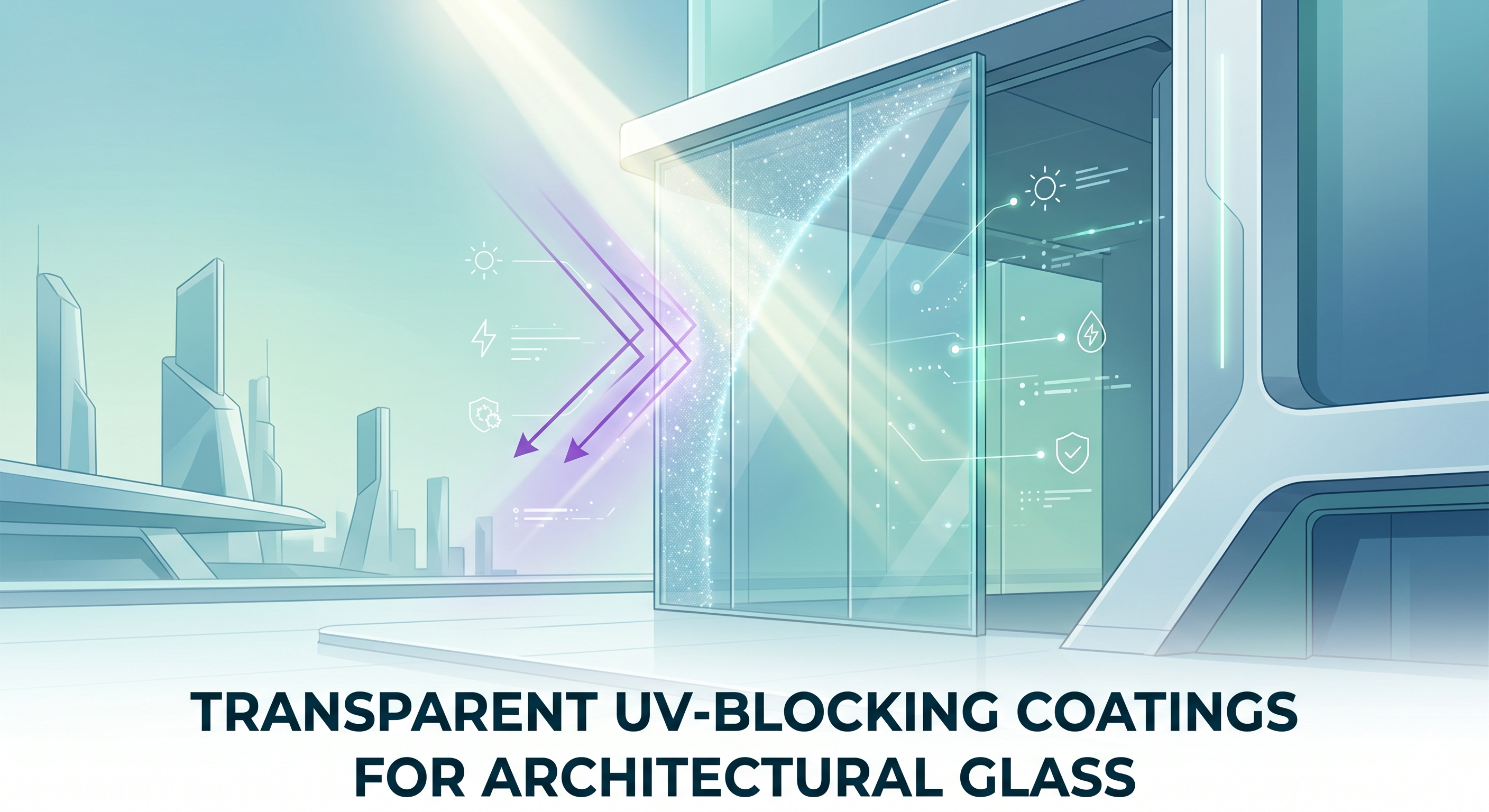
In the landscape of modern architecture, glass is no longer just a window; it is a structural statement. From the soaring skyscrapers of New York to the minimalist villas of the Mediterranean, expansive glazing has become the hallmark of contemporary design. It connects us with the outdoors, floods our interiors with natural light, and creates a sense of boundless space. However, this transparency comes with a hidden cost: the relentless penetration of Ultraviolet (UV) radiation.
For decades, the trade-off for “bringing the outside in” was the degradation of interior materials and potential health risks for occupants. Today, a silent revolution in material science—specifically in nanotechnology and thin-film coatings—is changing the narrative. Transparent UV-blocking coatings are the “invisible shields” of the 21st century, allowing us to enjoy the sun’s brilliance without its destructive side effects.
Understanding the Spectrum: Why UV Protection Matters
To understand the necessity of these coatings, we must first look at the solar spectrum. Sunlight reaches the Earth in three primary forms: visible light, infrared (heat), and ultraviolet radiation. While UV radiation accounts for only about 3% to 7% of the solar energy reaching the surface, its high energy makes it disproportionately impactful.
UV radiation is typically categorized into three types:
-
UVA (315–400 nm): Long-wave UV that penetrates deep into the skin and causes the fading of fabrics, wood, and artwork. It passes easily through standard clear glass.
-
UVB (280–315 nm): Shorter-wave UV responsible for sunburns. While standard glass filters out a significant portion of UVB, it does not stop it entirely.
-
UVC (100–280 nm): Almost entirely absorbed by the Earth’s atmosphere.
Without specialized coatings, a standard double-glazed window acts like a selective filter that lets in the very waves that damage our skin and bleach our furniture. Transparent UV-blocking coatings are designed to target these specific wavelengths while remaining completely clear to the human eye.
The Nanotechnology Revolution: How It Works
The challenge in creating a UV-blocking coating is maintaining transparency. If you want to block light, you can simply paint a surface. But if you want to block only UV light while letting visible light pass through, you need to work at the molecular level. This is where nanotechnology enters the frame.
Most modern UV-blocking coatings utilize Metal Oxide Nanoparticles. Materials such as Zinc Oxide (ZnO) and Titanium Dioxide (TiO2) are naturally effective at absorbing UV radiation. When these materials are engineered into particles smaller than the wavelength of visible light (less than 100 nanometers), they become invisible to the naked eye. They are “too small” to scatter visible light, but they are “just right” to intercept and dissipate UV energy.
Another approach involves Thin-Film Interference. This method uses multiple layers of dielectric materials (like Silicon Dioxide or Aluminum Oxide) applied through a process called Magnetron Sputtering. These layers are calculated so that UV waves bouncing off the different levels interfere with each other and cancel out, while visible light waves are synchronized to pass through even more clearly.
Current Technologies and Material Innovations
The field is rapidly moving beyond simple oxide layers. Recent research has focused on hybrid organic-inorganic coatings and the integration of 2D materials.
1. Zinc Oxide (ZnO) and Titanium Dioxide (TiO2)
These remain the industry gold standard. They are chemically stable, relatively inexpensive, and highly effective. Researchers are currently focusing on “doping” these oxides with elements like Aluminum or Indium to enhance their durability and broaden the range of UV wavelengths they can block.
2. Cerium Oxide (CeO2)
Cerium oxide is emerging as a powerful alternative. It has a sharper “cut-off” point in the UV spectrum, meaning it can block more of the high-energy UVA spectrum without tinting the glass yellow—a common problem with older UV-absorbing materials.
3. Graphene and Carbon Nanotubes
While often associated with conductivity, graphene and its derivatives are being tested for UV protection. Because graphene is only one atom thick, it is incredibly transparent. When integrated into a polymer matrix, it can create a dense mesh that absorbs UV radiation while adding structural strength to the glass surface.
Research Frontiers: What the Labs are Saying
A 2024 study published in the Journal of Non-Crystalline Solids highlighted the development of a new “Sol-Gel” coating technique. This process allows the coating to be applied at lower temperatures, making it possible to treat existing windows (retrofitting) rather than requiring the high-heat vacuum chambers used in traditional glass manufacturing.
Furthermore, research into Graphitic Carbon Nitride (g-C3N4) has shown promise. This material is not only excellent at blocking UV light but also possesses photocatalytic properties. This means that when UV light hits the coating, it triggers a chemical reaction that breaks down organic dirt on the glass surface, essentially creating a “self-cleaning” UV-protected window.
The Human Factor: Clinical Perspectives on UV-Blocking Glass
We often think of UV damage as something that happens at the beach, but dermatologists have long raised concerns about “indoor UV exposure.”
A landmark clinical study published in the New England Journal of Medicine showcased a delivery truck driver who had significantly more wrinkles and sun damage on the left side of his face (the side exposed to the side window) than the right. While this was an extreme case of occupational exposure, it underscored a vital point: UVA radiation penetrates glass and contributes to photoaging and the risk of melanoma.
Clinically, transparent UV coatings are now being recommended for buildings with high occupancy, such as hospitals and schools. Protecting the eyes is equally critical. Prolonged exposure to UVA through windows can contribute to the development of cataracts and macular degeneration. By installing architectural glass that filters 99% of UV radiation, building owners are providing a passive health benefit to every occupant.
Advantages vs. Risks: A Balanced Evaluation
Like any technological advancement, UV-blocking coatings come with a set of pros and cons that architects and homeowners must weigh.
The Advantages:
-
Preservation of Interiors: These coatings can extend the life of carpets, hardwood floors, and expensive upholstery by up to three times by preventing “solar bleaching.”
-
Energy Efficiency: By blocking specific wavelengths, these coatings often reduce the “Solar Heat Gain Coefficient” (SHGC), keeping buildings cooler in the summer and reducing air conditioning costs.
-
Health and Safety: As mentioned, they provide a constant, passive shield against skin and eye damage.
-
Aesthetics: Unlike dark tints or reflective films, transparent coatings do not change the appearance of the building or distort the natural colors of the view outside.
The Risks and Challenges:
-
Cost: High-performance coatings, especially those applied via sputtering, can increase the initial cost of glass by 20% to 50%.
-
Durability and Delamination: If the coating is applied to the exterior surface (Surface 1) of the glass, it is exposed to the elements. Over a decade, micro-scratches or chemical cleaning agents can degrade the coating, leading to a “cloudy” appearance.
-
The “Yellowing” Effect: Some organic UV absorbers can degrade over time when exposed to extreme heat, leading to a slight yellowish tint that can affect the interior color palette.
-
Plant Growth: For indoor gardens or greenhouses, blocking 99% of UV radiation can be a double-edged sword. While plants need visible light for photosynthesis, some species rely on specific UV wavelengths to produce protective pigments or to signal flowering.
The Road Ahead: Integration with Smart Systems
The future of architectural glass lies in “Dynamic Coatings.” We are moving toward a world where glass can adapt to the environment. Scientists are currently developing Thermochromic and Electrochromic coatings that can change their UV-blocking and heat-reflecting properties based on temperature or an electric signal.
Imagine a window that is perfectly transparent on a cloudy morning but becomes a high-performance UV barrier as the sun reaches its zenith. This integration of smart technology with nanotechnology will turn buildings into living organisms that protect their inhabitants while optimizing energy consumption.
Conclusion
Transparent UV-blocking coatings represent the perfect marriage of form and function. They allow us to pursue the architectural dream of transparency without compromising our health or the longevity of our environments. As manufacturing techniques become more efficient and materials like graphene and cerium oxide move from the lab to the factory floor, these “invisible shields” will become a standard requirement for every pane of glass in our cities.
In an age where we spend 90% of our time indoors, the quality of the light that reaches us is as important as the air we breathe. By investing in advanced coating technology, we aren’t just protecting our furniture—we are protecting ourselves.