Thermal Conductivity Breakthroughs Using Carbon-Based Nanomaterials

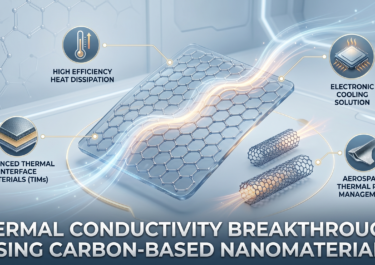
Thermal management is one of the most significant bottlenecks in modern technology. From the overheating of smartphones to the cooling costs of massive data centers, and from the lifespan of electric vehicle batteries to the heat shields of spacecraft, everything depends on how quickly and effectively we can transfer heat. Traditional metals like copper and aluminum are reaching their physical limits. However, in the realm of nanotechnology, carbon-based nanomaterials—such as Carbon Nanotubes (CNTs) and Graphene—are offering a new physical reality to break through these barriers.


Read more 

Graphene in Water Filtration: Solving the Global Water Crisis

The global water crisis is one of the most pressing challenges of the 21st century. As of 2026, nearly two billion people live in water-stressed regions, and that number is projected to rise. Traditional desalination and filtration methods, while effective, are often energy-intensive, expensive, and unable to filter out modern contaminants like “forever chemicals” (PFAS).

Read more 

The Impact of Graphene on Aerospace Fuel Efficiency

The aerospace industry is at a critical crossroads. With global travel rebounding and environmental regulations tightening, the pressure to reduce carbon emissions and improve fuel economy has never been higher. While traditional metallurgy and standard carbon fibers have served us well for decades, they are reaching their physical limits. Enter graphene—a single layer of carbon atoms arranged in a hexagonal lattice that is 200 times stronger than steel yet incredibly lightweight.

Read more 

How Graphene-Enhanced Concrete is Building the Cities of Tomorrow

The world is built on concrete. It is the second most consumed substance on Earth, surpassed only by water. However, our reliance on this gray foundation comes with a heavy price: the cement industry alone is responsible for nearly 8% of global CO2 emissions. To build the sustainable “Cities of Tomorrow,” we don’t just need new designs; we need a radical upgrade to the very atoms of our building blocks.

Read more 

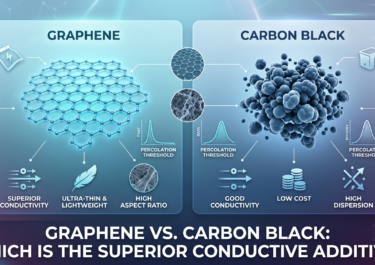
Graphene vs. Carbon Black: Which is the Superior Conductive Additive?

In the industrial world, electricity isn’t just something that flows through wires; it’s something we often need to embed directly into materials. From the touchscreens on our phones to the tires on our cars and the electrodes in our batteries, we rely on “conductive additives” to turn insulating plastics and rubbers into functional, electronic components.

Read more 

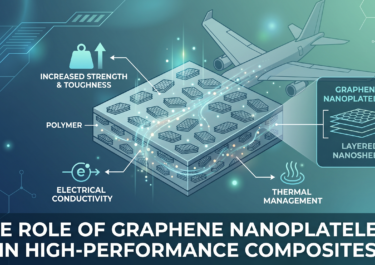
The Role of Graphene Nanoplatelets in High-Performance Composites

In the world of advanced engineering, the quest has always been to find materials that are lighter than plastic yet stronger than steel. For decades, carbon fiber was the undisputed champion of this domain. However, a new contender has emerged from the nanoworld to push the boundaries of what “high-performance” truly means: Graphene Nanoplatelets (GNPs).

Read more 

Graphene in EV Batteries: Charging Your Car in 5 Minutes?

The electric vehicle (EV) revolution is no longer a distant dream; it is parked in our driveways. However, for many gasoline-car loyalists, two major hurdles remain: range anxiety and charging time. While pumping gas takes mere minutes, fully charging a standard EV can take anywhere from forty minutes to several hours.

Read more 

Why Single-Walled Carbon Nanotubes (SWCNTs) are the Secret to Next-Gen Electronics

The tech world has been chasing the mantra of “smaller, faster, and more efficient” for decades. However, traditional silicon-based semiconductors are hitting their physical limits. As transistors shrink to the size of just a few atoms, silicon begins to suffer from heat dissipation issues and electron leakage. Enter the structure hailed by scientists as the “Holy Grail” of electronics: Single-Walled Carbon Nanotubes (SWCNTs).

Read more 

The Graphene Revolution: How Nanocarbons are Redefining Material Science

In 2004, a simple experiment involving adhesive tape and a piece of graphite changed the world forever. Two researchers at the University of Manchester managed to isolate a single layer of carbon atoms, a feat previously thought to be physically impossible. This material, known as Graphene, earned them the Nobel Prize and ignited a global race to harness the power of “Nanocarbons.”

Read more 

What is Molybdenum (Mo) Nanopowder/Nanoparticles?

Molybdenum (Mo) nanopowder and nanoparticles are finely divided particles of metallic molybdenum with nanoscale dimensions, typically less than 100 nm. These nanomaterials exhibit superior chemical reactivity, high surface area, excellent catalytic activity, and unique mechanical and electronic properties, making them suitable for advanced technological applications.

Read more 

What is Carbon Nanotube-TiO₂ Prepared by Electrostatic Adsorption?

Carbon Nanotube-TiO₂ composite materials prepared by electrostatic adsorption combine the excellent electrical, thermal, and mechanical properties of carbon nanotubes (CNTs) with the photocatalytic and semiconductor properties of titanium dioxide (TiO₂). This unique composite is typically synthesized by electrostatically attaching TiO₂ nanoparticles onto the surface of CNTs.

Read more 

What is Copper Indium (Cu-In) Alloy Nanopowder/Nanoparticles?

Copper Indium (Cu-In) alloy nanopowder/nanoparticles are nanoscale materials composed of copper (Cu) and indium (In) with precisely controlled compositions. These nanoparticles are widely recognized for their excellent electrical conductivity, optical properties, and catalytic efficiency, making them valuable in electronics, solar energy, and advanced technology applications.

Read more 

What is Carbon Nanotubes Doped with 52 wt% Silver (Ag) Nanopowder/Nanoparticles?

Carbon nanotubes doped with 52 wt% silver (Ag) nanoparticles are advanced composite materials combining the extraordinary mechanical and electrical properties of carbon nanotubes (CNTs) with the excellent electrical conductivity, antimicrobial activity, and catalytic capabilities of silver nanoparticles. These nanocomposites are extensively utilized across electronics, medical, catalytic, and advanced material applications.

Read more 

What is Aluminum Silicon (AlSi) Sputtering Target?

Aluminum Silicon (AlSi) sputtering targets are specialized alloy materials composed of aluminum (Al) and silicon (Si), widely utilized in thin film deposition techniques such as Physical Vapor Deposition (PVD). These targets facilitate the precise deposition of aluminum-silicon films, essential in the semiconductor, solar cell, optical coating, and electronics industries.

Read more 

What is Lithium Lanthanum Tantalum Zirconate (LLZTO)?

Lithium Lanthanum Tantalum Zirconate (LLZTO) is an advanced lithium-ion conductive ceramic electrolyte material known for its high ionic conductivity, chemical stability, and excellent electrochemical performance. LLZTO is primarily used as a solid-state electrolyte in next-generation lithium-ion and solid-state batteries, facilitating safer and higher-performance energy storage solutions.

Read more 

What are Aluminum Oxide (Al₂O₃) Sputtering Targets?

Aluminum Oxide (Al₂O₃) Sputtering Targets, also known as alumina sputtering targets, are high-purity ceramic materials widely utilized in thin-film deposition technologies. Alumina sputtering targets offer exceptional dielectric strength, thermal stability, chemical resistance, and mechanical robustness, making them essential for electronic, optical, semiconductor, and coating industries.

Read more