Investing in Industrial Commodities: Silver, Tungsten, and Beyond

Industrial commodities are essential materials that form the basis of a functioning global economy. These tangible assets, often mined or extracted, are critical across a vast array of sectors, from infrastructure development to high-tech manufacturing and clean energy. While the term “commodities” can include energy, metals, and agricultural products, this article will focus on the investing landscape of non-ferrous metals and rare earths, with a particular emphasis on two highly versatile and increasingly critical elements: silver and tungsten. We’ll also peek into the fascinating and crucial world of “beyond,” looking at the factors that will shape the future of industrial commodity investment.

Read more 

Digital Transformation in the Chemical Industry (Industry 4.0)

The chemical industry has traditionally been defined by physical assets: massive reactors, miles of stainless steel piping, and the precise manipulation of atoms. However, a new catalyst is transforming the sector from the inside out. Digital transformation, often referred to as Industry 4.0 or “Chemistry 4.0,” is the integration of “bits” with “atoms.” It represents a shift where data becomes as valuable as the raw materials themselves.

Read more 

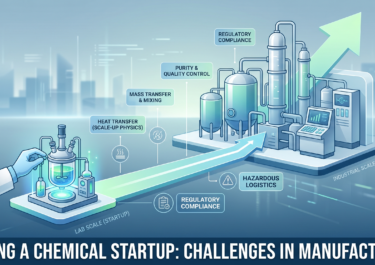
Scaling a Chemical Startup: Challenges in Manufacturing

The journey of a chemical startup from a laboratory bench to a commercial-scale manufacturing facility is often described as crossing the “Valley of Death.” While a scientist might successfully synthesize a few milligrams of a “wonder material” in a controlled environment, producing that same material by the ton—with identical purity, structure, and performance—is a monumental engineering challenge.

Read more 

Why Turkey is Becoming a Hub for Nanotechnology Production

The global industrial landscape is undergoing a profound transformation. We are moving away from an era defined solely by “bigger is better” and entering one defined by the “power of the small.” Nanotechnology—the manipulation of matter at the atomic and molecular scale—is the engine driving this change. While traditional tech giants have long dominated this space, a new player has emerged as a formidable contender on the world stage: Turkey.

Read more 

The Logistics of Hazardous Chemicals: Compliance and Safety

The global economy is built on a foundation of chemicals. From the lithium-ion batteries in our smartphones to the advanced polymers in medical devices and the specialized metal powders used in aerospace, hazardous materials (hazmat) are the silent engine of modern life. However, moving these substances from a synthesis lab to an industrial plant is a high-stakes operation. The logistics of hazardous chemicals is not merely a matter of transportation; it is a complex intersection of chemistry, international law, engineering, and digital risk management.

Read more 

Sourcing Nanomaterials: How to Ensure Quality and Purity

The nanotechnology market is no longer a niche scientific playground; it is a multi-billion dollar engine driving the next generation of electronics, medicine, and advanced manufacturing. However, as the demand for materials like graphene, carbon nanotubes, and metal nanopowders skyrockets, the supply chain has become increasingly complex. For researchers and industrial manufacturers alike, the primary challenge is no longer just “finding” these materials, but ensuring that what arrives in the lab or factory matches the technical specifications on the data sheet.

Read more 

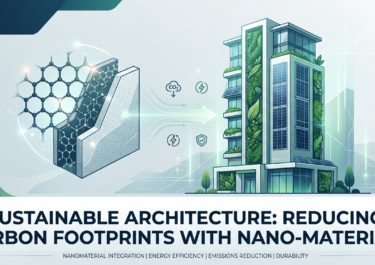
Sustainable Architecture: Reducing Carbon Footprints with Nano-Materials

The global construction industry is at a crossroads. As the primary driver of urban expansion, it is also one of the world’s largest polluters, accounting for nearly 40% of global energy-related carbon dioxide emissions. From the energy-intensive production of steel and cement to the lifelong heating and cooling demands of finished buildings, the “carbon debt” of our built environment is staggering. However, a silent revolution is taking place at the molecular level.

Read more 

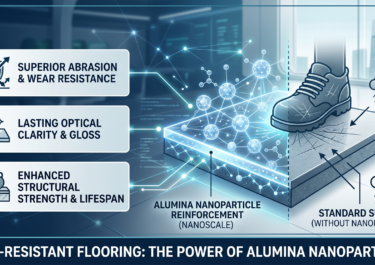
Wear-Resistant Flooring: The Power of Alumina Nanoparticles

In the world of interior design and architecture, flooring is literally the foundation of every space. It endures the heaviest traffic, bears the weight of furniture, and faces the constant onslaught of scuffs, scratches, and abrasions. For decades, home and business owners have been caught in a cycle of installing beautiful floors, watching them degrade over time, and eventually facing the costly process of refinishing or replacement.

Read more 

The Future of “Active” Packaging in Smart Logistics

In the traditional supply chain, a package has only had a few fundamental jobs: containment, convenience, and passive protection. It acts as a barrier, preventing external dirt or moisture from damaging the valuable cargo within. However, as the world of modern logistics grows smarter, more connected, and more demanding, the cardboard box and plastic wrap are undergoing a remarkable transformation.

Read more 

Nano-Ceramic Coatings for Luxury Furniture Protection

Luxury furniture is more than just functional décor; it is an investment in artistry, craftsmanship, and ambiance. Whether it is an antique mahogany dining table, a supple Italian leather sofa, or a contemporary piece featuring polished marble and exotic veneers, these items often represent significant financial and emotional value. However, the very materials that define their luxury—delicate wood grains, porous stones, and high-quality textiles—are the ones most vulnerable to the hazards of daily life: spills, scratches, sunlight, and humidity.

Read more 

The Aesthetics of Nanomaterials: Creating Invisible Protection

Throughout human history, protection has been visually apparent. Think of the thick, heavy coats of varnish on ancient Renaissance paintings, the metallic armor of knights, or the bulky plastic casings on our smartphones. Our concept of shielding something valuable—be it art, infrastructure, or our own skin—has almost always required a compromise: we must add a visible layer of defense that fundamentally changes how the object looks.

Read more 

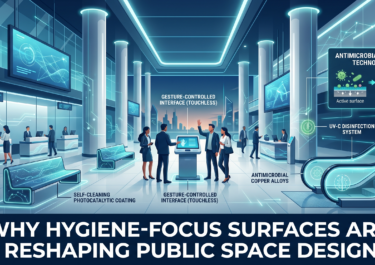
Why Hygiene-Focus Surfaces are Reshaping Public Space Design

For most of modern architectural history, the design of public spaces—airports, subways, hospitals, and shopping malls—was guided by a triad of priorities: aesthetics, durability, and cost. While cleanliness was always a consideration, it was treated as a maintenance task rather than a fundamental structural requirement. However, a global shift in public health consciousness has permanently altered this hierarchy.

Read more 

Anti-Fog Coatings for Automotive and Industrial Mirrors

Visibility is the cornerstone of safety in both high-speed transportation and complex industrial environments. Whether it is a driver merging onto a highway on a humid morning or an operator maneuvering a forklift in a temperature-controlled warehouse, the sudden clouding of a mirror can lead to catastrophic results. This phenomenon, known as fogging, is more than just a nuisance—it is a significant engineering challenge.

Read more 

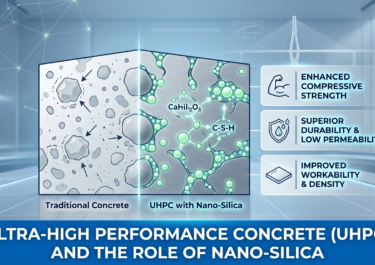
Ultra-High Performance Concrete (UHPC) and the Role of Nano-Silica

For decades, the construction industry relied on traditional concrete—a reliable but limited material. However, as our architectural ambitions reach higher and our infrastructure requirements become more demanding, the limitations of standard concrete have become apparent. Enter Ultra-High Performance Concrete (UHPC). Often described as the “superhero” of building materials, UHPC is redefining what is possible in civil engineering.

Read more 

Anti-Graffiti Coatings for Urban Infrastructure

In the metropolitan landscapes of 2026, the battle for the visual soul of the city has moved beyond traditional law enforcement and into the realm of advanced material science. For decades, graffiti has been a polarizing subject—viewed by some as a vibrant form of “street art” and by others as a symptom of urban decay and a significant financial burden on taxpayers. Regardless of one’s artistic stance, the physical reality is clear: the cost of removing unwanted paint from bridges, transit systems, and historical monuments exceeds billions of dollars globally every year.

Read more 

Smart Windows: How Nano-Coatings Control Building Temperature

In the architectural world of 2026, the concept of a “wall” is becoming increasingly fluid. For decades, windows were the weakest link in a building’s thermal armor—essentially “holes” in the insulation where expensive heat escaped in the winter and punishing solar radiation poured in during the summer. However, a revolution in material science has turned the glass pane from a passive observer into an active gatekeeper.

Read more