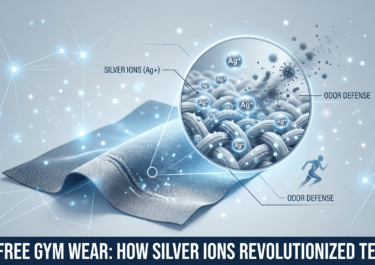
Odor-Free Gym Wear: How Silver Ions Revolutionized Textiles

There is a universal truth among fitness enthusiasts: the most grueling workouts are often followed by the most stubborn smells. For decades, gym-goers accepted the “stink” as a badge of honor, a testament to their dedication. Traditional fabrics, especially the synthetic fibers praised for their moisture-wicking properties, seemed to harbor odors even after multiple wash cycles.

Read more 

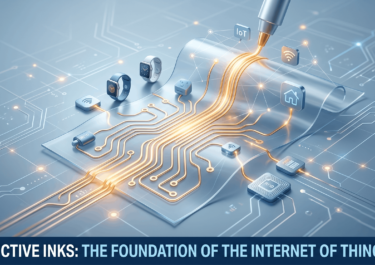
Conductive Inks: The Foundation of the Internet of Things (IoT)

The Internet of Things (IoT) is no longer a futuristic concept; it is the reality of our connected world. From smartwatches tracking our heartbeats to industrial sensors optimizing supply chains, billions of devices are now communicating wirelessly. At the heart of this revolution lies a critical, yet often invisible, technology: conductive inks. These specialized materials are transforming traditional, rigid electronics into flexible, stretchable, and lightweight systems, effectively serving as the foundational circuitry upon which the sprawling ecosystem of IoT is built.

Read more 

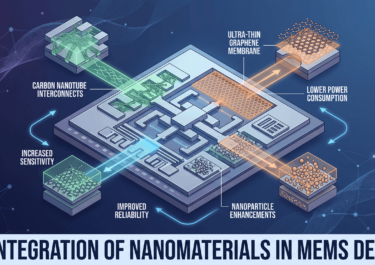
The Integration of Nanomaterials in MEMS Devices

The world of technology is governed by a simple rule: smaller is often better. For decades, Micro-Electro-Mechanical Systems (MEMS) have been the unsung heroes of the digital age. They are the tiny accelerometers that rotate your smartphone screen, the pressure sensors in your car’s tires, and the microscopic mirrors in digital projectors. However, as we push toward the limits of physics, traditional silicon-based MEMS are facing a “size wall.”

Read more 

Printed Sensors for Smart Agriculture: Monitoring Soil in Real-Time

The global population is projected to reach nearly 10 billion by 2050. To feed this many people, global food production must increase by approximately 70%. However, we are facing this challenge in the midst of a climate crisis, shrinking arable land, and a desperate need to reduce the environmental footprint of industrial farming. The answer to this paradox lies in “Smart Agriculture”—a data-driven approach where every drop of water and every gram of fertilizer is optimized.

Read more 

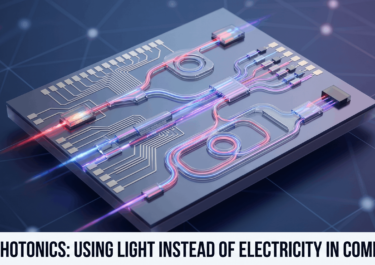
Nanophotonics: Using Light Instead of Electricity in Computing

The history of computing has been a relentless race toward miniaturization. For decades, we have followed Moore’s Law, doubling the number of transistors on a silicon chip roughly every two years. However, we have hit a physical wall. As electronic components shrink to the size of atoms, they leak energy, generate immense heat, and face the “bottleneck” of electron travel speeds.

Read more 

EMI Shielding in 5G Technology: Challenges and Nano-Solutions

The digital world is currently undergoing a massive transformation. We are moving from a world where “some things” are connected to a reality where “everything” is connected. 5G technology is the central nervous system of this revolution, promising speeds up to 100 times faster than 4G and latencies so low they are almost imperceptible. However, this invisible leap forward comes with a hidden, technical price tag: a chaotic environment of electromagnetic interference (EMI).

Read more 

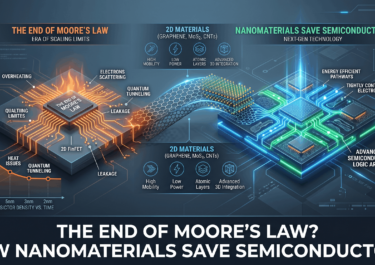
The End of Moore’s Law? How Nanomaterials Save Semiconductors

For more than half a century, the technology industry has marched to the beat of a single, relentless drum: Moore’s Law. In 1965, Gordon Moore, the co-founder of Intel, predicted that the number of transistors on a microchip would double approximately every two years, while the cost of computers would be halved. For decades, this prediction held remarkably true, powering the transition from room-sized mainframes to the supercomputers we now carry in our pockets.

Read more 

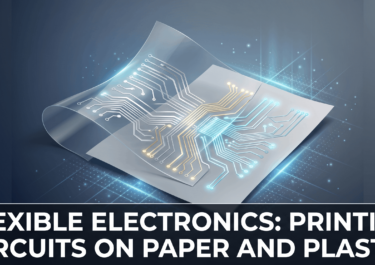
Flexible Electronics: Printing Circuits on Paper and Plastic

For over half a century, the word “electronics” has been synonymous with rigid, green fiberglass boards, stiff silicon chips, and bulky enclosures. We have lived in a world of hard angles and fragile components. However, a quiet revolution is currently unfolding in laboratories and high-tech manufacturing facilities. The future of technology is no longer rigid—it is bendable, foldable, and even wearable.

Read more 

Nano-Sensors for Real-Time Industrial Gas Leak Detection

In the heart of modern industrial complexes—from massive petrochemical refineries to high-tech semiconductor fabrication plants—thousands of kilometers of piping carry invisible, often odorless, and frequently dangerous gases. Traditional gas detection systems have served us well for decades, but as industry moves toward “Industry 4.0,” the margin for error has shrunk. Enter the world of nanotechnology, where sensors the size of a dust mote are redefining what it means to be “safe.”

Read more 

Quantum Dots: The Future of Display Technology and Beyond

In the realm of nanotechnology, few discoveries have captured the imagination of scientists and industry leaders quite like Quantum Dots (QDs). These microscopic semiconductor particles, often referred to as “man-made atoms,” are so small that their optical and electronic properties differ significantly from those of larger particles. While they might sound like something out of a science fiction novel, they are already powering the screens in our living rooms and are poised to revolutionize everything from cancer surgery to renewable energy.

Read more 

Custom Synthesis: Meeting Unique Client Demands in Nanotech

Nanotechnology, the science of manipulating matter at an atomic and molecular scale, has long ceased to be just a theoretical field. It is now a powerful reality driving innovation across almost every sector of modern industry. From small-scale manufacturing in agriculture and medicine to large-scale production in automobiles and environmental management, nanotechnology has modernized nearly every facet of our world [2.1.2]. However, the core of this revolution lies not just in using nanomaterials, but in using the right nanomaterials. This is where Custom Synthesis becomes the indispensable backbone of advanced nanotechnological application.

Read more 

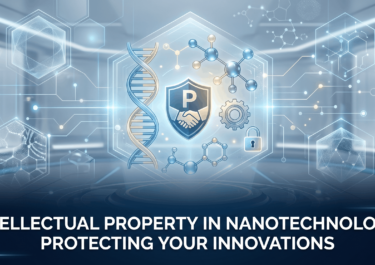
Intellectual Property in Nanotechnology: Protecting Your Innovations

Nanotechnology—the science of manipulating matter at the atomic and molecular scale—is no longer a futuristic concept. It is a present-day reality transforming everything from the medicine we take to the smartphones in our pockets. However, as we shrink our inventions down to the size of a few nanometers, the legal challenges surrounding them grow exponentially. Intellectual Property (IP) is the bedrock of this industry; without robust protection, the billions of dollars invested in research and development (R&D) would vanish into a sea of replicas.

Read more 

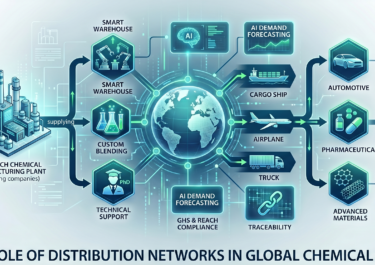
The Role of Distribution Networks in Global Chemical Sales

The global chemical industry is often described as the “industry of industries.” From the specialized coatings on a smartphone to the advanced nanomaterials like graphene used in aerospace, nearly every physical product in the modern world begins with a chemical reaction. However, the journey from a massive petrochemical refinery or a specialized laboratory to the end-user is rarely a straight line. It is facilitated by an intricate, highly regulated, and increasingly digitalized web: the global distribution network.

Read more 

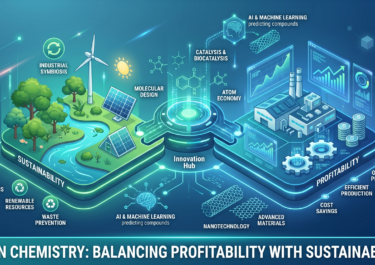
Green Chemistry: Balancing Profitability with Sustainability

The global chemical industry is undergoing a paradigm shift. For decades, the metric of success was defined almost exclusively by yield and profit margins, often at the expense of environmental health and worker safety. However, a new discipline—Green Chemistry—is proving that the perceived “trade-off” between economic gain and ecological responsibility is a false dichotomy. By redesigning chemical processes from the molecular level up, industries are discovering that sustainability is not just a moral obligation but a powerful engine for long-term profitability.

Read more 

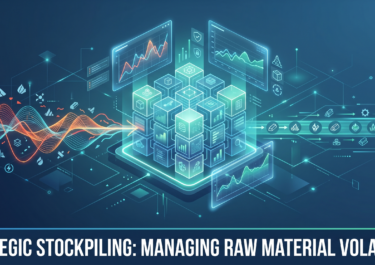
Strategic Stockpiling: Managing Raw Material Volatility

In the current global economic landscape, the “Just-in-Time” (JIT) manufacturing model, which dominated the late 20th century, is being systematically dismantled. In its place, a more robust, albeit complex, philosophy has emerged: Strategic Stockpiling. This transition is not merely a response to temporary supply chain hiccups; it is a fundamental shift in how industries—ranging from nanotechnology and advanced metallurgy to renewable energy—insulate themselves against a world defined by volatility.

Read more 

B2B Marketing for Chemical Companies: Trust and Technical Authority

In the complex ecosystem of the chemical industry, marketing is far more than just a creative exercise; it is a high-stakes exchange of information. Unlike the consumer market, where emotional triggers often drive purchases, the B2B chemical sector operates on a foundation of rigorous logic, safety compliance, and performance metrics. When a procurement manager or a formulation chemist chooses a supplier, they are not just buying a substance—they are investing in a partnership that impacts their product’s safety, regulatory standing, and market success.

Read more 

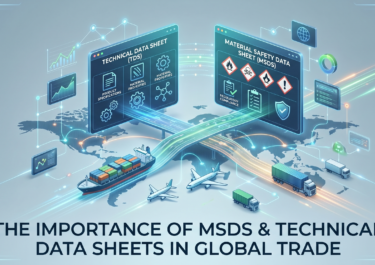
The Importance of MSDS and Technical Data Sheets in Global Trade

In the modern global economy, the movement of goods across borders is often viewed through the lens of logistics—ships, planes, and trucks. However, there is an invisible infrastructure of data that dictates whether a shipment moves smoothly or faces a costly, and sometimes dangerous, standstill. At the heart of this data infrastructure are two critical documents: the Material Safety Data Sheet (MSDS)—now more commonly referred to as the Safety Data Sheet (SDS) under international standards—and the Technical Data Sheet (TDS).

Read more 

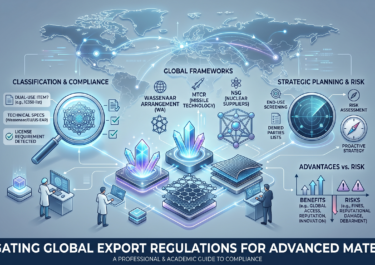
Navigating Global Export Regulations for Advanced Materials

The 21st century has been termed the “Century of Advanced Materials.” We are no longer limited to the metals and plastics of the past. From the graphene that promises to revolutionize energy storage, to the advanced ceramics that enable ultra-high-speed flight, to the specialized nanomaterials that can target cancer cells, the pace of material innovation is staggering. These substances form the foundation of next-generation medical devices, renewable energy systems, and high-performance computation. However, these materials also sit at the precise intersection of profound promise and deep peril. The very properties that make a material indispensable for a new life-saving medical implant can, in the wrong hands, make it equally useful for advanced weaponry or a weapons of mass destruction (WMD) delivery system. This inherent duality is the driving force behind the complex, and often restrictive, system of global export controls for advanced materials. Navigating this regulatory labyrinth is not just an administrative burden; it is a critical scientific, strategic, and legal necessity for any research institution or company looking to take their innovation beyond domestic borders.

Read more 

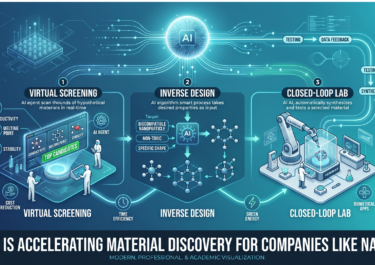
How AI is Accelerating Material Discovery for Companies Like Nanokar

In the heart of modern industrial and biomedical laboratories, a revolution is brewing, but the protagonists aren’t wearing lab coats. They are sophisticated artificial intelligence (AI) models, navigating the vast, often incomprehensible combinatorial landscape of chemical elements and compounds. For companies specializing in advanced materials and nanotechnology, such as Nanokar, this technology represents a paradigm shift.

Read more