Troubleshooting Common Issues in Metal Powder Bed Fusion

Metal Powder Bed Fusion (PBF), particularly the laser-based variant (L-PBF or DMLS/SLM), is often hailed as the gold standard for industrial metal 3D printing. By using a high-powered laser to selectively melt fine metal powders layer by layer, it enables the creation of highly complex geometries that are impossible to achieve via traditional machining or casting. However, this transformative technology is not a “plug-and-play” process. It is a highly sensitive engineering endeavor that occurs within a harsh, closed environment where thousands of variables must align perfectly.
Read more 

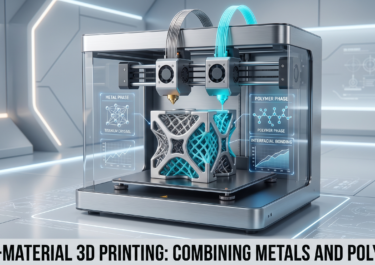
Multi-Material 3D Printing: Combining Metals and Polymers

The history of manufacturing has largely been a saga of single materials. We carve from wood, melt from metal, or mold from plastic. When an object requires conductive properties and flexibility, or load-bearing strength and lightweighting, we are forced into assembly lines—using bolts, adhesives, and screws to join distinct components. Today, additive manufacturing, popularly known as 3D printing, is tearing down this historical boundary. We are moving beyond printing complex geometries to printing complex material systems.

Read more 

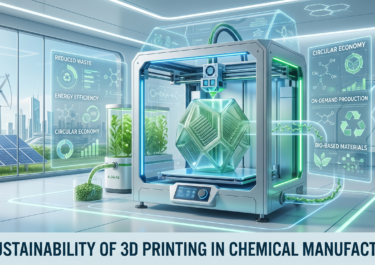
The Sustainability of 3D Printing in Chemical Manufacturing

The chemical manufacturing sector is facing an unprecedented moment of reckoning. For over a century, the industry has relied on massive, centralized economies of scale, utilizing “subtractive” manufacturing techniques—machining, casting, and forging—that are inherently wasteful, energy-intensive, and optimized for producing thousands of identical parts slowly. However, as of April 2026, the twin pressures of severe climate volatility and complex regulatory frameworks demanding decarbonization are forcing a paradigm shift.

Read more 

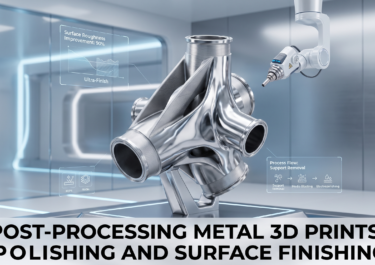
Post-Processing Metal 3D Prints: Polishing and Surface Finishing

In the world of additive manufacturing (AM), the “printing” phase often gets all the glory. We marvel at the laser’s dance across a bed of metal powder, creating complex geometries that traditional milling could never achieve. However, there is a “dirty little secret” in the industry: a part fresh out of a metal 3D printer is rarely ready for use. It is usually rough, covered in partially melted satellites, and filled with internal stresses.

Read more 

Lattice Structures: Optimizing Strength-to-Weight with Advanced Powders

In the history of engineering, the quest has always been to do more with less. From the arched stone bridges of Rome to the hollowed-out bones of a bird, the principle remains the same: arrange material only where it is needed to maximize strength while minimizing mass. Today, we are entering a new era of this philosophy. By combining Lattice Structures with Advanced Material Powders, 3D printing is enabling us to manufacture objects that were once considered mathematically possible but physically unbuildable.

Read more 

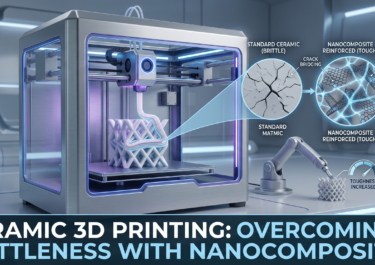
Ceramic 3D Printing: Overcoming Brittleness with Nanocomposites

The world of additive manufacturing is currently witnessing a silent but profound shift. For years, the headlines were dominated by plastics and metals, but as of 2026, the spotlight has moved toward high-performance ceramics. Traditionally, ceramics have been the “difficult child” of 3D printing—prized for their extreme heat resistance, hardness, and chemical stability, yet plagued by a fatal flaw: intrinsic brittleness.

Read more 

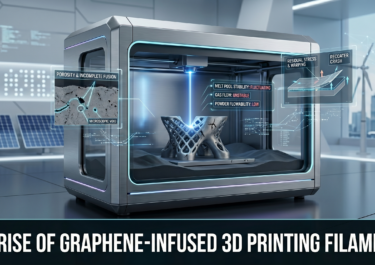
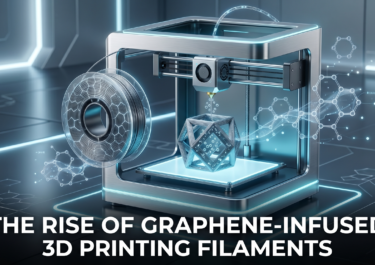
The Rise of Graphene-Infused 3D Printing Filaments

The world of additive manufacturing (AM) has reached a critical tipping point. For decades, 3D printing was primarily a tool for rapid prototyping—a way to turn digital designs into physical “looks-like” models that lacked the structural integrity for heavy-duty industrial use. However, as of 2026, the narrative has shifted. The catalyst for this transformation is not just faster printers or larger build volumes, but a fundamental revolution in material science: Graphene-Infused Filaments.

Read more 

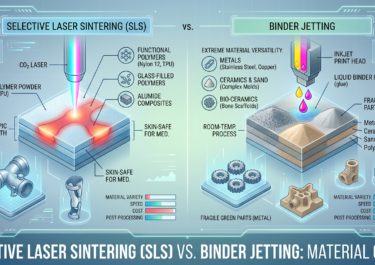
Selective Laser Sintering (SLS) vs. Binder Jetting: Material Choice

In the high-stakes world of industrial 3D printing, we are witnessing a fundamental divergence. While the early days of additive manufacturing were dominated by simple plastic filaments, today’s engineers are looking at “powder bed” technologies to achieve professional-grade results. Two titans stand at the center of this arena: Selective Laser Sintering (SLS) and Binder Jetting.

Read more 

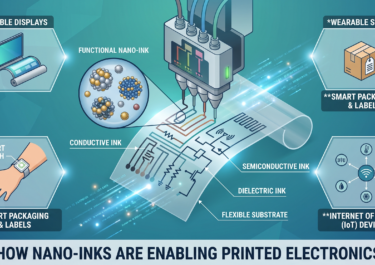
How Nano-Inks are Enabling Printed Electronics

The history of electronics has traditionally been a story of “subtraction.” To make a computer chip, we start with a wafer of pure silicon and use light and chemicals to etch away everything that isn’t a circuit. This process, known as photolithography, is incredibly precise but also incredibly expensive, wasteful, and restricted to rigid, flat surfaces.

Read more 

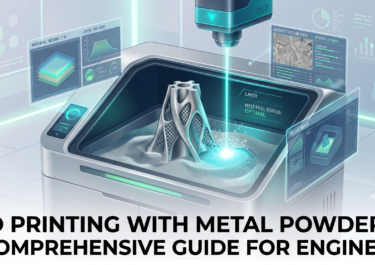
3D Printing with Metal Powders: A Comprehensive Guide for Engineers

In the history of manufacturing, we have spent millennia being “subtractive.” We took a block of stone, wood, or steel and chipped away at it until the desired shape remained. Today, we are witnessing a fundamental shift. We are no longer carving; we are “growing.” Metal Additive Manufacturing (AM)—commonly known as 3D printing with metal powders—has moved from the fringes of rapid prototyping to the core of aerospace, automotive, and medical engineering.

Read more 

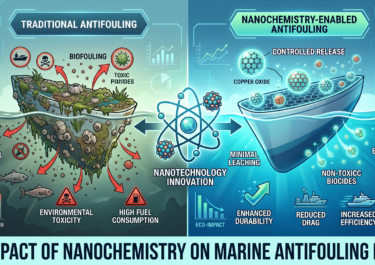
The Impact of Nanochemistry on Marine Antifouling Paints

For as long as humanity has sailed the seas, we have been at war with an invisible and relentless enemy: biofouling. From the wooden hulls of ancient triremes to the massive steel plates of modern supertankers, the accumulation of microorganisms, algae, plants, and animals like barnacles on submerged surfaces has been a multi-billion-dollar headache.

Read more 

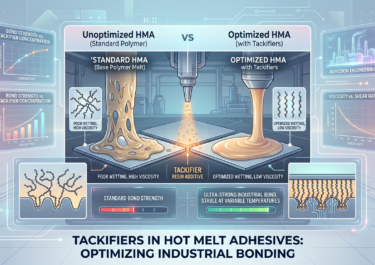
Tackifiers in Hot Melt Adhesives: Optimizing Industrial Bonding

In the high-speed world of modern manufacturing, things move fast. An Amazon box is sealed in milliseconds; a car door panel is bonded in seconds; a diaper is assembled at speeds that the human eye can barely follow. Behind this incredible pace is a class of materials known as Hot Melt Adhesives (HMA). But while the base polymer provides the strength, it is a specialized group of additives known as Tackifiers that provide the “soul” of the bond.

Read more 

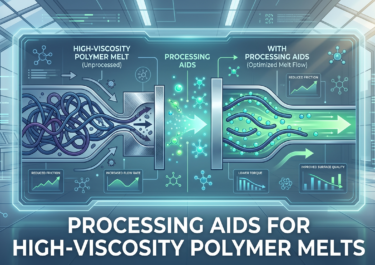
Processing Aids for High-Viscosity Polymer Melts

In the world of industrial manufacturing, polymers are the undisputed heavyweight champions. From the ultra-durable pipes buried beneath our cities to the high-performance components in electric vehicle batteries, high-molecular-weight polymers are the backbone of modern infrastructure. However, these materials come with a significant catch: they are incredibly difficult to move.

Read more 

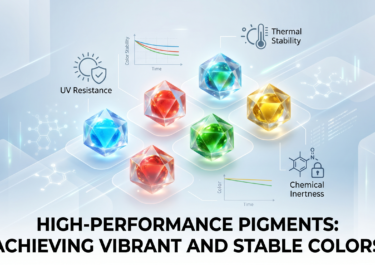
High-Performance Pigments: Achieving Vibrant and Stable Colors

Color is the most immediate way we perceive the world. From the deep crimson of a luxury sports car to the calming teal of a modern skyscraper, color defines our aesthetic experience. However, creating colors that are both vibrant and enduring is an immense scientific challenge. Standard pigments often fail under the pressure of UV radiation, extreme heat, or corrosive environments. Enter High-Performance Pigments (HPPs)—the elite class of colorants engineered to survive where others fade.

Read more 

The Role of Nanoclay in Gas Barrier Packaging for Food Safety

In the global effort to ensure food security and minimize waste, the frontline is often thinner than a human hair. We are talking about the polymer films that wrap our meat, shield our snacks, and preserve our dairy. For decades, the industry relied on thick, multi-layered plastics to keep food fresh, but as the world pivots toward sustainability and higher safety standards, a new hero has emerged from the earth itself: Nanoclay.

Read more 

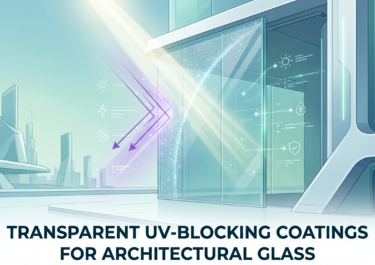
Transparent UV-Blocking Coatings for Architectural Glass

In the landscape of modern architecture, glass is no longer just a window; it is a structural statement. From the soaring skyscrapers of New York to the minimalist villas of the Mediterranean, expansive glazing has become the hallmark of contemporary design. It connects us with the outdoors, floods our interiors with natural light, and creates a sense of boundless space. However, this transparency comes with a hidden cost: the relentless penetration of Ultraviolet (UV) radiation.

Read more 

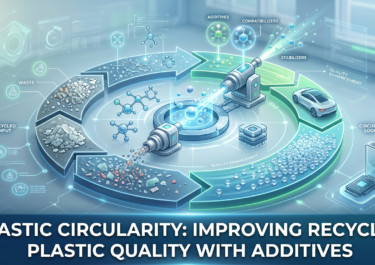
Plastic Circularity: Improving Recycled Plastic Quality with Additives

The global plastic crisis has shifted from a looming threat to a present-day reality, forcing industries to rethink the lifecycle of polymers. For decades, the “linear economy”—take, make, dispose—dominated. Today, the focus is on Plastic Circularity, a model where plastic never becomes waste but rather circles back into the production loop. However, a significant hurdle remains: recycled plastic often lacks the structural integrity, color, and performance of virgin resin.

Read more 

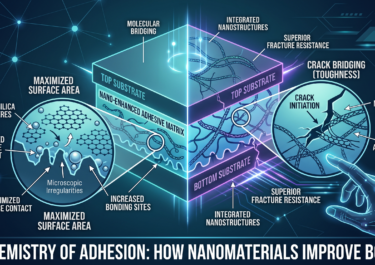
The Chemistry of Adhesion: How Nanomaterials Improve Bonding

Adhesion science is the invisible hero of the modern industrial world. From the screens of our smartphones to the fuselages of aircraft flying at 30,000 feet, and even the dental fillings in our mouths, everything depends on the integrity of a bond. However, traditional adhesives have reached their physical limits in high-stress environments and extreme temperatures. This is where nanotechnology steps in, redefining the chemistry of adhesion at the molecular level.

Read more 

Antimicrobial Polymers: Beyond the Pandemic Infrastructure

The global events of the early 2020s fundamentally changed how we perceive the surfaces around us. What was once a simple door handle, an elevator button, or a subway pole became a potential vector for disease. While the initial response relied on aggressive, manual chemical disinfection, the long-term solution has moved into the realm of materials science. We are no longer just cleaning surfaces; we are engineering them to be inherently hostile to pathogens.

Read more