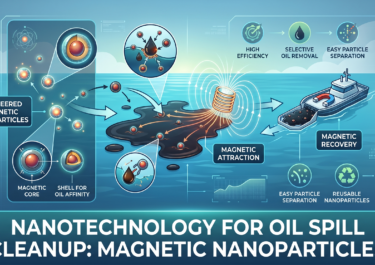
Nanotechnology for Oil Spill Cleanup: Magnetic Nanoparticles

Oil spills are environmental catastrophes of massive proportions. They are not merely localized accidents; they represent the sudden, violent disruption of delicate marine and coastal ecosystems. When a tanker breaches, a pipeline leaks, or an offshore rig fails, millions of gallons of crude oil pour into the ocean. This dark tide smothers wildlife, devastates fisheries, poisons habitats, and poses severe long-term risks to human health in coastal communities.

Read more 

Smart Sensors for Autonomous Driving Hardware Protection

The “eyes” of an autonomous vehicle (AV)—its LiDAR, cameras, and Radar—get all the glamour. We marvel at their ability to see in the dark, distinguish a pedestrian from a lamppost, and map a three-dimensional world in real-time. But these perception systems are not indestructible superheroes; they are incredibly delicate, computationally dense, and expensive instruments exposed to the harshest of environments. They are the car’s sensory nervous system, and currently, that system is vulnerable.

Read more 

The Transition to Solid-State Batteries in Luxury SUVs

For the last decade, the electric vehicle (EV) narrative has been dominated by the incremental improvements of lithium-ion technology. While these liquid-electrolyte batteries have successfully moved us away from fossil fuels, they have always carried a set of inherent compromises: weight, charging speed, and the lingering concern of thermal stability. As we move through 2026, the industry is reaching a tipping point. The “Holy Grail” of energy storage—the Solid-State Battery (SSB)—is no longer a laboratory curiosity. It is the defining feature of the next generation of luxury SUVs.

Read more 

EV Battery Cooling: Advanced Thermal Management Materials

As the world pivots toward a carbon-neutral future, the electric vehicle (EV) has moved from a niche alternative to the primary driver of global mobility. However, the Achilles’ heel of the EV remains the lithium-ion battery. Beyond range and charging speed, the most critical factor determining a battery’s lifespan, safety, and performance is how it handles heat.

Read more 

Hydrogen Storage Tanks for Heavy-Duty Trucks: Nano-Solutions

The global logistics industry is currently standing at a crossroads. While passenger vehicles have made a rapid transition toward battery electric power, the heavy-duty trucking sector faces a much steeper climb. For a 40-ton long-haul truck, the weight of the batteries required to achieve a 1,000-kilometer range would consume nearly a quarter of its payload capacity. This is where hydrogen steps in as the high-energy-density hero of zero-emission transport.

Read more 

Brake Pad Performance: The Impact of Hard Metal Powders

The automotive industry is currently undergoing a massive transformation, shifting from internal combustion engines to electric powertrains. However, regardless of how a vehicle is powered, one fundamental requirement remains unchanged: the ability to stop safely, consistently, and efficiently. At the heart of this safety requirement lies the brake pad, a complex composite of materials engineered to withstand extreme heat and pressure.

Read more 

The Future of Automotive Paint: Scratch-Healing and UV-Stable

For decades, the gleam of a showroom car has been the ultimate symbol of automotive pride. Yet, that perfection is fleeting. The moment a car leaves the dealership, it enters a hostile world filled with rogue shopping carts, abrasive dust, tree sap, acid rain, and the relentless degradation caused by the sun’s Ultraviolet (UV) radiation. A car owner’s relationship with their paint often shifts from admiration to a stressful battle against wear and tear.

Read more 

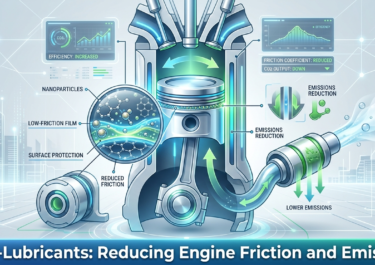
Nano-Lubricants: Reducing Engine Friction and Emissions

In the heart of every internal combustion engine, a fierce battle is constantly being fought. It is a battle against friction—a silent thief that steals fuel energy, wears down vital components, and amplifies harmful emissions. For over a century, traditional lubricants have been the primary defense line, providing a thin, protective sheathing between moving metal parts. However, as the automotive world faces unprecedented pressure to improve fuel economy and reduce its carbon footprint, traditional chemistry is reaching its limit.

Read more 

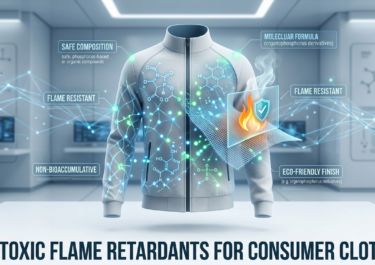
Non-Toxic Flame Retardants for Consumer Clothing

We often focus on the comfort, style, and durability of the clothes we wear every day. However, an invisible layer of chemistry exists within many textiles—one designed to protect us from fire. Flame retardants (FRs) are substances applied to materials to prevent or slow the spread of fire. For decades, the industry relied on highly effective, but ultimately problematic, chemical compounds to meet safety standards.

Read more 

Nanomaterials in Cosmetics: Safety, Efficacy, and Trends

The beauty industry is currently undergoing a silent, microscopic revolution. If you look at the back of a high-end sunscreen or an anti-aging serum, you are no longer just looking at a mixture of oils and water. You are looking at a sophisticated feat of molecular engineering. Nanotechnology—the science of manipulating matter at the scale of 1 to 100 nanometers—has moved from the research lab to the vanity mirror.

Read more 

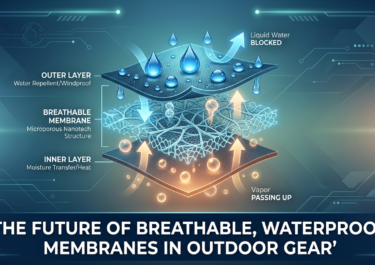
The Future of Breathable, Waterproof Membranes in Outdoor Gear

For decades, the “holy grail” of the outdoor industry has been a single, elusive goal: creating a fabric that keeps liquid water out while allowing sweat to escape as vapor. Historically, this paradox was solved by a thin plastic film—most famously expanded Polytetrafluoroethylene (ePTFE)—laminated to a face fabric. However, as we move into mid-2026, the landscape of “Breathable, Waterproof Membranes” (BWMs) is undergoing its most radical transformation since the 1970s. Driven by stringent global regulations, breakthroughs in nanotechnology, and a shift toward biomimetic design, the future of outdoor gear is becoming smarter, safer, and significantly more efficient.

Read more 

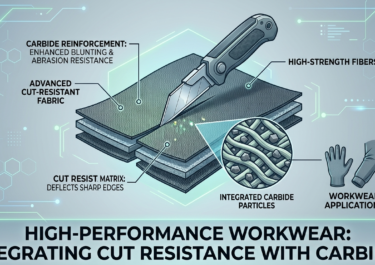
High-Performance Workwear: Integrating Cut Resistance with Carbides

In the modern industrial landscape, the boundary between “clothing” and “equipment” has blurred. For professionals working in high-risk environments—ranging from metal fabrication and glass handling to advanced manufacturing—workwear is no longer just a uniform; it is a critical engineering solution. The evolution of high-performance workwear has reached a new frontier: the integration of cut-resistant fibers with ultra-hard carbides.

Read more 

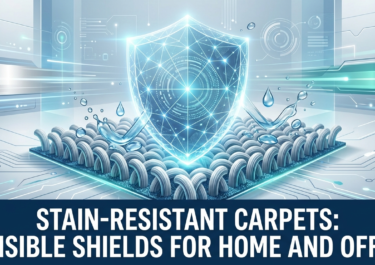
Stain-Resistant Carpets: Invisible Shields for Home and Office

For decades, the carpet was seen as a humble, static piece of furniture—a soft surface to walk on, a way to dampen sound, and a decorative touch to tie a room together. However, under the lens of modern material science, the contemporary carpet has transformed into a high-tech filter and a sophisticated chemical shield. The term “stain-resistant” is no longer just a marketing buzzword; it represents a complex intersection of polymer chemistry, nanotechnology, and environmental health.

Read more 

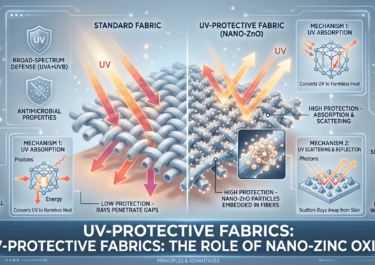
UV-Protective Fabrics: The Role of Nano-Zinc Oxide

The summer sun invites us outdoors, promising beach days, hiking adventures, and backyard barbecues. Yet, this warmth and light harbor a silent threat: Ultraviolet (UV) radiation. We are constantly reminded to “slap on some sunscreen,” but the limitations of lotions—reapplication, incomplete coverage, and chemical concerns—are driving a revolution in personal sun protection. The front line of this battle has shifted from cosmetics to our closets.

Read more 

Smart Textiles: Clothing That Monitors Your Heart Rate

Imagine a world where your daily health check isn’t a chore you actively perform, but a seamless result of merely getting dressed. This futuristic vision is becoming a reality through the convergence of material science, textile engineering, and biomedical tech: Smart Textiles (E-Textiles). In the context of cardiovascular health, these are garments explicitly designed to monitor your heart rate continuously, comfortably, and non-invasively, transforming everyday clothing into sophisticated diagnostic tools.

Read more 

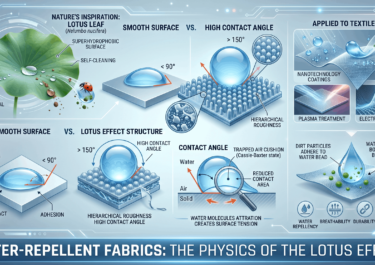
Water-Repellent Fabrics: The Physics of the Lotus Effect

We have all seen it: a rainshower beads up on a well-waxed car, or dew forms perfect spheres on a cabbage leaf. This striking natural phenomenon, where water seems to defy gravity and refuses to wet a surface, is not just a visual curiosity. It is the foundation of a technological revolution in textiles. Famously known as the Lotus Effect, this principle of superhydrophobicity is changing how we dress, how we protect our gear, and how we interact with our environment.

Read more 

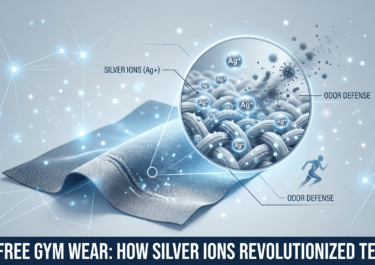
Odor-Free Gym Wear: How Silver Ions Revolutionized Textiles

There is a universal truth among fitness enthusiasts: the most grueling workouts are often followed by the most stubborn smells. For decades, gym-goers accepted the “stink” as a badge of honor, a testament to their dedication. Traditional fabrics, especially the synthetic fibers praised for their moisture-wicking properties, seemed to harbor odors even after multiple wash cycles.

Read more