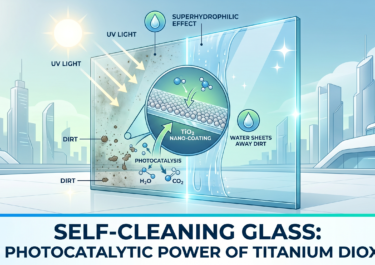
Self-Cleaning Glass: The Photocatalytic Power of Titanium Dioxide

Imagine a world where skyscrapers maintain their crystalline glimmer without a single window washer suspended hundreds of feet in the air. Imagine solar farms that operate at peak efficiency year-round, unburdened by the accumulation of dust or grime. This isn’t a scene from a science fiction novel set in 2050; it is the reality of 2026, driven by a remarkable chemical compound: Titanium Dioxide (TiO2).
Read more 

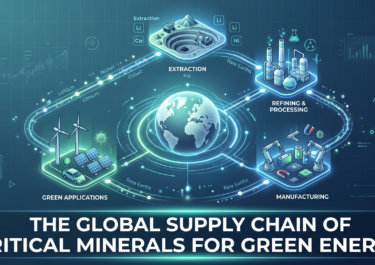
The Global Supply Chain of Critical Minerals for Green Energy

As the world reaches the midpoint of the 2020s, the global energy landscape is undergoing its most profound transformation since the Industrial Revolution. The shift from a fuel-intensive energy system—dominated by coal, oil, and gas—to a material-intensive one is no longer a future projection; it is the current reality of 2026. At the heart of this transition lies a complex, high-stakes network of mining, refining, and manufacturing known as the Global Supply Chain of Critical Minerals.

Read more 

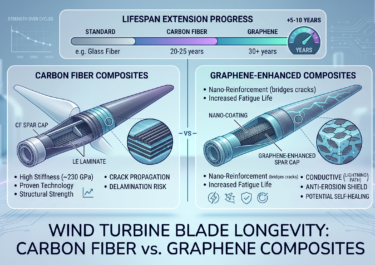
Wind Turbine Blade Longevity: Carbon Fiber vs. Graphene Composites

The global transition to renewable energy has positioned wind power as a cornerstone of a sustainable future. As wind turbines grow larger and are deployed in harsher environments—particularly offshore—the demands placed on their components increase exponentially. Among these components, the blades bear the brunt of operational stress. They are massive, complex engineering marvels that must survive decades of relentless fatigue, erosion, and extreme weather.

Read more 

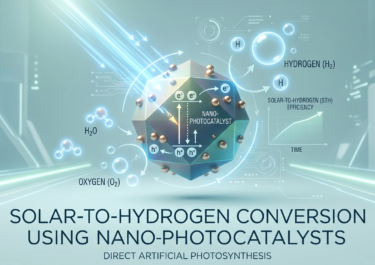
Solar-to-Hydrogen Conversion Using Nano-Photocatalysts

The global energy transition is no longer a future concept; it is an urgent, present reality. As we strive to decouple our economies from fossil fuels, one molecule has taken center stage in the race for decarbonization: Hydrogen. However, not all hydrogen is created equal. Currently, over 95% of the world’s hydrogen is “grey hydrogen,” produced from natural gas through steam methane reforming—a process that releases massive amounts of carbon dioxide.

Read more 

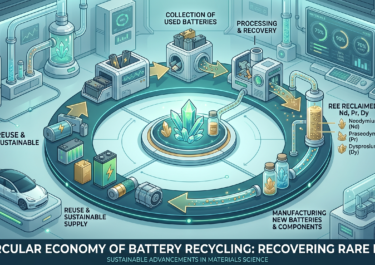
The Circular Economy of Battery Recycling: Recovering Rare Earths

The 21st century is defined by a colossal shift in how humanity consumes energy. As we race to decarbonize the global economy, internal combustion engines are being replaced by Electric Vehicles (EVs), and fossil fuel power plants are giving way to intermittent renewable sources like solar and wind, which require massive stationary storage solutions. At the heart of this transition lies the battery—specifically, high-performance Lithium-ion (Li-ion) batteries and, to a lesser extent, Nickel-Metal Hydride (NiMH) batteries.

Read more 

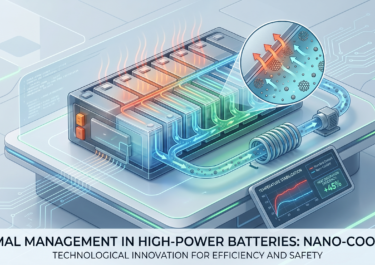
Thermal Management in High-Power Batteries: Nano-Coolants

The 21st-century energy landscape is being rewritten by the lithium-ion battery. From the sleek electric vehicles (EVs) silent on our streets to the massive grid-scale storage systems stabilizing renewable energy, these electrochemical powerhouses are indispensable. But as we demand more power—faster charging, longer range, and higher performance—we encounter a formidable, ancient adversary: Heat.

Read more 

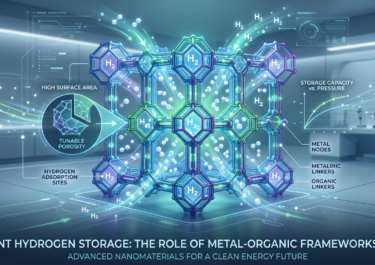
Efficient Hydrogen Storage: The Role of Metal-Organic Frameworks (MOFs)

The global energy landscape is undergoing a radical transformation. As the world pushes to decouple economic growth from carbon emissions, hydrogen has emerged as a frontrunner in the race for clean energy. It is the most abundant element in the universe, possesses a high energy density by mass, and its only combustion byproduct is pure water. However, there is a significant “bottleneck” preventing the “Hydrogen Economy” from becoming a daily reality: storage.

Read more 

Nanomaterials for CO2 Capture and Carbon Sequestration

Climate change, driven primarily by the astronomical increase in atmospheric carbon dioxide (CO2), is undoubtedly one of the defining challenges of the 21st century. The concentration of CO2 in our atmosphere has reached levels not seen in millions of years, leading to a steady rise in global temperatures, extreme weather events, and oceanic acidification. While the long-term solution lies in a complete shift toward renewable energy sources, the sheer magnitude of our current emissions demands immediate, complementary actions. This is where Carbon Capture, Utilization, and Storage (CCUS) becomes a critical part of the global climate mitigation toolkit.

Read more 

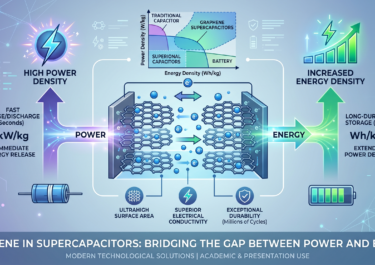
Graphene in Supercapacitors: Bridging the Gap Between Power and Energy

The global transition to a net-zero future has, for years, been bottlenecked not by our ability to generate clean energy, but by our inability to store and deliver it optimally. For decades, the energy storage landscape was sharply divided between two fundamental technologies: batteries (the marathon runners) and capacitors (the sprinters). Batteries could hold a lot of energy but were slow to charge and release (low power). Capacitors could charge in seconds but held very little energy.

Read more 

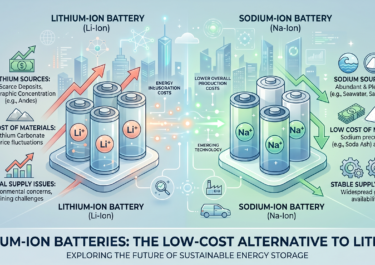
Sodium-Ion Batteries: The Low-Cost Alternative to Lithium

The global transition toward renewable energy and electric mobility is facing a fundamental bottleneck: the availability of raw materials. For decades, lithium-ion (Li-ion) batteries have been the undisputed champions of energy storage, powering everything from smartphones to Tesla vehicles. However, lithium isn’t perfect. It is geographically concentrated, expensive to extract, and subject to volatile pricing swings.

Read more 

Perovskite Solar Cells: The Next Leap in Photovoltaic Efficiency

The global transition to renewable energy is accelerating, and at the heart of this movement lies solar power. For decades, traditional silicon-based solar panels have dominated the landscape, silently turning sunlight into electricity on rooftops and in vast solar farms. While silicon has served us well, the scientific community has been chasing a “holy grail”: a new material that is cheaper to produce, more efficient at capturing sunlight, and versatile enough to be used anywhere.

Read more 

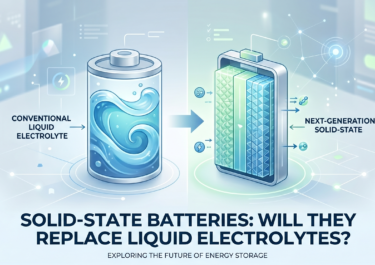
Solid-State Batteries: Will They Replace Liquid Electrolytes?

The world is currently in the midst of a massive energy transition. From the electric vehicles (EVs) parked in our driveways to the smartphones in our pockets, the demand for better, safer, and longer-lasting energy storage has never been higher. For decades, the lithium-ion (Li-ion) battery has been the undisputed king of this domain. However, as we push the limits of what liquid-based batteries can do, a new contender is emerging from the labs and entering pilot production: the Solid-State Battery (SSB).

Read more 

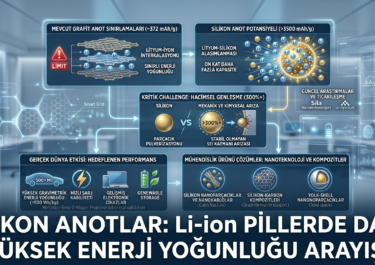
Silicon Anodes: The Quest for Higher Energy Density in Li-ion Batteries

The electric vehicle (EV) revolution is here, but its ultimate success is tethered to a crucial component: the Lithium-ion (Li-ion) battery. While battery technology has improved significantly over the past few decades, we are reaching the physical limitations of current battery chemistry. The bottleneck is not the lithium itself, nor the electric motor, but the materials used to store the ions within the battery.

Read more 

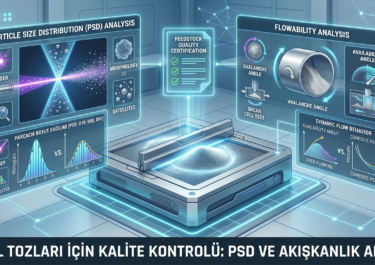
Quality Control for Metal Powders: PSD and Flowability Analysis

The industrial landscape is undergoing a quiet revolution, fueled by the rapid ascent of Additive Manufacturing (AM)—more commonly known as 3D printing. In sectors ranging from aerospace to personalized medical implants, 3D printers are crafting complex components from metal feedstocks. However, a 3D printer is only as good as the material it uses. If the metal powder feedstock is inconsistent, contaminated, or improperly characterized, the resulting part will fail, potentially with catastrophic consequences in high-stakes applications.

Read more 

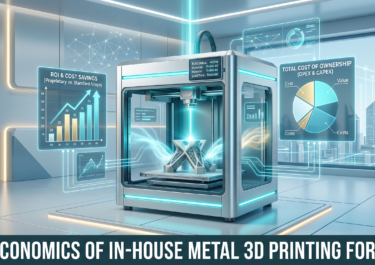
The Economics of In-House Metal 3D Printing for SMEs

For decades, metal additive manufacturing (AM) was the exclusive playground of Fortune 500 giants. Companies like GE Aviation and Siemens had the deep pockets required to install multi-million dollar machines, build specialized facilities, and hire teams of Ph.D. material scientists. However, as we move through April 2026, the narrative has shifted. Small and Medium-sized Enterprises (SMEs) are now standing at a crossroads: Should they continue to outsource their metal parts to service bureaus, or is it finally time to bring metal 3D printing in-house?

Read more 

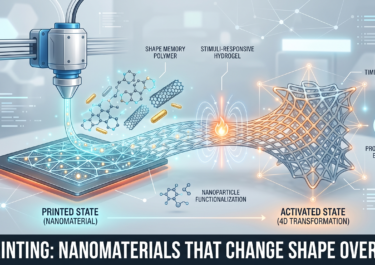
4D Printing: Nanomaterials That Change Shape Over Time

The advent of 3D printing changed manufacturing forever, allowing us to build intricate, customized objects layer by layer from digital blueprints. However, those objects remained static, fixed in the shape they were printed. Now, we are witnessing the next evolution of additive manufacturing: 4D printing. This revolutionary technology adds the dimension of time, introducing programmable materials that can transform, evolve, and adapt long after the printing process is complete.

Read more 

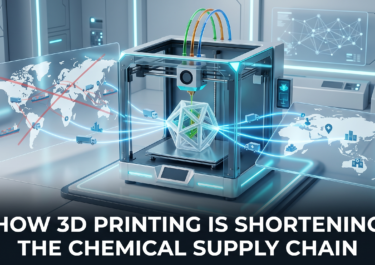
How 3D Printing is Shortening the Chemical Supply Chain

For over a century, the chemical industry has been defined by massive, centralized infrastructure. Thousands of tons of chemical feedstocks and finished products are shipped daily across global highways, oceans, and rail lines. This model relies heavily on economies of scale, long-term forecasting, and complex logistics networks that are frequently brittle. When a key localized disaster strikes, from a pandemic shutting down shipping ports to a natural disaster destroying a single precursor factory, the entire global chain ripples with disruption.

Read more