Antimicrobial Polymers: Beyond the Pandemic Infrastructure

The global events of the early 2020s fundamentally changed how we perceive the surfaces around us. What was once a simple door handle, an elevator button, or a subway pole became a potential vector for disease. While the initial response relied on aggressive, manual chemical disinfection, the long-term solution has moved into the realm of materials science. We are no longer just cleaning surfaces; we are engineering them to be inherently hostile to pathogens.
Read more 

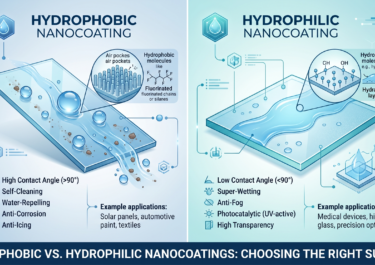
Hydrophobic vs. Hydrophilic Nanocoatings: Choosing the Right Surface

In the realm of materials science, the surface of an object is its first line of defense and its primary interface with the world. For decades, we treated surfaces as static boundaries. However, with the advent of nanotechnology, we have gained the ability to “program” surfaces at the molecular level. This has led to the rise of two dominant, yet polar opposite, technologies: Hydrophobic and Hydrophilic nanocoatings.

Read more 

The Future of Smart Coatings: Self-Healing Polymer Systems

For decades, the battle against corrosion, wear, and mechanical fatigue has been a passive one. We painted bridges, coated pipelines, and lacquered cars, hoping these “dumb” barriers would hold out as long as possible. But once a scratch appeared, the clock started ticking toward structural failure. Today, we are entering a new era where materials are no longer passive.

Read more 

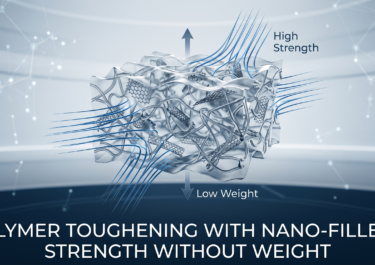
Polymer Toughening with Nano-Fillers: Strength Without Weight

The history of engineering has long been a battle against the “law of bulk.” For centuries, if you wanted a structure to be stronger, you had to make it thicker, denser, and inevitably, heavier. However, the dawn of nanotechnology has shattered this paradigm. In the modern era of materials science, we are no longer looking for “more” material; we are looking for “smarter” material.

Read more 

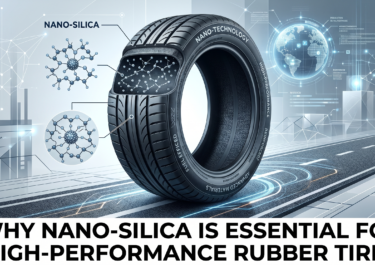
Why Nano-Silica is Essential for High-Performance Rubber Tires

When we look at a car, we often focus on the engine’s horsepower, the sleekness of the design, or the high-tech infotainment system. Yet, the most critical component for both safety and efficiency is a set of four “black circles” that provide the only contact between the vehicle and the road. For decades, tires were essentially made of natural rubber and carbon black. However, a silent revolution has taken place beneath the surface of the tread.

Read more 

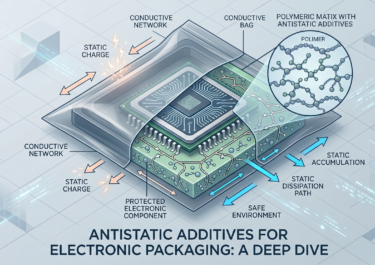
Antistatic Additives for Electronic Packaging: A Deep Dive

In the high-stakes world of semiconductor manufacturing and consumer electronics, there is a silent, invisible killer: Electrostatic Discharge (ESD). As our devices become smaller, faster, and more complex, they also become significantly more fragile. A single stray spark, often too small for a human to feel, can melt the microscopic circuits inside a smartphone processor or a medical sensor, rendering it a useless piece of silicon.

Read more 

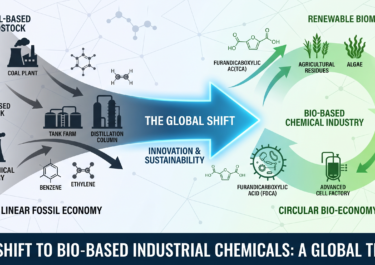
The Shift to Bio-Based Industrial Chemicals: A Global Trend

For over a century, the global industrial landscape has been dominated by a single, formidable pillar: petroleum. From the lubricants in our engines to the synthetic dyes in our clothing and the complex resins in our electronics, the “petrochemical era” defined the 20th century. However, as we move further into the 2020s, a tectonic shift is occurring. We are entering the age of Bio-Based Industrial Chemicals.

Read more 

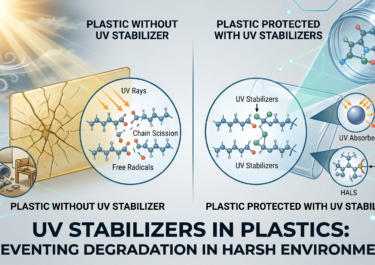
UV Stabilizers in Plastics: Preventing Degradation in Harsh Environments

The modern world is built on polymers. From the soaring blades of wind turbines and the intricate irrigation systems of industrial farms to the sleek components of electric vehicles and the protective coatings of aerospace technology, plastics are everywhere. However, these versatile materials face a relentless, invisible enemy: Ultraviolet (UV) radiation. Without intervention, UV light

Read more 

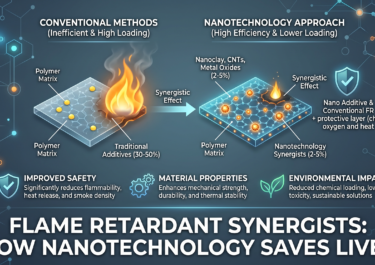
Flame Retardant Synergists: How Nanotechnology Saves Lives

In the modern world, we are surrounded by polymers. From the upholstery in our cars and the casings of our smartphones to the insulation in our walls and the massive battery packs in our electric vehicles (EVs), synthetic materials are the fabric of 21st-century life. While these materials are versatile and lightweight, they possess a dangerous hidden trait: they are essentially solid fuel. When a fire starts, these polymers ignite rapidly, releasing intense heat and toxic smoke that can turn a survivable incident into a catastrophe in seconds.

Read more 

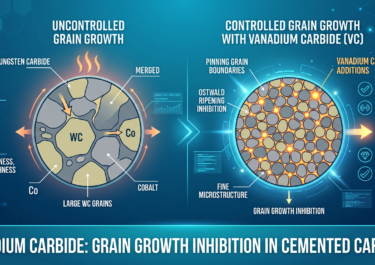
Vanadium Carbide: Grain Growth Inhibition in Cemented Carbides

In the world of advanced materials, there is a constant battle being fought at a scale invisible to the human eye. It is the battle of Sintering. When we manufacture high-performance tools—the kind that cut through titanium or drill miles into the earth’s crust—we start with powders and heat them until they fuse together. During this process, something problematic happens: the tiny, hard crystals want to grow. They want to merge, expand, and become “fat.”

Read more 

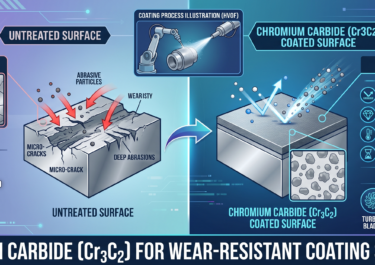
Chromium Carbide for Wear-Resistant Coating Solutions

In the industrial theater of war, where friction, heat, and corrosion are the primary antagonists, engineers are constantly seeking the ultimate “armor.” While Tungsten Carbide is often the first name mentioned in the halls of metallurgy, it has a significant weakness: it cannot stand the heat. When temperatures climb above 500°C, Tungsten Carbide begins to oxidize, losing its structural integrity.

Read more 

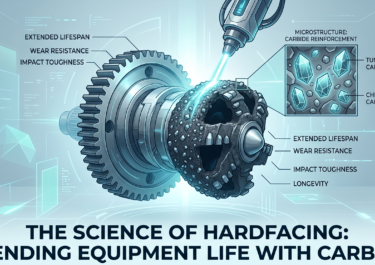
The Science of Hardfacing: Extending Equipment Life with Carbides

In the heavy-duty world of mining, agriculture, and power generation, “normal” wear and tear is anything but normal. It is a relentless, multi-billion-dollar battle against abrasion, impact, and corrosion. When a multi-million-dollar excavator bucket or a high-pressure grinding roll (HPGR) fails due to surface degradation, the costs aren’t just in the replacement parts—they are in the downtime, the lost labor, and the stalled production.

Read more 

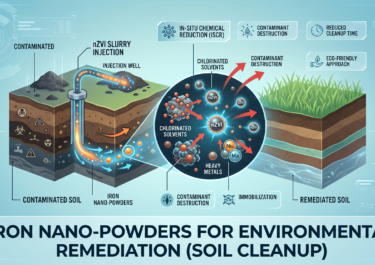
Iron Nano-Powders for Environmental Remediation (Soil Cleanup)

In the industrial history of the last century, we have often treated the Earth as a silent partner that could absorb any spill, leak, or waste product. Today, we are facing the consequences: vast tracts of land contaminated with heavy metals, chlorinated solvents, and toxic pesticides. Traditional soil cleanup methods—like “dig and dump”—are expensive, disruptive, and often just move the problem from one place to another.

Read more 

Copper Nanoparticles: Anti-Microbial Properties in Industrial Surfaces

For millennia, humans have known that copper is special. Ancient Egyptians used it to sterilize drinking water, and Roman soldiers placed copper strips in their wounds to prevent infection. But while the ancients knew that it worked, they didn’t know how. Fast forward to the mid-2020s, and we are no longer just using bulk copper plates. We are harnessing Copper Nanoparticles (CuNPs)—particles so small that they bridge the gap between the world of chemistry and the world of biology.

Read more 

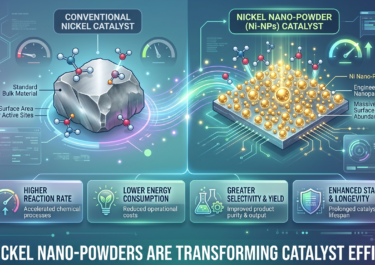
How Nickel Nano-Powders are Transforming Catalyst Efficiency

In the vast landscape of industrial chemistry, there is a group of “hidden heroes” that drive nearly 90% of all commercially produced chemical products. These heroes are catalysts—substances that speed up chemical reactions without being consumed in the process. For over a century, the crown jewels of catalysis have been precious metals like Platinum, Palladium, and Iridium. However, as the world pivots toward a sustainable, hydrogen-based economy, these metals have become a bottleneck due to their extreme cost and scarcity.

Read more 

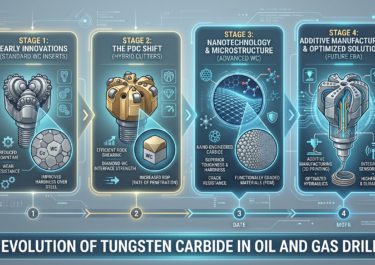
The Evolution of Tungsten Carbide in Oil and Gas Drilling

In the high-stakes world of energy exploration, the earth’s crust is often described as a “brick wall” thousands of feet thick. To pierce through miles of granite, sandstone, and abrasive salt domes, the oil and gas industry requires materials that defy the standard laws of wear and tear. For nearly a century, one material has stood as the undisputed heavyweight champion of the drill bit: Tungsten Carbide (WC).

Read more 

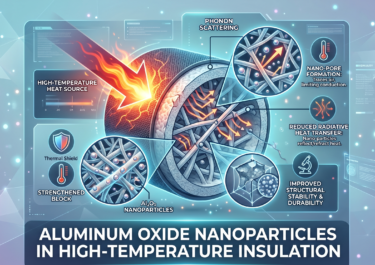
Aluminum Oxide Nanoparticles in High-Temperature Insulation

In the relentless pursuit of industrial efficiency, heat is both a tool and a tyrant. From the searing interiors of jet engines to the high-capacity furnaces used in semiconductor manufacturing, managing extreme temperatures is the difference between a breakthrough and a meltdown. Traditional insulation materials—like bulky ceramic fibers or heavy bricks—are reaching their physical limits.

Read more 

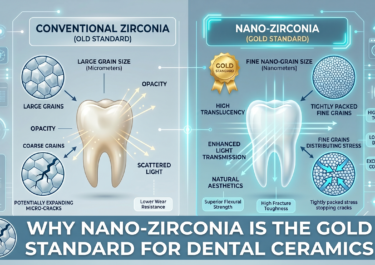
Why Nano-Zirconia is the Gold Standard for Dental Ceramics

For decades, the quest for the perfect dental restoration has been a balancing act between two seemingly opposing forces: beauty and brawn. Patients want teeth that look indistinguishable from nature—translucent, vibrant, and light-reflecting. Dentists, however, need materials that can withstand the incredible forces of the human jaw, which can exert hundreds of pounds of pressure during chewing.

Read more