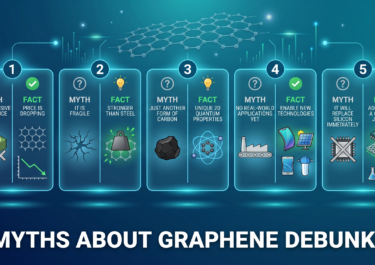
5 Myths About Graphene Debunked

Since the 2010 Nobel Prize in Physics was awarded for its isolation, graphene has been hailed as the “wonder material” that will change everything. From space elevators to smartphones that charge in five seconds, the hype has been astronomical. However, with great hype comes great misunderstanding.

Read more 

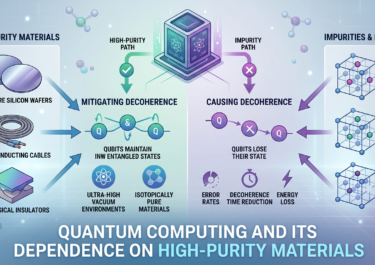
Quantum Computing and its Dependence on High-Purity Materials

The world is currently standing on the precipice of a computational shift so profound that it dwarfs the transition from the abacus to the microchip. Quantum computing promises to solve problems in minutes that would take today’s most powerful supercomputers millennia. We are talking about simulating complex new drugs, cracking unbreakable encryption, and optimizing global logistics in real-time.

Read more 

Decentralized Chemical Production: The Micro-Factory Model

For over a century, the chemical industry has been defined by the “bigger is better” philosophy. Massive, sprawling industrial complexes—often the size of small cities—were built to take advantage of economies of scale. These centralized hubs processed raw materials in gargantuan batches, shipping finished products across oceans and continents. But as the world faces unprecedented

Read more 

Why Every Manufacturing CEO Needs a Nanotech Strategy

In the landscape of modern industrial competition, CEOs are constantly hunting for the next disruptive technology—the artificial intelligence algorithm, the green energy source, or the automation system that will provide a decisive edge. Yet, many manufacturing leaders are overlooking a profound transformation occurring at the fundamental level of their products: the materials themselves. We are standing on the precipice of the nano-revolution.

Read more 

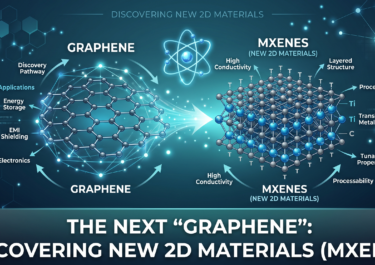
The Next “Graphene”: Discovering New 2D Materials (MXenes)

In 2010, the Nobel Prize in Physics was awarded to Andre Geim and Konstantin Novoselov for their groundbreaking experiments with a one-atom-thin sheet of carbon known as graphene. This discovery ignited a global scientific fever. Graphene was lighter than a feather, stronger than steel, a superlative conductor of electricity, and completely flexible. It promised to revolutionize everything from batteries to touchscreens and advanced composites.

Read more 

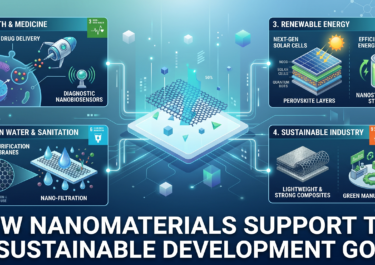
How Nanomaterials Support the UN Sustainable Development Goals

The world is facing unprecedented challenges, from the climate crisis and water scarcity to intractable diseases and food insecurity. In 2015, the United Nations adopted the 2030 Agenda for Sustainable Development, outlined by 17 Sustainable Development Goals (SDGs). These goals serve as a shared blueprint for peace and prosperity for people and the planet. Achieving them, however, requires radical innovation and new technological tools.

Read more 

Space Mining: Is Sourcing Metals from Asteroids Realistic?

The idea of mining celestial bodies, once relegated to the realm of science fiction, is rapidly descending into the pragmatic world of boardrooms and tech startups. As Earth’s non-renewable resources dwindle and the demand for critical metals for green technologies and electronics skyrockets, we are increasingly turning our gaze upward. Asteroids, the rocky remnants of our solar system’s formation, are not merely drifting hazards; they are flying treasure troves.

Read more 

Nanotechnology Market Outlook 2026-2030: What to Watch

As we look ahead from our vantage point in mid-2026, the promised “molecular revolution” is no longer a futuristic concept—it is a pervasive industrial reality. Nanotechnology, the science of manipulating matter at the atomic level (typically under 100 nanometers), has quietly transitioned from specialized laboratory experiments to the very backbone of modern manufacturing, healthcare, and energy systems. The decade leading up to 2026 focused on discovery; the years between 2026 and 2030 will be defined by integration, standardization, and pervasive intelligence.

Read more 

Quality Assurance in Advanced Material Manufacturing

The materials that define our future are no longer just dug from the ground or forged in traditional furnaces. We are entering an era of Advanced Material Manufacturing, where materials like graphene, meta-materials, engineered biomaterials, and customized superalloys are designed atom-by-atom to possess extraordinary properties—unmatched strength, lightness, electrical conductivity, or bio-compatibility. Yet, the bridge between a revolutionary material synthesized in a laboratory and a reliable, life-saving component in an aerospace engine or a patient’s hip implant is paved with a crucial, albeit less glamorous, discipline: Quality Assurance (QA).

Read more 

Sol-Gel Processing: A Versatile Route for Nano-Coatings

In the realm of advanced materials science, few techniques can match the elegant flexibility of sol-gel processing. While it may sound like something from a culinary class, “sol-gel” is actually a wet-chemical procedure—a molecular-scale technique used to fabricate solid materials, particularly high-purity ceramic and glass materials. This seemingly simple approach has evolved into the definitive method for creating nano-coatings—layers of material so thin that their thickness is measured in billionths of a meter.

Read more 

Plasma Spheroidization: Improving Metal Powder Quality

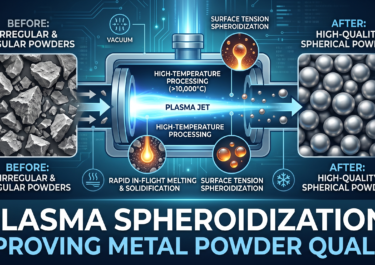
The modern manufacturing landscape, particularly the burgeoning field of metal additive manufacturing (3D printing), is only as good as the raw materials it uses. Metal powders are the lifeblood of these processes, and their quality directly dictates the strength, integrity, and finish of the final component. However, many standard techniques for producing metal powders yield irregular, angular, and porous particles. Enter plasma spheroidization—a revolutionary thermal processing technique that reshapes and densifies these powders, unlocking their full potential. This article provides a detailed exploration of plasma spheroidization, its scientific foundations, its role in improving metal powder quality, current research, and a balanced assessment of its advantages and risks.

Read more 

Surface Functionalization: The Key to Material Compatibility

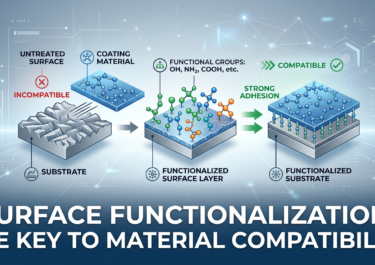
In the world of materials science, what you see on the surface is rarely the whole story. While the internal structure of a material—its “bulk”—determines properties like strength, weight, and conductivity, it is the surface that dictates how that material interacts with the rest of the world. This is the realm of Surface Functionalization. It is the process of intentionally modifying the surface of a material to give it new, specific properties without altering its core characteristics.

Read more 

Ultrasonic Dispersion: Achieving Homogeneity in Nanofilled Resins

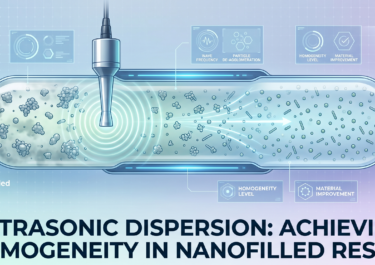
The integration of nanotechnology into polymer science has unlocked a new era of high-performance materials. Nanofilled resins—composites where a resin matrix is reinforced with particles smaller than 100 nanometers—are now essential in industries ranging from aerospace and automotive manufacturing to restorative dentistry and flexible electronics. However, the true potential of these “super-materials” is often hindered by a microscopic enemy: agglomeration.

Read more 

Safety Protocols for Handling Airborne Nanoparticles in Labs

The nanotechnology revolution has transitioned from a futuristic concept to a cornerstone of modern industrial and medical progress. From high-performance electronics and aerospace components to targeted drug delivery systems, the manipulation of matter at the atomic and molecular scale—typically between 1 and 100 nanometers—is reshaping our world. However, this “small” revolution carries substantial “large” responsibilities.

Read more 

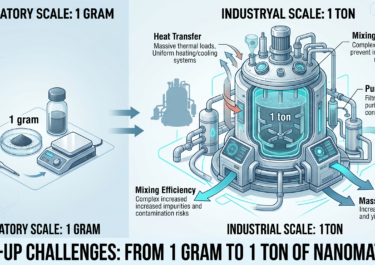
Scale-Up Challenges: From 1 Gram to 1 Ton of Nanomaterial

In the history of technology, some of the greatest ideas have never left the laboratory. In the field of nanotechnology, this is often due to the “Scale-Up Challenge.” It is one thing for a PhD student to produce 1 gram of high-quality gold nanoparticles or a few milligrams of carbon nanotubes for a research paper; it is an entirely different feat to produce 1 ton of that same material with the same precision, purity, and cost-effectiveness.

Read more 

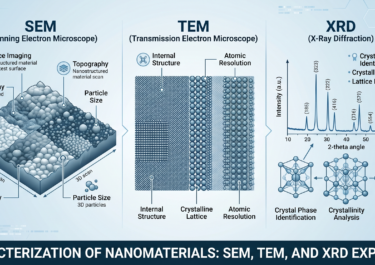
Characterization of Nanomaterials: SEM, TEM, and XRD Explained

In the world of nanotechnology, seeing is not just believing—it is the foundation of science. When we develop a bio-compatible coating for an implant or a carbon nanotube scaffold for regenerative medicine, we are working with structures that are thousands of times smaller than the width of a human hair. At this scale, the laws of classical physics fade, and the unique properties of matter emerge.

Read more