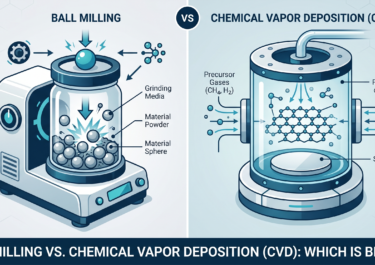
Ball Milling vs. Chemical Vapor Deposition (CVD): Which is Better?

In the rapidly evolving world of nanotechnology, the method used to create materials often dictates their final success in medical, industrial, or electronic applications. Whether we are building scaffolds for regenerative medicine or sensors for rapid pathogen detection, we must choose between two fundamentally different philosophies of construction: Top-Down and Bottom-Up.

Read more 

Brain-Machine Interfaces: The Conductivity Challenge

The concept of controlling technology with our thoughts was once relegated to the pages of cyberpunk novels. Today, Brain-Machine Interfaces (BMIs)—also known as Brain-Computer Interfaces (BCIs)—are a reality. These systems establish a direct communication pathway between the electrical activity of the brain and an external device, such as a computer, a robotic arm, or even a speech synthesizer.

Read more 

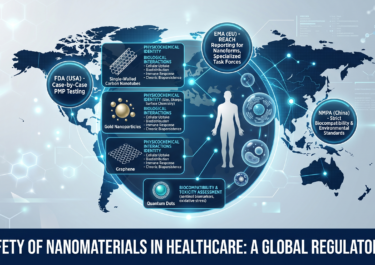
The Safety of Nanomaterials in Healthcare: A Global Regulatory View

Nanotechnology has moved from the realm of theoretical physics into the heart of modern medicine. By manipulating matter at the scale of 1 to 100 nanometers, scientists have unlocked the ability to deliver drugs directly to cancer cells, create ultra-sensitive diagnostic tools, and engineer tissues that mimic human biology. However, the very properties that make nanomaterials revolutionary—their high surface area, reactivity, and ability to cross biological barriers—also raise significant safety concerns.

Read more 

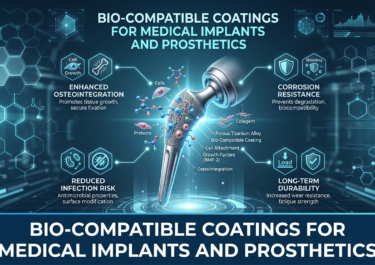
Bio-Compatible Coatings for Medical Implants and Prosthetics

The field of regenerative medicine and orthopedics has undergone a radical transformation over the past few decades. While the primary goal was once simply to replace a damaged joint or missing limb with a mechanical substitute, today’s focus has shifted toward biological integration. The success of a medical implant—whether it is a titanium hip replacement, a dental post, or a neural probe—depends entirely on the “handshake” between the synthetic material and the living tissue.

Read more 

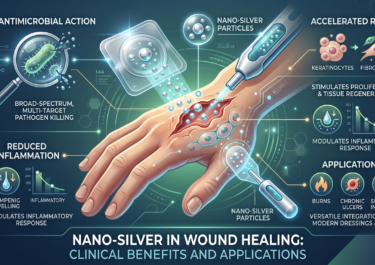
Nano-Silver in Wound Healing: Clinical Benefits and Applications

Wound care is a fundamental component of healthcare, yet it presents one of the most persistent challenges for clinicians worldwide. From minor lacerations to complex, non-healing ulcers, the primary threat to proper repair is infection. Bacterial colonisation doesn’t just delay healing; it can lead to devastating systemic complications, amputation, and sepsis. Historically, silver has been a guardian of wound care, revered for centuries for its innate ability to fight microbes.

Read more 

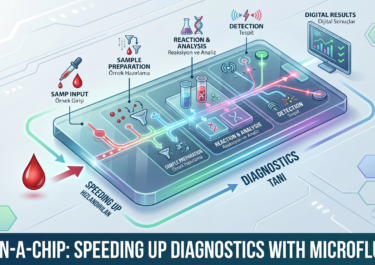
Lab-on-a-Chip: Speeding Up Diagnostics with Microfluidics

Imagine waiting for a critical medical diagnosis. Currently, this often involves taking a substantial sample of blood or tissue, sending it to a centralized facility miles away, and waiting days—sometimes weeks—for results generated by massive, expensive machinery operated by specialized technicians. During that waiting period, a disease can progress, treatment can be delayed, and anxiety levels can skyrocket.

Read more 

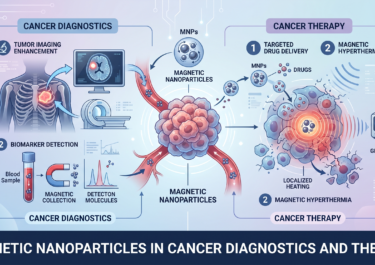
Magnetic Nanoparticles in Cancer Diagnostics and Therapy

Cancer remains one of humanity’s most daunting health challenges. While standard treatments like chemotherapy, radiation, and surgery have saved countless lives, they often come with significant drawbacks—principally their lack of specificity. Traditional chemotherapy acts like a sledgehammer, damaging healthy dividing cells throughout the body while trying to eliminate cancerous ones. Early diagnosis, too, can be elusive, allowing the disease to progress unseen.

Read more 

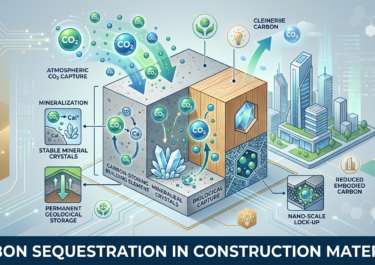
Carbon Sequestration in Construction Materials

The climate crisis is a challenge of unprecedented scale, and its solutions require rethinking how we live, travel, and crucially, how we build. The built environment is responsible for nearly 40% of global energy-related carbon emissions. While much attention has been paid to the “operational carbon” (the energy used to heat, cool, and power buildings), a growing urgency surrounds “embodied carbon”—the emissions resulting from manufacturing, transporting, and assembling the building materials themselves.

Read more 

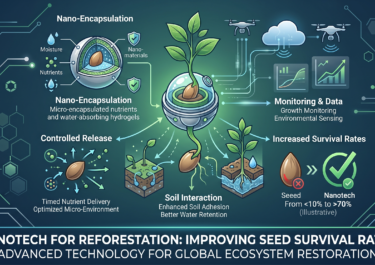
Nanotech for Reforestation: Improving Seed Survival Rates

The planet is facing an unprecedented environmental crisis. Deforestation is occurring at an alarming rate, driven by industrial expansion, agricultural demands, and the increasing frequency of climate-change-induced wildfires. Reforestation—the act of replanting forests—is one of our most potent weapons against biodiversity loss and carbon sequestration. However, a silent, microscopic bottleneck threatens these massive efforts: the abysmally low survival rate of seeds planted in the wild.

Read more 

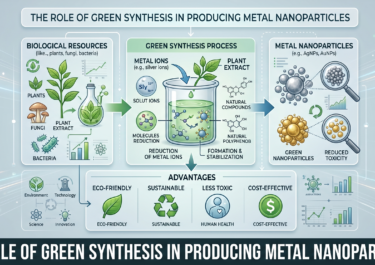
The Role of Green Synthesis in Producing Metal Nanoparticles

The shift toward sustainable and eco-friendly technologies is no longer a luxury; it is a global necessity. Chemistry and nanotechnology, historically associated with hazardous solvents and high energy consumption, are undergoing a profound transformation. At the heart of this “Green Chemistry” revolution lies a groundbreaking technique: Green Synthesis of Metal Nanoparticles. This biogenic route is dismantling traditional chemical paradigms, proving that we can produce advanced materials without sacrificing the planet or human health.

Read more 

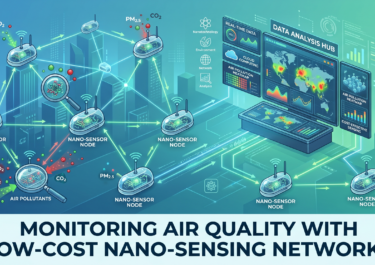
Monitoring Air Quality with Low-Cost Nano-Sensing Networks

Air pollution is often described as an “invisible killer.” It does not always appear as thick black smoke; sometimes, its deadliest components are microscopic particles or invisible gases that we inhale without a second thought. Despite its subtlety, the World Health Organization estimates that air pollution is responsible for seven million premature deaths annually worldwide. Traditionally, our defense against this threat has been a sparse network of regulatory-grade monitoring stations—bulky, expensive (often exceeding $100,000 each), and requiring skilled operators. These stations provide extremely accurate data, but only for the large region they represent.

Read more 

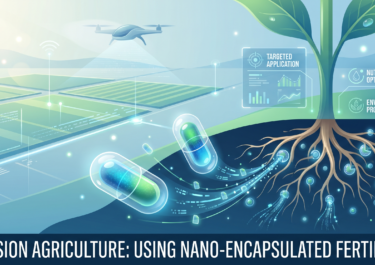
Precision Agriculture: Using Nano-Encapsulated Fertilizers

The global agricultural landscape is facing an unprecedented crisis. We are tasked with feeding a population expected to reach nearly 10 billion by 2050, while simultaneously battling shrinking arable land, climate volatility, and the dire environmental consequences of traditional farming practices. Traditional fertilization methods are inherently inefficient; it is estimated that only 30-50% of applied nutrients are actually absorbed by crops. The remainder leaches into groundwater, volatilizes into the atmosphere as greenhouse gases, or becomes locked in the soil, causing eutrophication and ecosystem collapse.

Read more 

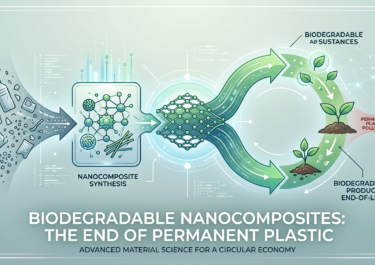
Biodegradable Nanocomposites: The End of Permanent Plastic

For nearly a century, humanity has had a love affair with plastic. It’s lightweight, durable, versatile, and astonishingly cheap. From intravenous tubes saving lives in hospitals to the packaging that keeps our food fresh, synthetic polymers have fundamentally shaped modern civilization. However, this miracle material has a dark side that is now impossible to ignore. Our planet is drowning in plastic waste. Because traditional plastics are engineered to be permanent, they do not decompose in any human timeframe, instead breaking down into insidious microplastics that contaminate our oceans, soil, and even our own bodies.

Read more 

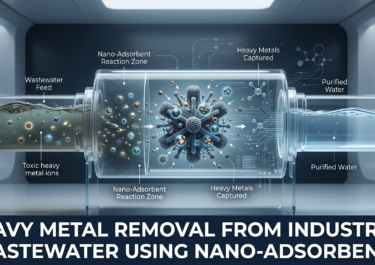
Heavy Metal Removal from Industrial Wastewater Using Nano-Adsorbents

Water is the lifeblood of global industry, yet it is also the primary victim of industrial success. Every year, millions of tons of heavy metals—byproducts of mining, electronics manufacturing, textile dyeing, and metal plating—are discharged into our waterways. Unlike organic pollutants that might eventually break down, heavy metals are “forever” contaminants. They do not degrade; they accumulate.

Read more 

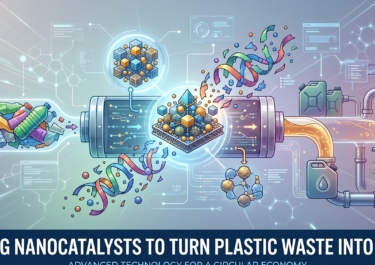
Using Nanocatalysts to Turn Plastic Waste into Fuel

The world is currently drowning in a sea of synthetic polymers. Since the 1950s, humanity has produced over 8 billion tons of plastic, and a staggering 90% of it has never been recycled. While traditional mechanical recycling—chopping plastic up and melting it down—has its place, it often results in “downcycling,” where the material loses quality and eventually ends up in a landfill anyway.

Read more 

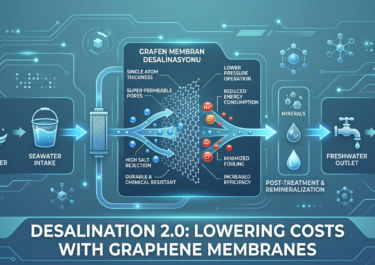
Desalination 2.0: Lowering Costs with Graphene Membranes

Water is the essence of life, yet the paradox of our planet is that while it is covered in water, fresh, drinkable water is a vanishing resource. Global demand for fresh water is skyrocketing due to population growth, industrialization, and agriculture, while climate change is rapidly shrinking traditional water sources like glaciers and rivers. This has forced the world to turn to the most abundant source of all: the ocean.

Read more