The Role of Molybdenum Disulfide (MoS2) in Solid Lubrication

In the world of mechanical engineering and advanced materials science, friction is the silent enemy. It consumes energy, wears down components, and eventually leads to system failure. While liquid oils and greases have been the traditional “peacekeepers” in this conflict for centuries, modern technology often pushes machinery into environments where liquids simply cannot survive. Whether it is the vacuum of deep space, the searing heat of a jet engine, or the delicate interior of a human joint replacement, liquid lubricants evaporate, freeze, or contaminate.
Read more 

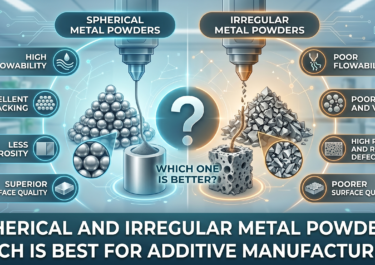
Spherical vs. Irregular Metal Powders: Which is Best for Additive Manufacturing?

In the burgeoning field of Additive Manufacturing (AM), or 3D printing as it is commonly known, the conversation often centers on the machines: the high-powered lasers, the electron beams, and the complex software that guides them. However, for those deep in the trenches of materials science and industrial procurement, the real hero—or villain—of the story is the powder.

Read more 

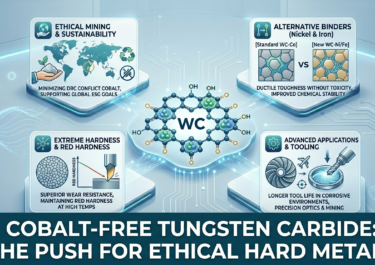
Cobalt-Free Tungsten Carbide: The Push for Ethical Hard Metals

For nearly a century, the partnership between Tungsten Carbide (WC) and Cobalt (Co) has been the bedrock of the global manufacturing industry. Known as “cemented carbide,” this composite material combines the extreme hardness of ceramic tungsten grains with the ductile “toughness” of a metallic cobalt binder. It is the material that drills our oil wells, cuts our aerospace components, and shapes the steel of our automobiles.

Read more 

How Nano-Karbür Additives Increase Tool Life by 300%

In the competitive landscape of modern manufacturing, efficiency is the only currency that truly matters. Whether you are milling aerospace components from titanium or drilling for oil in high-pressure environments, the “Achilles’ heel” of the operation is always the same: tool wear. When a cutting tool fails or dulls, production stops, costs skyrocket, and precision is lost.

Read more 

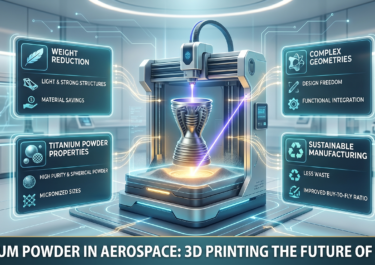
Titanium Powder in Aerospace: 3D Printing the Future of Flight

In the history of aviation, every major leap has been driven by a breakthrough in material science. From the wood and fabric of the Wright brothers to the aluminum alloys of the mid-20th century, the goal has always been the same: Higher, Faster, and Lighter. For decades, Titanium has been the “dream metal” of aerospace engineers due to its incredible strength-to-weight ratio and resistance to extreme temperatures.

Read more 

Boron Carbide: Using the “Black Diamond” for Advanced Armor

In the relentless evolution of warfare and defense technology, the struggle has always been between the “shield” and the “sword.” As projectiles become faster and more lethal, the materials we use to protect human lives and high-value assets must evolve even faster. Among the elite class of advanced ceramics, one material has earned a reputation so formidable that it is known in engineering circles as the “Black Diamond.”

Read more 

Silicon Carbide (SiC) in Power Electronics: Efficiency Reimagined

For over half a century, Silicon (Si) has been the undisputed king of the semiconductor world. It powered the computer revolution, gave us the internet, and managed the electricity in our homes. But as we transition into an era defined by electric vehicles (EVs), massive AI data centers, and renewable energy grids, Silicon is hitting a physical wall. It simply cannot handle the heat or the high voltages required by the next generation of technology without becoming bulky and inefficient.

Read more 

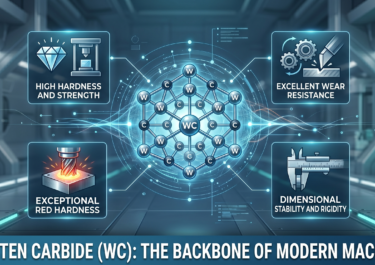
Tungsten Carbide (WC): The Backbone of Modern Machining

In the high-stakes world of industrial manufacturing, where precision is measured in microns and heat can melt ordinary steel like wax, one material reigns supreme. It isn’t a naturally occurring diamond, nor is it a traditional metal. It is Tungsten Carbide (WC). Often referred to simply as “carbide” in machine shops across the globe, this compound is the silent force behind everything from the engine in your car to the surgical tools used in life-saving operations.

Read more 

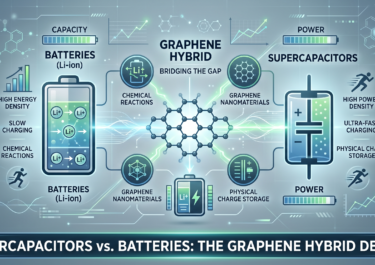
Supercapacitors vs. Batteries: The Graphene Hybrid Debate

The global transition toward renewable energy and electric mobility has sparked a high-stakes technological arms race. At the heart of this revolution lies a fundamental question: How do we store energy more efficiently, charge it faster, and ensure it lasts for decades? For years, the answer was simple—Lithium-ion (Li-ion) batteries. However, as we push the limits of chemistry and physics, a new contender has emerged from the world of nanotechnology: Graphene-enhanced Supercapacitors.

Read more 

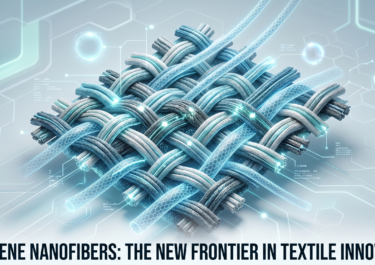
Graphene Nanofibers: The New Frontier in Textile Innovation

For thousands of years, textiles have served two primary purposes: protection and aesthetics. From the wool wraps of ancient civilizations to the synthetic polyesters of the 20th century, the evolution of clothing has been steady but largely focused on comfort and durability. However, we are entering an era where our clothes will do much more than just cover our skin. The integration of Graphene Nanofibers (GNFs) is transforming textiles into “intelligent skins” capable of monitoring health, regulating temperature, and even communicating with our devices.

Read more 

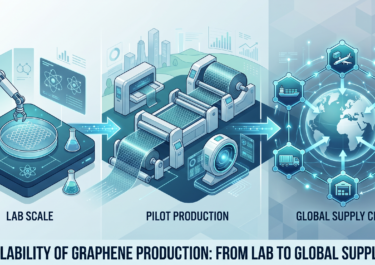
The Scalability of Graphene Production: From Lab to Global Supply Chain

For over two decades, graphene has been hailed as the “wonder material” that would revolutionize everything from quantum computing to water filtration. However, for a long time, there was a significant gap between the extraordinary properties observed in a laboratory and the reality of industrial application. The challenge wasn’t just making graphene; it was making it at scale, with consistent quality, and at a price point that makes economic sense.

Read more 

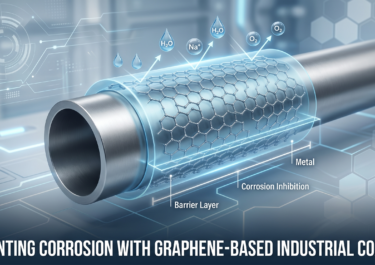
Preventing Corrosion with Graphene-Based Industrial Coatings

Corrosion is often called the “silent killer” of global infrastructure. From the massive hulls of cargo ships to the intricate pipelines snaking across continents and the structural steel of our bridges, the slow, relentless oxidation of metal costs the global economy an estimated 2.5 trillion USD annually. For decades, the industry has relied on heavy-duty epoxies, zinc-rich primers, and toxic chromate-based conversions. However, as environmental regulations tighten and the demand for longer-lasting materials grows, the industrial world is turning to nanotechnology—specifically, the “wonder material” known as graphene.

Read more 

Graphene’s Role in Wearable Bio-Sensors and Health Monitoring

The healthcare industry is undergoing a paradigm shift from reactive treatment to proactive, continuous monitoring. At the heart of this transformation is a new generation of wearable devices that do far more than count steps. We are entering the era of “biometric tattoos” and smart patches that can track glucose levels, detect early signs of cardiovascular disease, and monitor stress hormones in real-time.

Read more 

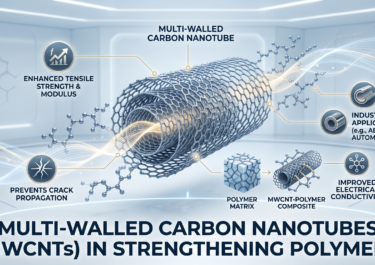
Multi-Walled Carbon Nanotubes (MWCNTs) in Strengthening Polymers

The materials science world is currently witnessing a silent revolution. For decades, polymers (plastics) have been the backbone of modern manufacturing due to their versatility and low cost. However, their inherent weakness has always been their limited mechanical strength and lack of electrical conductivity. That is, until the introduction of Multi-Walled Carbon Nanotubes (MWCNTs).

Read more 

Thermal Conductivity Breakthroughs Using Carbon-Based Nanomaterials

Thermal management is one of the most significant bottlenecks in modern technology. From the overheating of smartphones to the cooling costs of massive data centers, and from the lifespan of electric vehicle batteries to the heat shields of spacecraft, everything depends on how quickly and effectively we can transfer heat. Traditional metals like copper and aluminum are reaching their physical limits. However, in the realm of nanotechnology, carbon-based nanomaterials—such as Carbon Nanotubes (CNTs) and Graphene—are offering a new physical reality to break through these barriers.

Read more